- BIST10011,131-3.02%
- USD50.47+0.05%
- EUR55.46+0.20%
- GOLD3,525.90-4.33%
- INTEREST36.00%-1.00
- BITCOIN58,969-4.74%
- November 20, 202617°
- BIST10011,131-3.02%
- USD50.47+0.05%
- EUR55.46+0.20%
- GOLD3,525.90-4.33%
- INTEREST36.00%-1.00
- BITCOIN58,969-4.74%
- November 20, 202617°
ICJ to rule tomorrow on Myanmar’s responsibility for Rohingya genocide
The International Court of Justice will issue its final ruling on Gambia’s case against Myanmar on November 19. The ruling has not yet been issued; to date, the Court has not held any state directly responsible for genocide.


The International Court of Justice (ICJ) will issue its final ruling tomorrow in the genocide case filed by Gambia against Myanmar over its actions against Rohingya Muslims. The ruling, which has not yet been issued, will be read by the Court’s president, Japanese Judge Yuji Iwasawa, beginning at 12:00 Türkiye time on November 19 at the Peace Palace in The Hague.
A state could be held responsible for genocide for the first time
To date, the ICJ has not held any state directly responsible for committing genocide. In the Bosnia and Herzegovina v. Serbia case, the Court classified the Srebrenica massacre as genocide but did not attribute it to Serbia, finding the country responsible only for violating its obligations to prevent and punish genocide. In the Croatia v. Serbia case, the genocide claims brought by both sides were rejected. For this reason, the possibility of Myanmar being held responsible as a state is seen as the most significant element that could make the ruling historic. Even if the Court rejects the genocide claim, it could find that Myanmar violated its obligation to prevent genocide or the provisional measures issued in 2020.
Dr. Abdurrahman Erol, a faculty member at Istanbul Medeniyet University’s Faculty of Law, said the central issue in the case is how genocidal intent will be proven and that the ruling will also be closely watched in South Africa’s case against Israel. Erol recalled that, in its 2007 ruling, the ICJ significantly raised the evidentiary threshold by requiring that an intent inferred from a pattern of conduct constitute the “only reasonable inference.”
The “clearance operations” of 2017
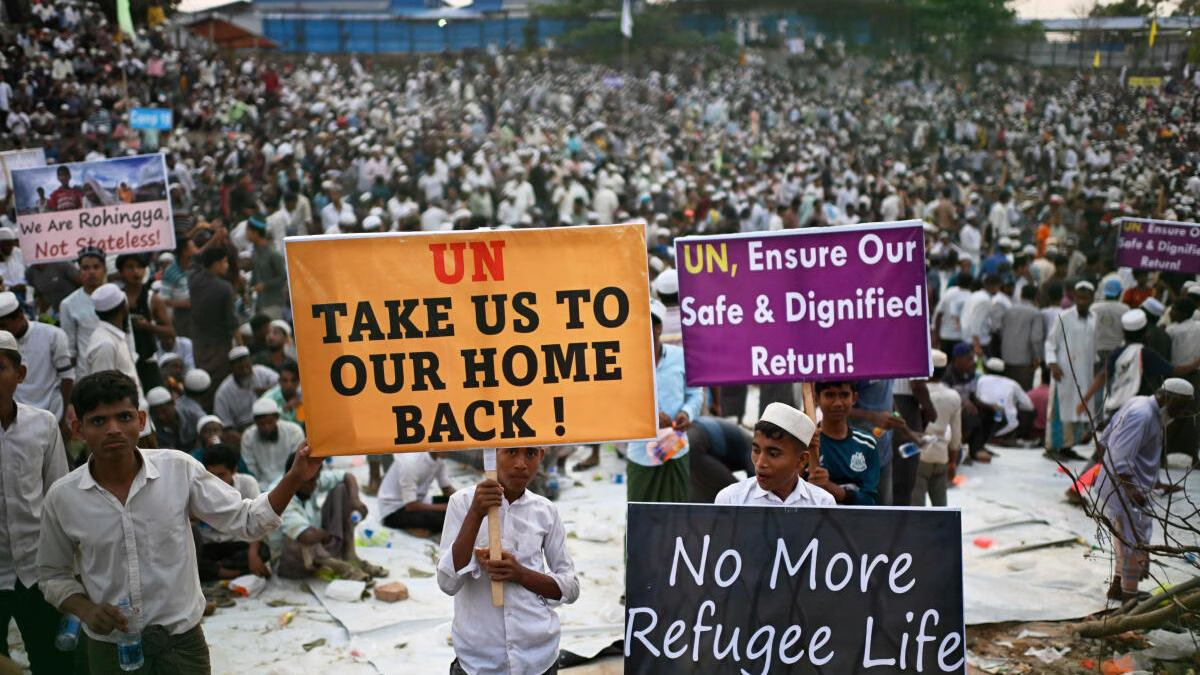
Mass killings, rapes and village burnings during operations launched by the Myanmar army in northern Rakhine State in August 2017 forced hundreds of thousands of Rohingya Muslims to flee to Bangladesh. When Gambia filed the case in 2019, it became the first state with no direct connection to the alleged crimes to bring a case solely on the basis of being a party to the Genocide Convention. Gambia is seeking the prosecution of those responsible, safe return, the restoration of property, recognition of Rohingya identity and compensation. Myanmar denies the allegations and argues that the operations were conducted as part of a “counterterrorism” campaign against attacks by the Arakan Rohingya Salvation Army (ARSA).
Photos: AA, The Hindu.
Stay Updated with The Turkiye Times
Subscribe to be informed about special news, developments and announcements. We will keep you informed.
By signing up, you agree to our Privacy Policy