- BIST10011,430-2.49%
- USD49.45+0.05%
- EUR55.62+0.37%
- GOLD4,161.50-0.47%
- INTEREST37.00%-1.00
- BITCOIN81,825-0.23%
- October 19, 202617°
- BIST10011,430-2.49%
- USD49.45+0.05%
- EUR55.62+0.37%
- GOLD4,161.50-0.47%
- INTEREST37.00%-1.00
- BITCOIN81,825-0.23%
- October 19, 202617°
Istanbul’s Sokullu Mehmet Pasha Primary School preserves 151-year legacy
Sokullu Mehmet Pasha Primary School in Istanbul’s Üsküdar district has provided education for 151 years, tracing its history to 1875 and preserving an Ottoman inscription and historic fountain. The school currently serves 350 students and offers folk dancing, robotics programming, drama and Quran classes based on students’ requests.


Sokullu Mehmet Pasha Primary School in Istanbul’s Üsküdar district continues its educational tradition, which began in 1875, alongside its historic architectural features. The Ottoman inscription above the entrance of the two-story stone building is among the school’s most notable features.
Opened as a military middle school in 1875
The school was established as one of nine military middle schools opened in Istanbul during the reign of Sultan Abdülaziz. Operating under the name “Toptaşı Military Middle School” from 1875, it was a four-grade day school equivalent to today’s middle-school level.
The school’s enrollment reached 148 in 1876. Students wore military uniforms and studied Arabic, Persian and French alongside art classes.
After Paşakapısı Military Middle School was converted into a civilian middle school in 1893, Toptaşı Middle School became Üsküdar’s only military school providing education at this level and continued operating until 1914.
During the Second Constitutional Era, when the constitution was reinstated in the Ottoman Empire and parliamentary proceedings resumed, military middle schools were gradually abolished. Toptaşı Middle School was also converted into a civilian institution and renamed “Sokullu Model School.”
The school was renamed “Üsküdar 15th Toptaşı Primary School” in 1926 and “Sokullu Mehmet Pasha Primary School” in 1948. The institution became a basic education school in 1997 and returned to primary-school status in 2013.
The inscription bears Sultan Abdülaziz’s tughra
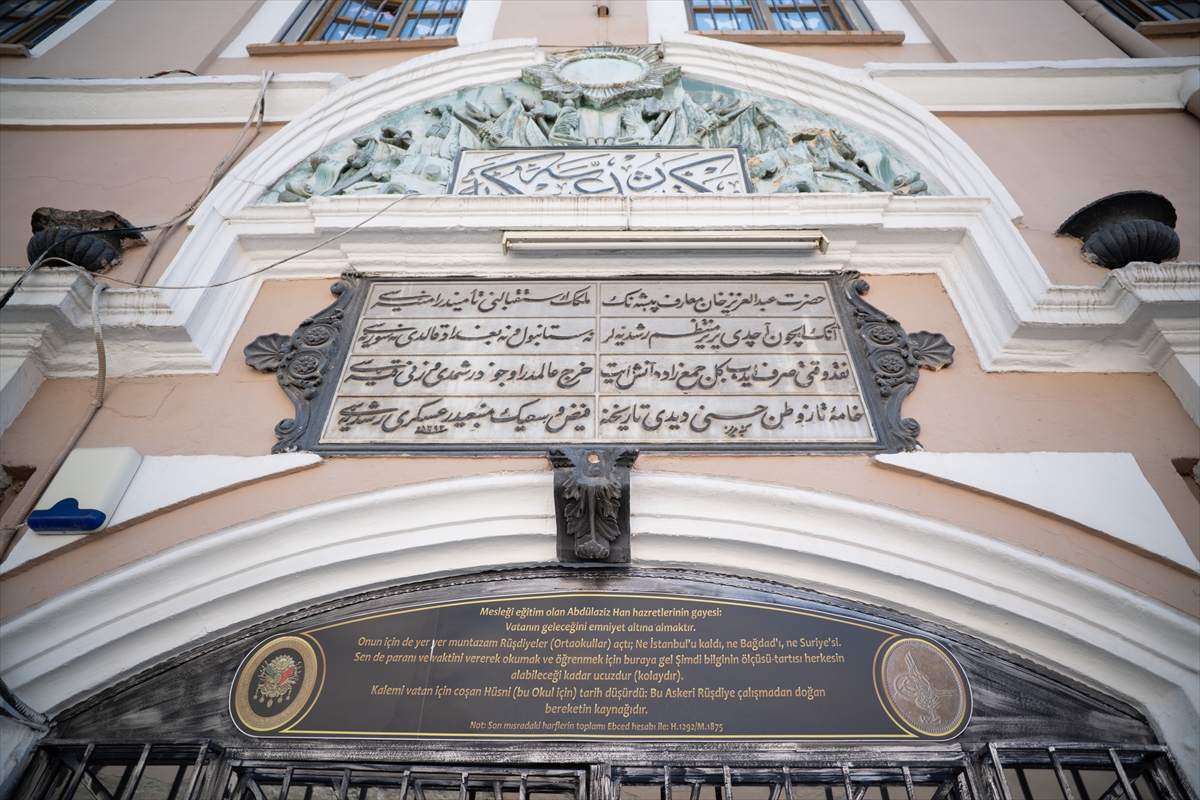
The stone facade above the school’s entrance features an emblem symbolizing the Ottoman state and Sultan Abdülaziz’s tughra. A plaque beneath the door bears the words “Military Middle School.”
Between the plaque and the entrance arch is a poetic inscription consisting of eight couplets. It describes Sultan Abdülaziz’s emphasis on education and his interest in opening middle schools in different parts of the country. The school stands out not only as one of the few educational institutions to preserve its original inscription but also for having a historic poetic inscription.
Historic fountain in the courtyard brought back to light
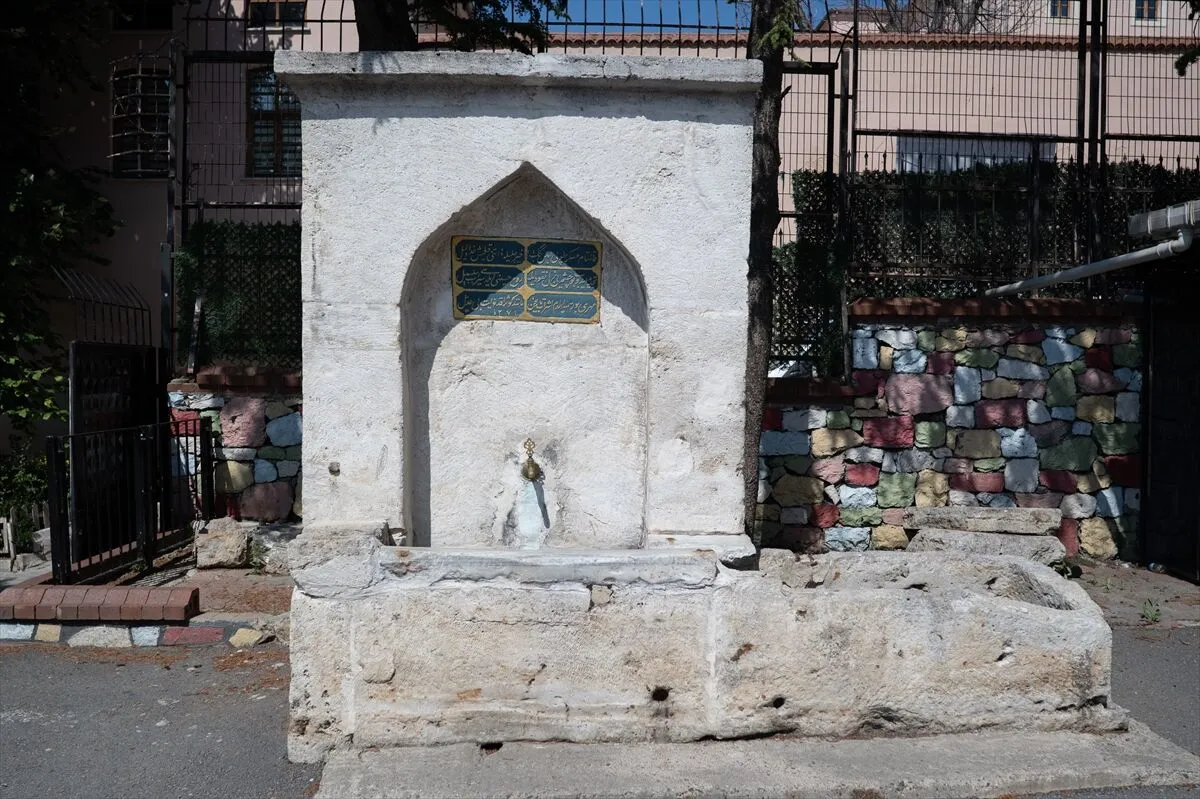
Another feature completing the school’s historic character is the Acı Fountain in its courtyard. Local residents gave the fountain this name because of the slightly bitter taste of its water.
The Acı Fountain was built in 1855 on the orders of Emin Bey, the district governor, replacing an older fountain at the same site. Over time, much of the fountain was covered by soil and asphalt; later restoration work uncovered it and returned it to its place in the school courtyard.
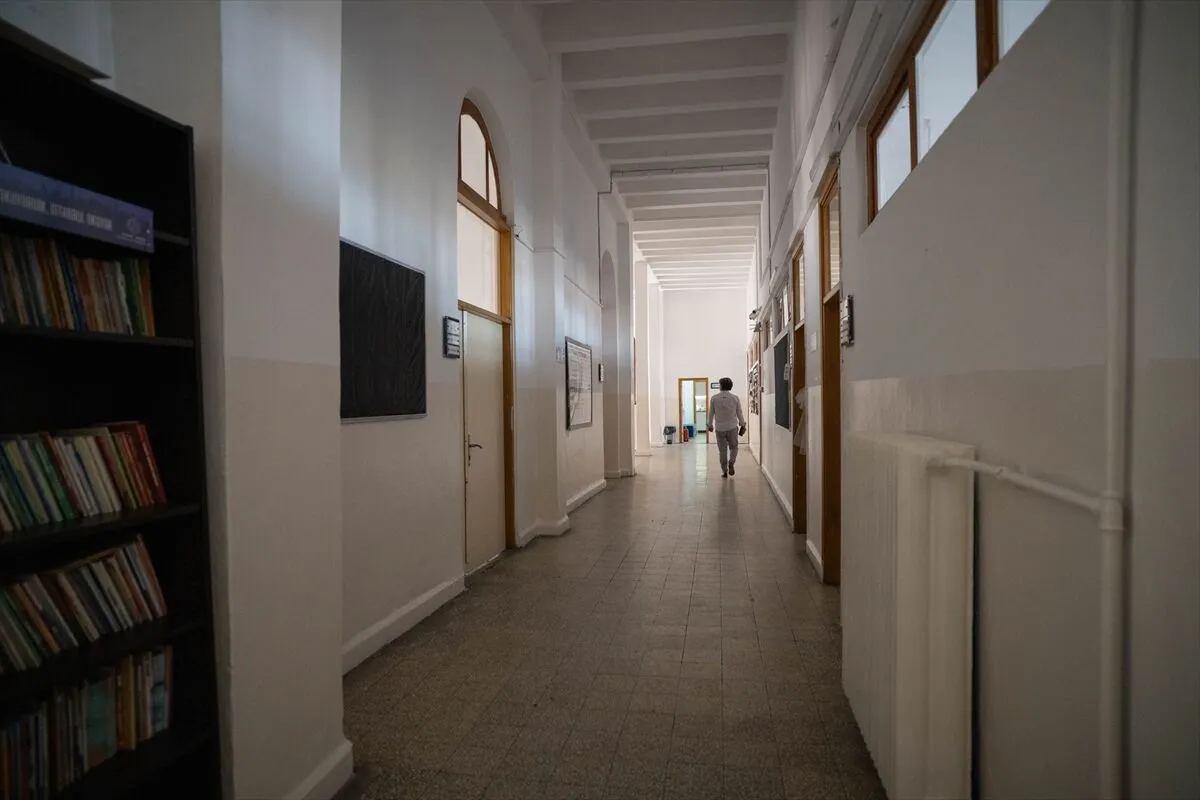
Architectural features from the Ottoman period have also been preserved inside the building. These include high-ceilinged corridors, arched classroom doors and an inner courtyard.
The school’s history reaches back to an old charitable institution
School principal Murat Özgen said the building was constructed in the 1870s on the orders of Sultan Abdülaziz as Toptaşı Military Middle School. Özgen said a structure designed by architect Sinan had previously stood on the site and served as a shelter for convalescent patients, people in need and travelers.
Özgen said the school building was constructed using materials removed from the earlier structure. He noted that the school served as a military middle school from the late 19th century to the early 20th century, was later converted into Sokullu Mehmet Pasha Model School and has provided primary education ever since.
The school has 350 students
The school currently has 350 students. Extracurricular activities place particular emphasis on folk dancing and cultural heritage projects.
Six or seven folk-dance groups are formed each year based on students’ interests. The groups perform at ceremonies, commemorative events and national holidays, presenting their work to parents.
The school also offers robotics programming, drama and Quran classes supported by the Public Education Center in response to students’ requests. These activities take place outside the core curriculum.
Özgen said working at a historic school gives him a sense of excitement and happiness, adding that he feels the same way whenever he sees the entrance door and inscription. He said they view the building not merely as a school but as a legacy that must be preserved.
The school administration regularly inspects every part of the building, from its doors and windows to layers of paint and structural elements. The necessary permits are obtained for repair and restoration work, while care is taken to preserve the building’s original appearance and approved standards.
Stay Updated with The Turkiye Times
Subscribe to be informed about special news, developments and announcements. We will keep you informed.
By signing up, you agree to our Privacy Policy