- BIST10012,151-0.94%
- USD49.220.00%
- EUR55.21+0.28%
- GOLD4,195.90+0.13%
- INTEREST37.00%-1.00
- BITCOIN82,230-1.72%
- October 13, 202618°
- BIST10012,151-0.94%
- USD49.220.00%
- EUR55.21+0.28%
- GOLD4,195.90+0.13%
- INTEREST37.00%-1.00
- BITCOIN82,230-1.72%
- October 13, 202618°
Kadıköy Anatolian Imam Hatip High School girls place third at TEKNOFEST
The female students of Kadıköy Anatolian Imam Hatip High School placed third in the TEKNOFEST Rotary-Wing UAV Competition held in Malatya with the drone they developed, named EBABİL. After working for nearly two years on mechanics, design, electronics and software, the students developed a lightweight vehicle with a high payload capacity.


Female students from Kadıköy Anatolian Imam Hatip High School placed third in the TEKNOFEST Rotary-Wing UAV Competition held in Malatya. After nearly two years of work, the students ranked third with the drone they developed and named "EBABİL".
The team worked on the mechanical, design, electronic and software aspects of the vehicle to make it lighter, faster and capable of carrying a higher payload. After reaching the finals in the same category last year, the students improved the vehicle's mechanical and software features this year and finished the competition in third place.
Students developed the UAV's mechanical and software systems
Team captain Sude Nur Akbaş said EBABİL emerged after a two-year production process. Akbaş said the students worked in the school's technology workshops and designed and produced many of the UAV's components themselves, from its mechanical parts to its software.
Akbaş said they completed the first version of the UAV last year and qualified for the TEKNOFEST finals, while this year they improved the vehicle by addressing shortcomings in its software and mechanical systems. The team has separate working groups for design, software and public relations.
The design team worked on the materials to be used and a flight-ready design so that the UAV could perform its tasks efficiently. The software team developed programs suited to the competition tasks, while the design and software work was continuously refined through flight tests.
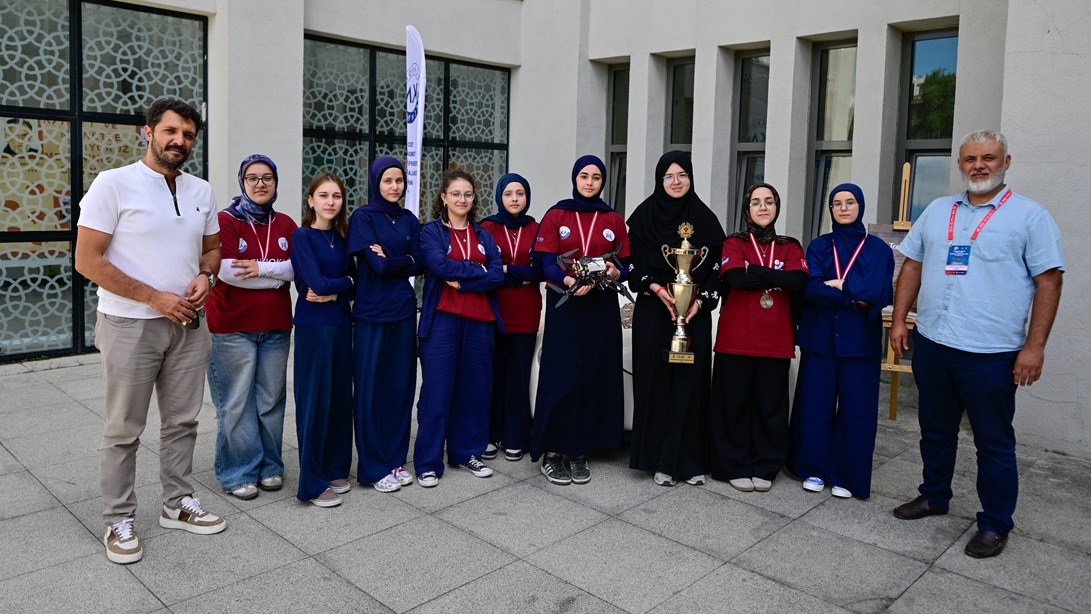
Akbaş said the students carried out most of the process, with the technology coordinator and team mentors also supporting the work. She said EBABİL was lighter than its competitors but designed to carry heavy loads, and that the goal of achieving high flight speed was also met.
Competition consisted of three stages
According to Akbaş, the competition process consisted of three stages: a written report, a video report and the final. Teams that passed these stages qualified for the finals.
In the final, teams attempted to complete payload-drop tasks in which flight and software also played a key role. The teams prepared from the beginning of the year knowing which tasks they would face in the final.
Akbaş said they were the only team made up entirely of female students and that their ranking therefore held special significance for them. She said the students believed they had shown that students at imam hatip high schools can produce successful work in the field of technology.
They worked on electronic systems and autonomous flight
Team pilot Gülsemin Yeşil said they had been preparing for the competition for nearly two years and had reached the finals in this category for the first time last year. Yeşil said they placed third with contributions from new students who joined the team this year, adding that they experienced excitement and stress during the competition and that remaining calm, especially at critical moments, was important.
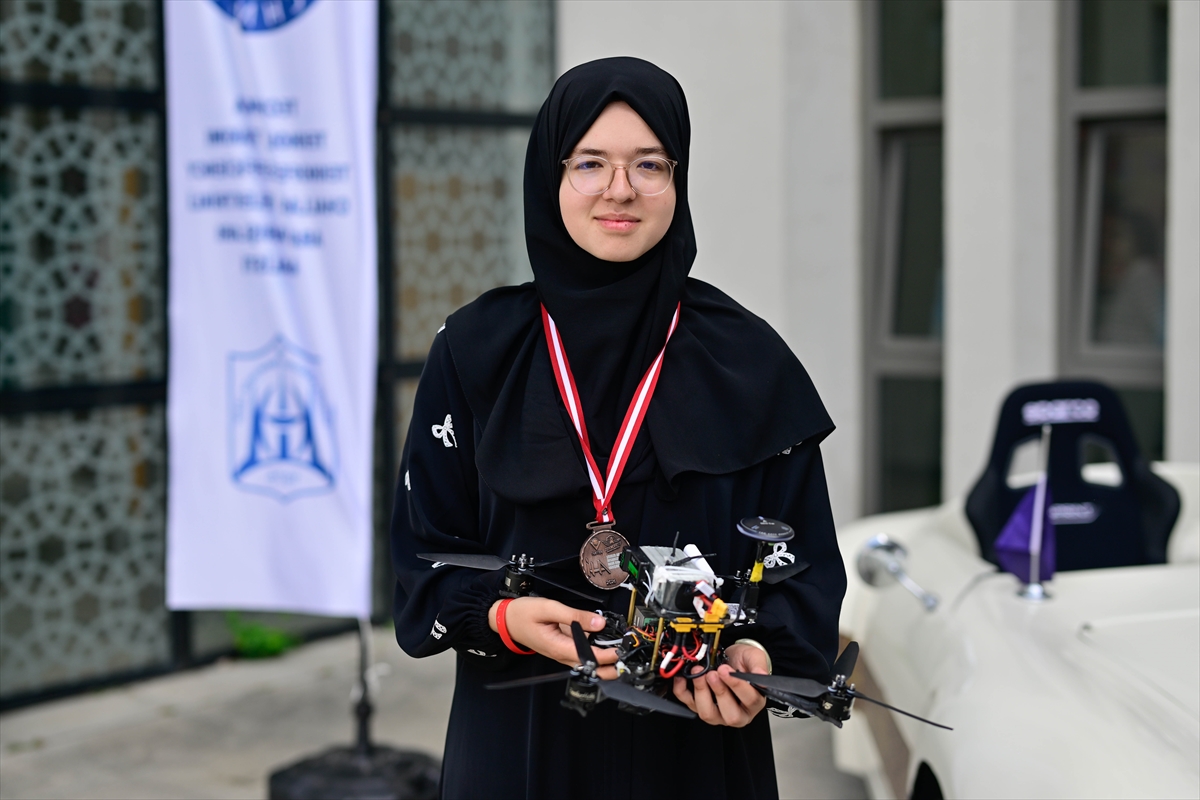
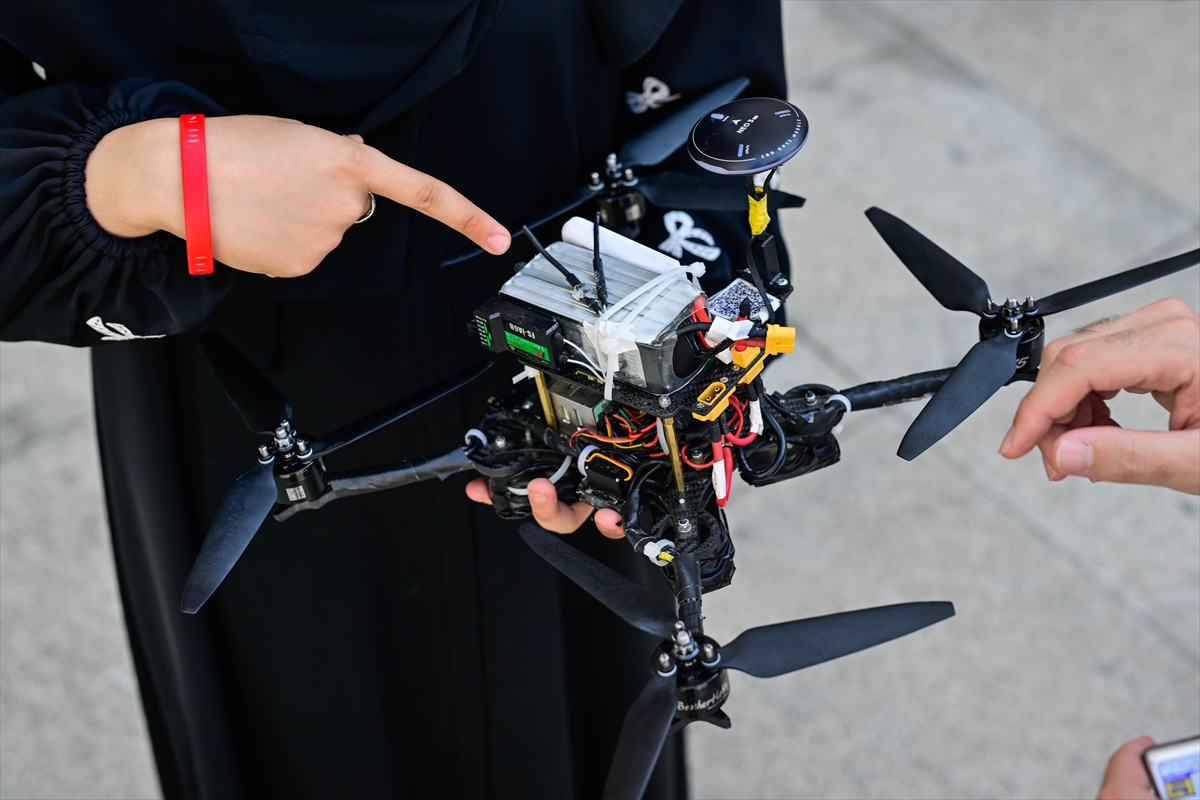
Yeşil said they planned the placement of components while preparing the electronic systems. She said they created a layout diagram so that the electronic components would take up less space and be less affected by magnetic fields, then focused on developing a smaller UAV with the design team.
Yeşil said EBABİL could perform its tasks autonomously, adding that she had an important responsibility as the pilot because unexpected situations could arise during flight. She said the competition experience had shaped her interest in technology and her plans for the future, while their teachers continuously guided them throughout the preparation process.
Design focused on a small and lightweight vehicle
Safiye Meryem Yanar, who worked in the team's design division, said they aimed to make the UAV as small and light as possible while also giving it a high payload capacity. Yanar said the design work was carried out using various programs under the guidance of their teachers and that the process had given her experience in different fields.
Yanar said team members were trying to develop in the areas where they felt most comfortable and could make the greatest contribution. Saying that she wanted to study engineering in the future, Yanar noted that they had been preparing not only for the UAV competition but also for competitions in different categories since the beginning of the academic year.
School administration says students work across multiple fields
Ahmet Talha Çalışkan, deputy principal of Kadıköy Anatolian Imam Hatip High School and the team supervisor, said the achievement was not the result of just one year's work. Çalışkan said the students had gained experience by participating in TEKNOFEST in previous years and that students on the school's technology teams could contribute to more than one project and competition category.
Çalışkan said students who had previously worked on the electronic or mechanical systems of an electric car named "Firüze" could also support the rotary-wing UAV or robotics teams. He said this working model was intended to help students develop in multiple areas of technology, adding that the teams were formed at the beginning of the year and preparations continued throughout the year.
Çalışkan said mentors and supervising teachers guided the students during the UAV's production, while students took direct responsibility for many stages, from design and sourcing materials to software. He added that the students also worked during their holidays to prepare for the competition.
Çalışkan said the students' ranking was a source of pride for the school. He emphasized the importance of increasing young people's interest in technology and creating environments where they can improve themselves, adding that such organizations give high school and university students an opportunity to present their projects.
Çalışkan said the school had previously won awards by participating in national and international competitions in different categories. He said they aimed to develop higher-quality products and original ideas in the coming period and to return from the organizations they enter with successful results.
Stay Updated with The Turkiye Times
Subscribe to be informed about special news, developments and announcements. We will keep you informed.
By signing up, you agree to our Privacy Policy

















