- BIST10012,151-0.94%
- USD49.220.00%
- EUR55.21+0.28%
- GOLD4,194.30-0.52%
- INTEREST37.00%-1.00
- BITCOIN82,977-0.83%
- October 12, 202619°
- BIST10012,151-0.94%
- USD49.220.00%
- EUR55.21+0.28%
- GOLD4,194.30-0.52%
- INTEREST37.00%-1.00
- BITCOIN82,977-0.83%
- October 12, 202619°
Minister Gürlek says 196 new courts were established in six months
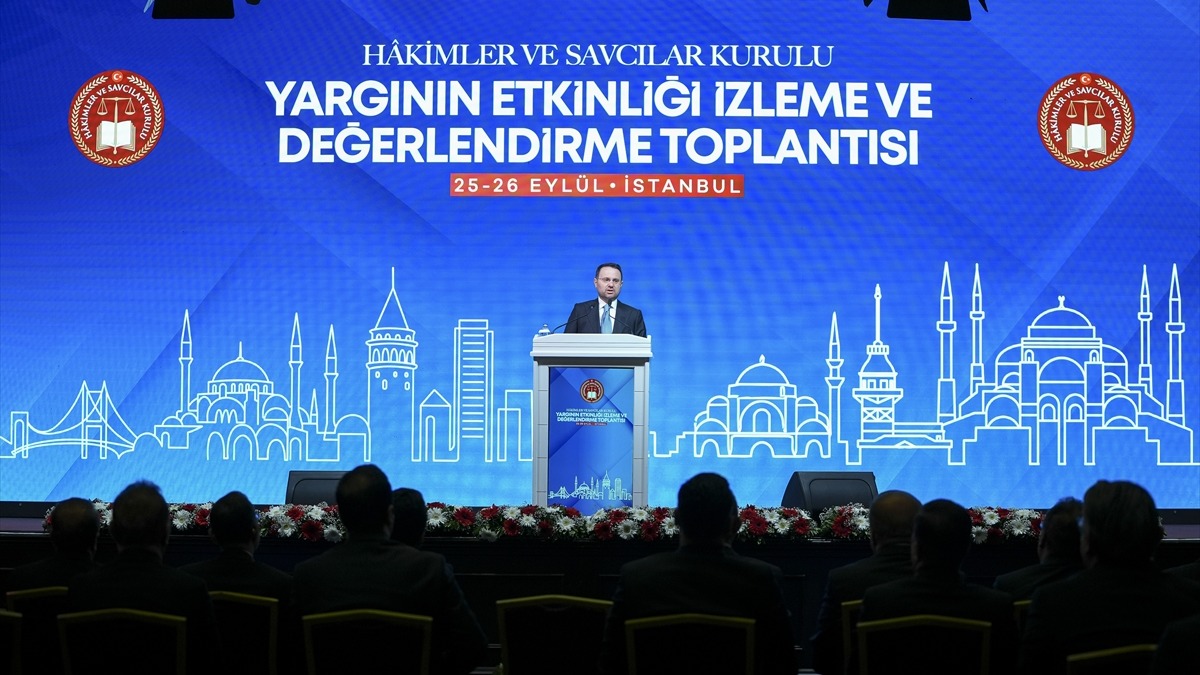
Minister Akın Gürlek announced at a meeting in Şişli that 196 new courts had been established and 284 courts had become operational in the past six months. He said 034 assistant judges and prosecutors had started their duties and that the Alo Adalet 135 hotline had been introduced on a pilot basis for lengthy investigations and cases.


At the opening of the Monitoring and Evaluation Meeting on the Effectiveness of the Judiciary, organized by the Council of Judges and Prosecutors in Şişli, Minister Akın Gürlek outlined efforts to make judicial services faster and more accessible. Gürlek said ensuring that citizens can access justice within a reasonable period was a priority.
Gürlek said 26,777 judges and public prosecutors were serving in 597 locations. He said speedy trials did not mean closing files hastily, adding that each file would be handled with the required care and that citizens should not have to wait unnecessarily to exercise their rights.
Effectiveness offices established in 204 units
Gürlek announced that Judicial Services Effectiveness Offices had been established in 204 units within the justice commissions of first-instance civil and criminal courts, regional courts of appeal and regional administrative courts, in order to identify the administrative and technical causes of delays in judicial services. He said these structures also covered affiliated courthouses.
Gürlek said the source of delays in proceedings caused by disruptions in workload distribution, staffing needs or technical obstacles would be identified and that obstacles that could be resolved would be removed. He emphasized that these offices would not intervene in the content or outcome of proceedings and that judges’ conscientious discretion and public prosecutors’ authority to conduct investigations would be protected.
Gürlek said chief public prosecutors’ offices and the heads of justice commissions would monitor administrative and technical delays in investigation and case files. He added that structural problems that could not be resolved through local resources would be referred to the relevant units of the Ministry and the Council of Judges and Prosecutors. He said the physical facilities and human resources of the Council’s Judicial Effectiveness Office had also been strengthened.
Alo Adalet 135 hotline launched as a pilot
Gürlek announced that the Alo Adalet 135 hotline had been established so citizens could directly submit applications concerning delays. He said the hotline had begun operating on a pilot basis at the Ankara West, İzmir and Kayseri courthouses.
Gürlek said applications would initially be accepted for case files pending for more than five years and investigations lasting more than three years. He said citizens could request information about the reason for a delay and ask for administrative measures that could accelerate the process to be considered. He added that, following the pilot scheme, the hotline was planned to be made available across Türkiye in October.
Gürlek said the hotline would not direct judges or public prosecutors on how a file should be concluded, but would only assess administrative and technical solutions related to delays. He added that the Judicial Services Effectiveness Offices would also help forward applications and the reasons for delays to the relevant units.
Judicial capacity being expanded
Gürlek said work was continuing to use artificial intelligence technologies in the UYAP infrastructure to accelerate judicial proceedings. He said the process for launching the UYAP AI project had been expedited.
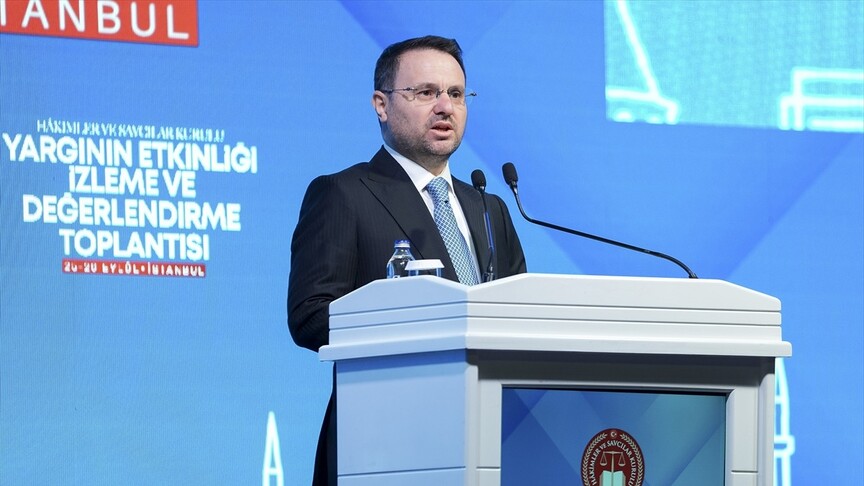
Minister Gürlek spoke at the Council of Judges and Prosecutors’ “Monitoring and Evaluation Meeting on the Effectiveness of the Judiciary”
Gürlek announced that 196 new courts had been established, 284 courts had become operational and a decision had been made to establish 180 specialized courts in the past six months. He said a total of 1. 034 assistant judges and prosecutors, comprising 982 from the judicial branch and 52 from the administrative judiciary, had started their duties. He said the aim was to direct this capacity to areas in need and eliminate imbalances that led to a backlog of cases.
Gürlek said writing reasoned decisions on time was also part of access to justice. He said improvements had been made in this area through periodic checks by the Council of Judges and Prosecutors and in response to incoming notifications. He added that a principle decision by the Council stipulated that decisions whose reasoning had not been approved would not be taken into account in promotion assessments, representing a step against delays caused solely by the writing of decisions.
Gürlek said files that had been pending for a long time were often voluminous and labor-intensive. He announced that a regulation was planned to award judges who concluded delayed files additional points in promotion assessments based on their workload percentage.
Service points to shape the appointment system
Gürlek said the First Chamber of the Council of Judges and Prosecutors had decided to place before the General Assembly a draft text requiring deputy chief public prosecutors and chief public prosecutors at criminal courts of first instance to take on a certain proportion of work from investigation files. He said the step aimed to balance the workload in investigations.
Gürlek said the appointment system for members of the judiciary had been made more predictable. He said a decision by the General Assembly of the Council of Judges and Prosecutors recognized service points as the primary criterion for transfers, with points calculated according to the coefficient of the place of assignment and the actual length of service.
Gürlek said the principles governing how promotions, inspections and disciplinary matters would be reflected in the score would be determined separately. He announced that, barring exceptions, the system was planned to be implemented with the 2027 Main Summer Decree. He said these steps were being taken to ensure that citizens could access a fair trial within a reasonable period.
Meeting focused on assessing judicial problems
Gürlek said İstanbul was an important testing ground for assessing the results of the work because of the number of case files and the diversity of disputes there. He asked participants to address the functioning of the effectiveness offices, the status of delayed files and the difficulties encountered at the meeting.
Gürlek said the Council of Judges and Prosecutors needed to closely monitor the functioning of the judiciary and take timely steps to address shortcomings. He said confidence in the judiciary would be strengthened by how the announced measures were implemented in courthouses.
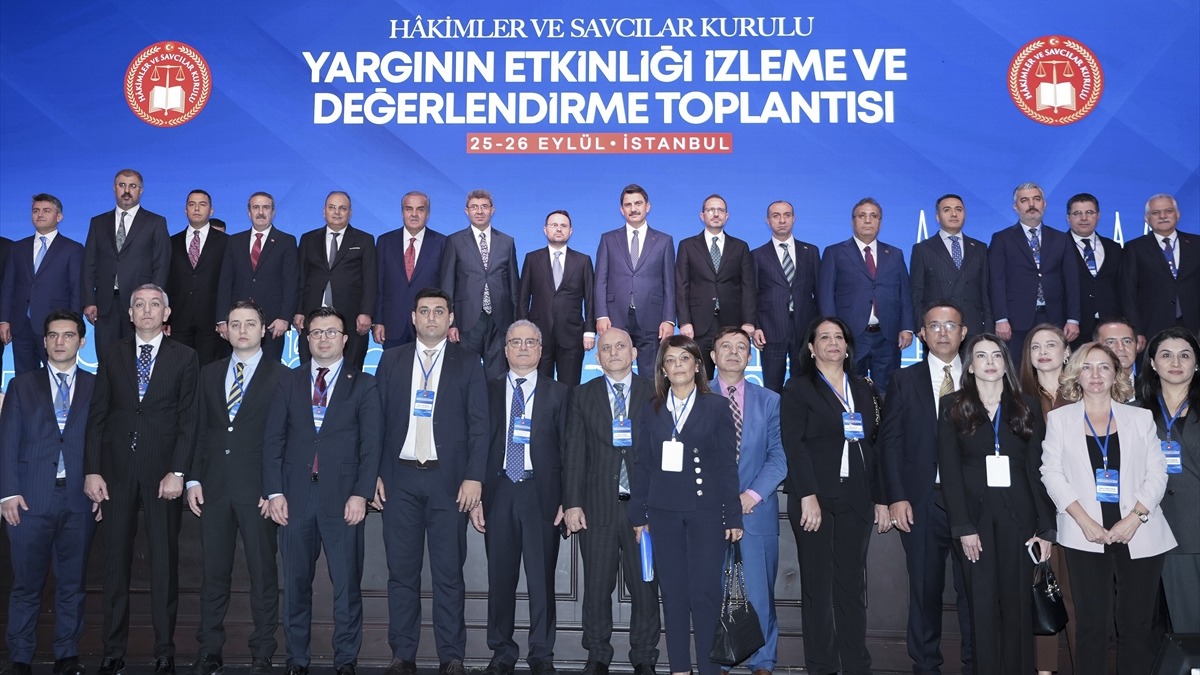
Deputy Minister of Justice Sedat Ayyıldız; Fuzuli Aydoğdu, deputy chair of the Council of Judges and Prosecutors and head of its Second Chamber; Turan Kuloğlu, head of its First Chamber; Ahmet Uğuz, secretary-general of the Council; members of the Council; İstanbul Chief Public Prosecutor Fatih Dönmez; and chief public prosecutors and heads of justice commissions from other courthouses attended the meeting.
Stay Updated with The Turkiye Times
Subscribe to be informed about special news, developments and announcements. We will keep you informed.
By signing up, you agree to our Privacy Policy