- BIST10012,151-0.94%
- USD49.220.00%
- EUR55.21+0.28%
- GOLD4,195.90+0.13%
- INTEREST37.00%-1.00
- BITCOIN82,230-1.72%
- October 13, 202618°
- BIST10012,151-0.94%
- USD49.220.00%
- EUR55.21+0.28%
- GOLD4,195.90+0.13%
- INTEREST37.00%-1.00
- BITCOIN82,230-1.72%
- October 13, 202618°
Minister Kurum says smart city plans will be prepared for all 81 provinces by 2026
Minister of Environment, Urbanization and Climate Change Murat Kurum announced that a five-year Smart City Action Plan has been prepared. The plan aims to prepare smart city strategies and road maps for all 81 provinces by the end of 2026 and implement at least 50 applications by 2028.


Minister of Environment, Urbanization and Climate Change Murat Kurum announced that a five-year Smart City Action Plan has been prepared. Regulations concerning 50 smart city applications designed to make residents' lives easier, particularly in municipal services, traffic systems and waste management, were published in the Official Gazette.
The 2030 National Smart Cities Strategy and Action Plan prepared by the ministry sets out a five-year road map for the transformation of cities. The plan includes four strategic objectives, eight targets, 32 actions and 297 implementation steps focused on implementation, monitoring and measurement.
Strategies and road maps to be prepared for 81 provinces
The first phase of the plan, running through the end of 2026, calls for smart city strategies and road maps to be prepared for all 81 provinces. Dedicated smart city units will be established in every municipality, and the use of a semantic planning model in spatial planning will become mandatory.
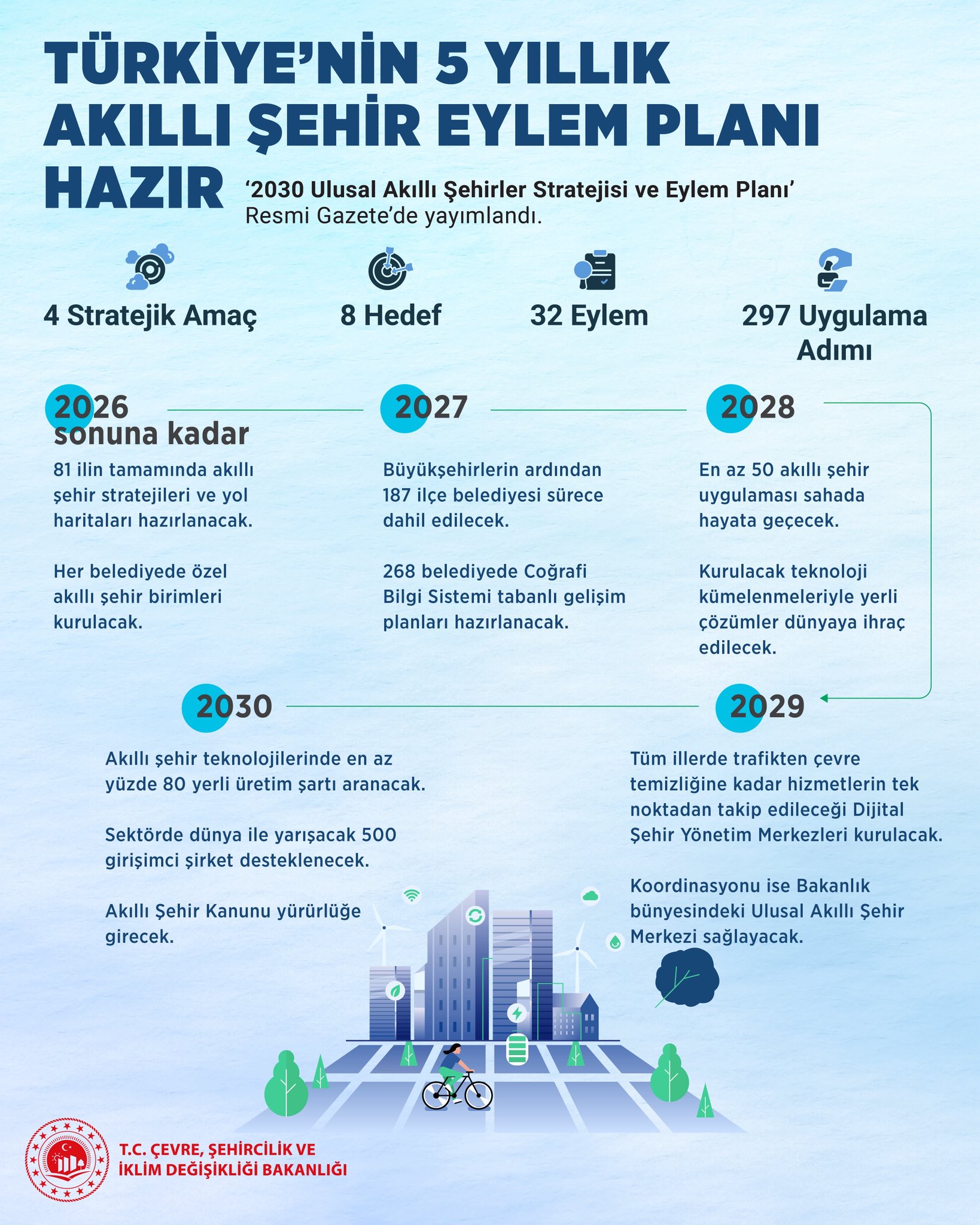
In 2027, 187 district municipalities are planned to join the process after the metropolitan municipalities, while development plans based on geographic information systems are to be prepared in 268 municipalities. At least 50 smart city applications are targeted to be implemented in the field by 2028.
Digital city management centers to be established
The road map will focus on artificial intelligence, big data, the Internet of Things and digital twin technologies. Early-warning and crisis-management mechanisms are planned for urban transformation, the climate crisis and disaster management.
The plan also aims to export domestic solutions abroad through technology clusters. Digital City Management Centers, where services such as traffic management and environmental cleaning can be monitored from a single point, will be established in all provinces by 2029. The National Smart City Center within the ministry will coordinate these centers.
By 2030, the plan calls for a requirement that at least 80 percent of smart city technologies be domestically produced, support for 500 entrepreneurial companies operating in the sector and the enactment of a Smart City Law to establish the legal framework.
Disaster preparedness and resource management to be strengthened
The plan places data governance and interoperability at the center to prevent institutions from wasting resources by establishing disconnected systems. It aims to identify technologies suited to the needs of cities and implement solutions that provide direct benefits to residents.
The Ministry of Environment, Urbanization and Climate Change has prepared feasibility reports on 50 applications and a 15,000-page training document repository to guide local governments. The goal is to strengthen disaster preparedness through early-warning and crisis-management mechanisms.
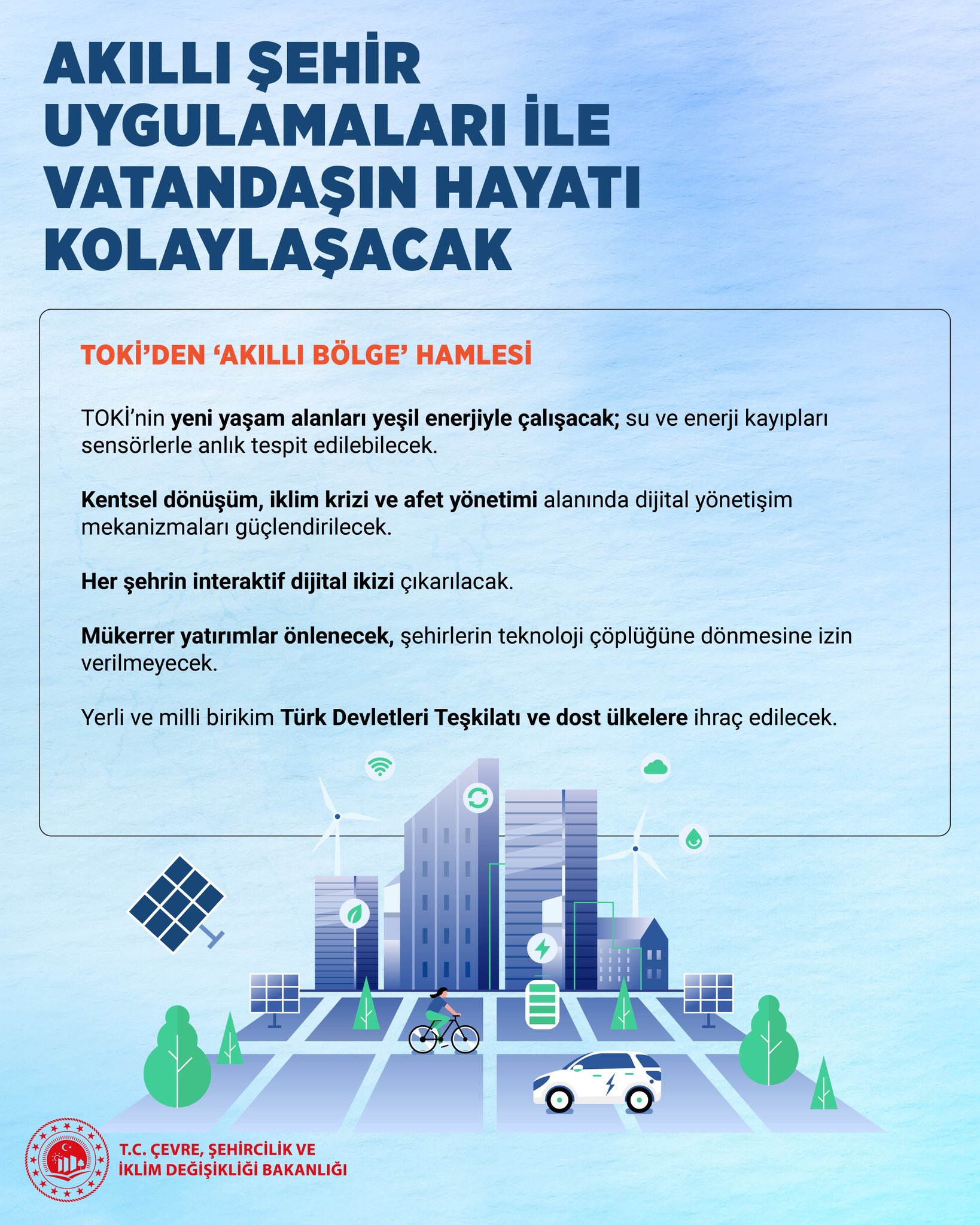
The Housing Development Administration is expected to integrate urban transformation and new housing projects through the “Smart Districts” approach. The plan envisions the use of green energy in new residential areas, the real-time detection of water and energy losses through sensors, and the implementation of environmentally sensitive designs.
Technology use in daily services to increase
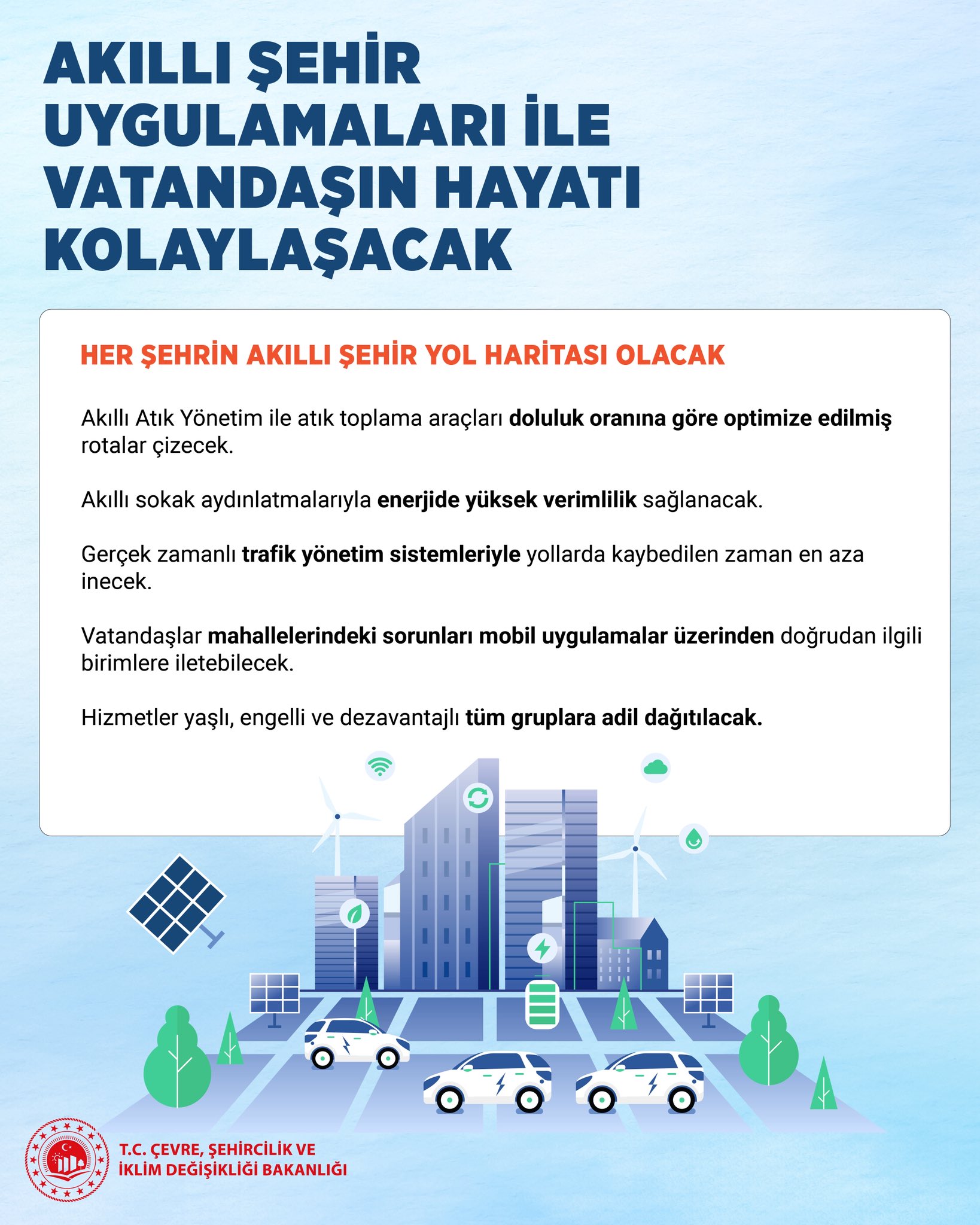
Real-time traffic management systems are expected to reduce time lost on the roads, while waste collection vehicles will generate routes based on their fill levels and smart street lighting will help save energy.
Residents will be able to report problems in their neighborhoods to the relevant departments through mobile applications. The Smart City Maturity Assessment Model is intended to measure the needs of each city separately and distribute services in a way that includes older people, people with disabilities and groups disadvantaged in accessing digital services.
Another objective of the plan is to develop international cooperation by exporting Türkiye’s domestic expertise in smart cities to countries in the wider region, particularly members of the Organization of Turkic States.
Stay Updated with The Turkiye Times
Subscribe to be informed about special news, developments and announcements. We will keep you informed.
By signing up, you agree to our Privacy Policy

















