Treasury and Finance Minister Mehmet Şimşek joined the Global Emerging Markets Conference organized by S&P Global remotely and evaluated the global economy, geopolitical developments and Türkiye's economy.
Addressing recent developments in the fund markets, Şimşek said that funds linked to troubled portfolio management companies had been quarantined. Şimşek said the liquidation and resolution process for those funds had begun.
Şimşek said the measures taken had largely prevented the problem from spreading to the rest of the financial system. He said the impact on the fund markets was limited and noted that there was no systemic problem.
Global economy and trade routes
Şimşek said the world was experiencing one of the most complex geopolitical environments of recent years and that fragmentation in trade had become the baseline scenario. Saying that supply chains were being rebuilt around security concerns, Şimşek noted that geopolitical disruptions were important for Türkiye, which depends on energy imports.
Şimşek said Türkiye had built buffers against shocks and was maintaining strong policies, adding that steps would be taken in the medium term to turn the country's geographic position into an advantage.
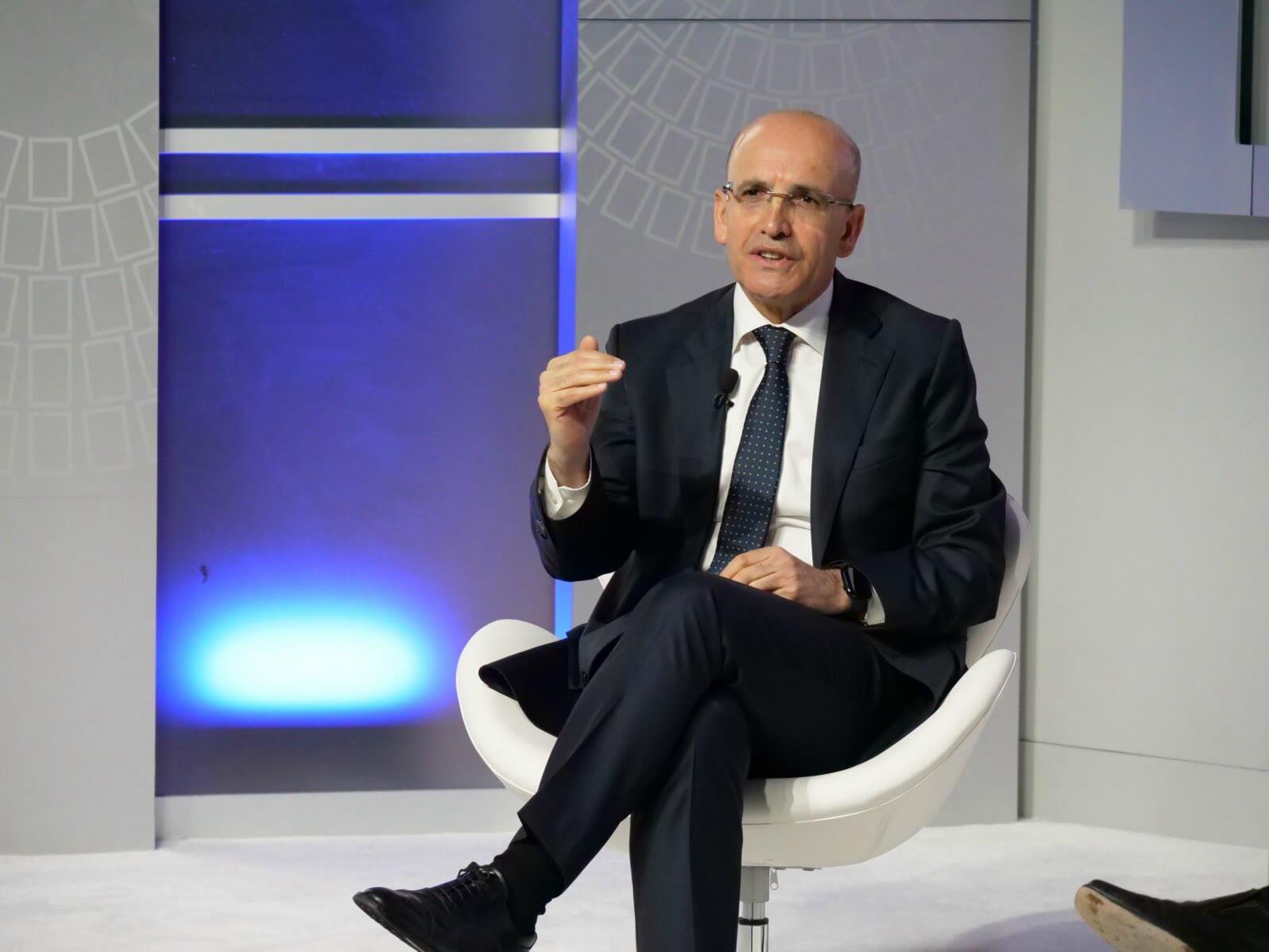
Şimşek also assessed the Mecca Joint Defense Agreement between Türkiye and Saudi Arabia, saying the agreement had ushered in a new period in relations between the two countries. Şimşek said the region needed new and reliable energy and trade routes, adding that Türkiye and Saudi Arabia were positioned to connect the Gulf Cooperation Council countries with Europe and China through Türkiye's existing infrastructure.
Şimşek said Türkiye was part of the Middle Corridor and noted that energy produced in the Gulf could be delivered to European markets through new trade routes and pipelines. He said the agreement could play a role not only in defense but also in implementing free trade agreements for countries in the region.
Growth and inflation expectations
Şimşek said Türkiye's economy was expected to grow by approximately 3 percent this year and that the current account deficit as a share of national income could remain slightly above projections. He said these developments were manageable and noted that budget performance remained strong compared with targets.
Şimşek said high energy prices posed a challenge for energy-importing countries, adding that this would not change the direction of the economic program. Saying that the program had been designed to absorb shocks, Şimşek said Türkiye's economy had demonstrated its resilience.
Şimşek said weakening demand was among the factors that would affect inflation over the next 12 to 18 months. He said core goods inflation was below 16 percent and noted that weak demand was limiting companies' pricing power.
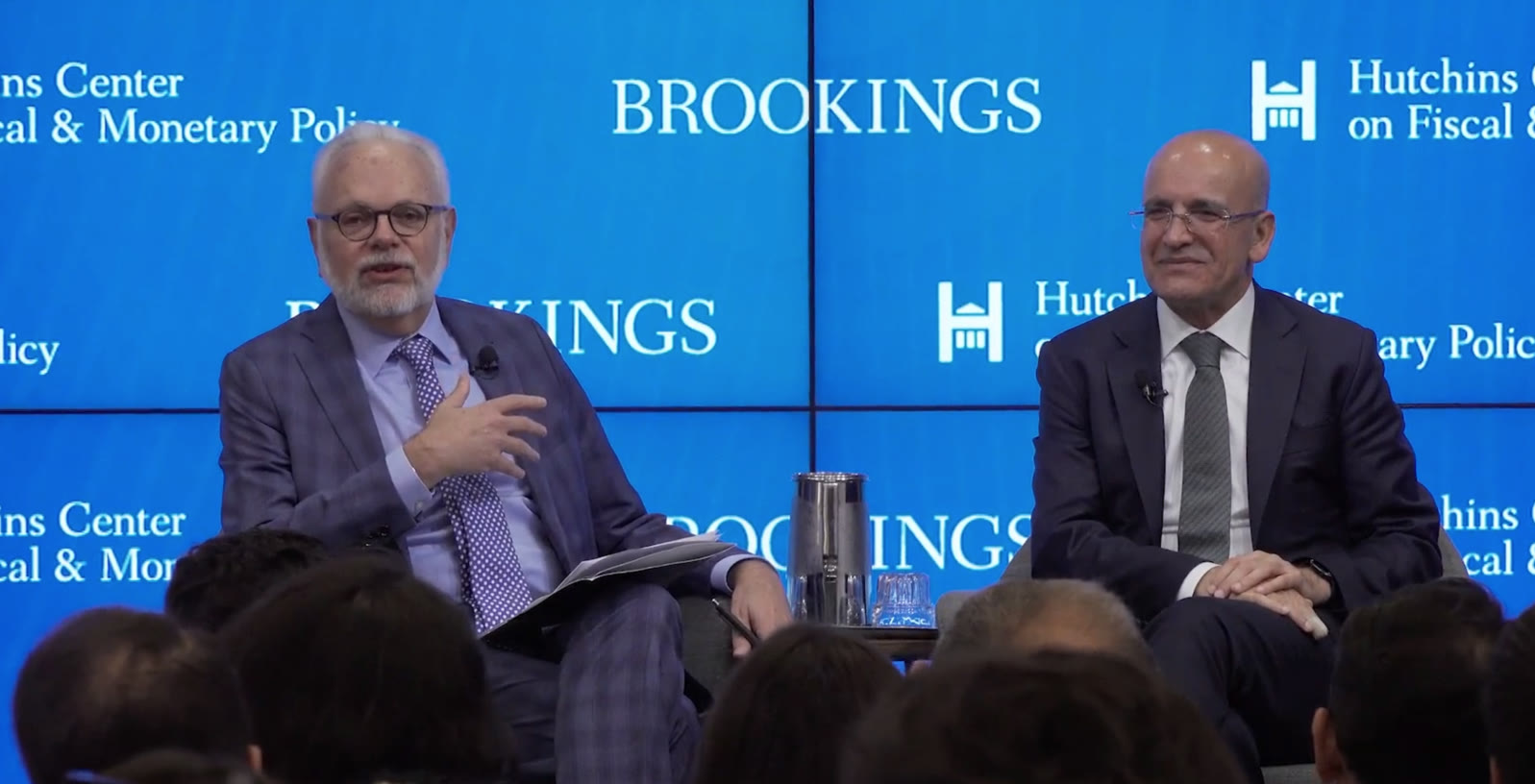
Şimşek also addressed the impact of high energy prices on inflation, saying that according to calculations by the Central Bank of the Republic of Türkiye, inflation could have been approximately 7 percentage points lower if there had been no war. He said a decline in oil and other commodity prices could support the disinflation process.
Şimşek said progress had been made in tackling inertia and rigidity in services inflation, noting significant improvement in rent and education inflation. He said transportation services had experienced an exception stemming from the war.
Economic program and the election process
Şimşek also assessed discussions about snap elections, saying speculation in that direction was unfounded. He said there would be no change in the direction of the economic program during the run-up to the elections, adding that fighting the cost of living was crucial for political success.
Şimşek said lowering inflation was the key to improving income distribution and that there would be no room for populist deviations. He announced that the focus in the pre-election period would be on increasing the supply of social housing, implementing active labor market policies, facilitating access to finance for SMEs and improving income distribution.
Şimşek said these four policies did not amount to an extensive election economy, adding that they had already been incorporated into the 2027 budget.
In a separate statement, Şimşek also said work on the troubled funds was continuing through coordination among institutions and that the necessary steps were being taken to make the highest possible payments to investors as soon as possible. Saying that the Ministry of Justice was firmly pursuing the legal process to protect investors' rights and ensure that those responsible were held accountable, Şimşek recalled that the current account deficit stood at 2.6 percent of national income, gross external debt at 32 percent and public debt at 22 percent.














