- BIST10012,151-0.94%
- USD49.220.00%
- EUR55.21+0.28%
- GOLD4,192.30-0.57%
- INTEREST37.00%-1.00
- BITCOIN82,747-1.11%
- October 12, 202619°
- BIST10012,151-0.94%
- USD49.220.00%
- EUR55.21+0.28%
- GOLD4,192.30-0.57%
- INTEREST37.00%-1.00
- BITCOIN82,747-1.11%
- October 12, 202619°
NASA Vice President Anderson calls competition with China ‘Space Race 2.0’
NASA Vice President Matt Anderson described the ongoing competition with China as ‘Space Race 2.0’ and said the International Space Station would be safely deorbited when its service life ends.


NASA Vice President Matt Anderson said they expected space cooperation between Türkiye and the United States to enter a new phase after Türkiye signed the Artemis Accords.
Anderson assessed Türkiye’s space program during the 77th International Astronautical Congress, held at the NEST Congress Center in Antalya. Organized by the International Astronautical Federation, the congress is being held under the coordination of the Ministry of Industry and Technology, with the support of the Turkish Space Agency and SAHA Istanbul.
The Artemis Accords and plans for a lunar base
Anderson said Türkiye had recently joined the Artemis Accords and that 76 countries were party to the agreement. He said Türkiye could contribute, alongside other participants, to plans for a base on the Moon.
Anderson said this cooperation could create opportunities for Turkish engineers, scientists and potential astronauts, as well as for technologies that could contribute to the construction of the lunar base. The NASA executive said space had become a national priority for Türkiye and that the Artemis Accords clearly demonstrated this.
The distinction between civilian and security activities in space
Commenting on last month’s statement concerning the United States placing weapons in space, Anderson said the United States was a leader in three areas of space activity. He said NASA conducted peaceful space research, while the national security dimension was handled by the United States Space Force and United States Space Command.
Anderson said this distinction was a fundamental difference that NASA considered when establishing partnerships with other government agencies.
Goals for the Moon and Mars
Assessing the possibility of China landing humans on the Moon before the United States, Anderson recalled that the United States had won the space race in the 1960s and 1970s. He described the current period as “Space Race 2.0” and said it was a competition focused on civilian and scientific exploration.
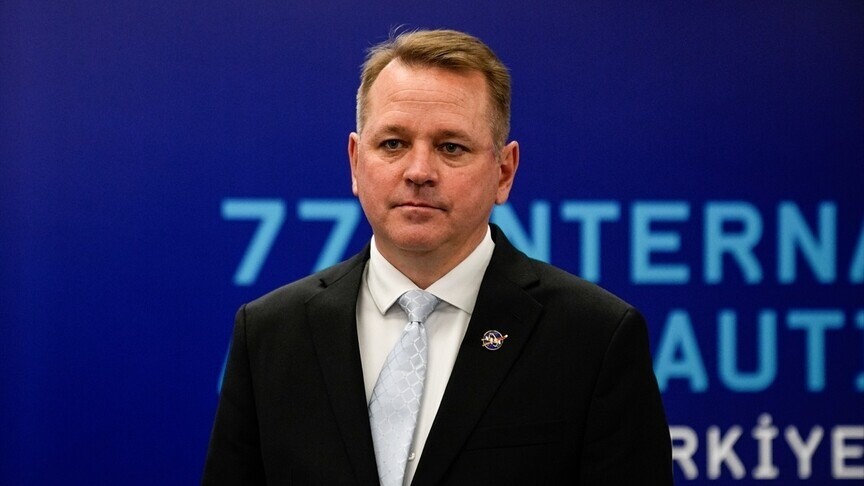
Anderson said NASA aimed during the Artemis era to establish a long-term presence on the lunar surface, build a lunar base and learn more about the Moon’s surface. He said the next stage would be advancing to Mars and beyond.
Plans to safely deorbit the International Space Station
Speaking about the end of the International Space Station’s operations, Anderson said NASA’s continuous presence in low Earth orbit had lasted for approximately 26 years.
Anderson said NASA had signed an agreement with a company that would ensure the station was safely brought back to Earth when its service life ended, adding that this would be used to deorbit the station.
Artificial intelligence and space exploration
Asked for his views on granting artificial intelligence autonomy in space, Anderson said there was no need for concern. He said U.S. President Donald Trump had brought together leading experts from around the world in superintelligence to address the issue, adding that the process could be managed properly under U.S. leadership.
Anderson said he was excited about Türkiye’s future in space and its role in the growing international space community, as well as the possibility of cooperation with NASA.
Stay Updated with The Turkiye Times
Subscribe to be informed about special news, developments and announcements. We will keep you informed.
By signing up, you agree to our Privacy Policy