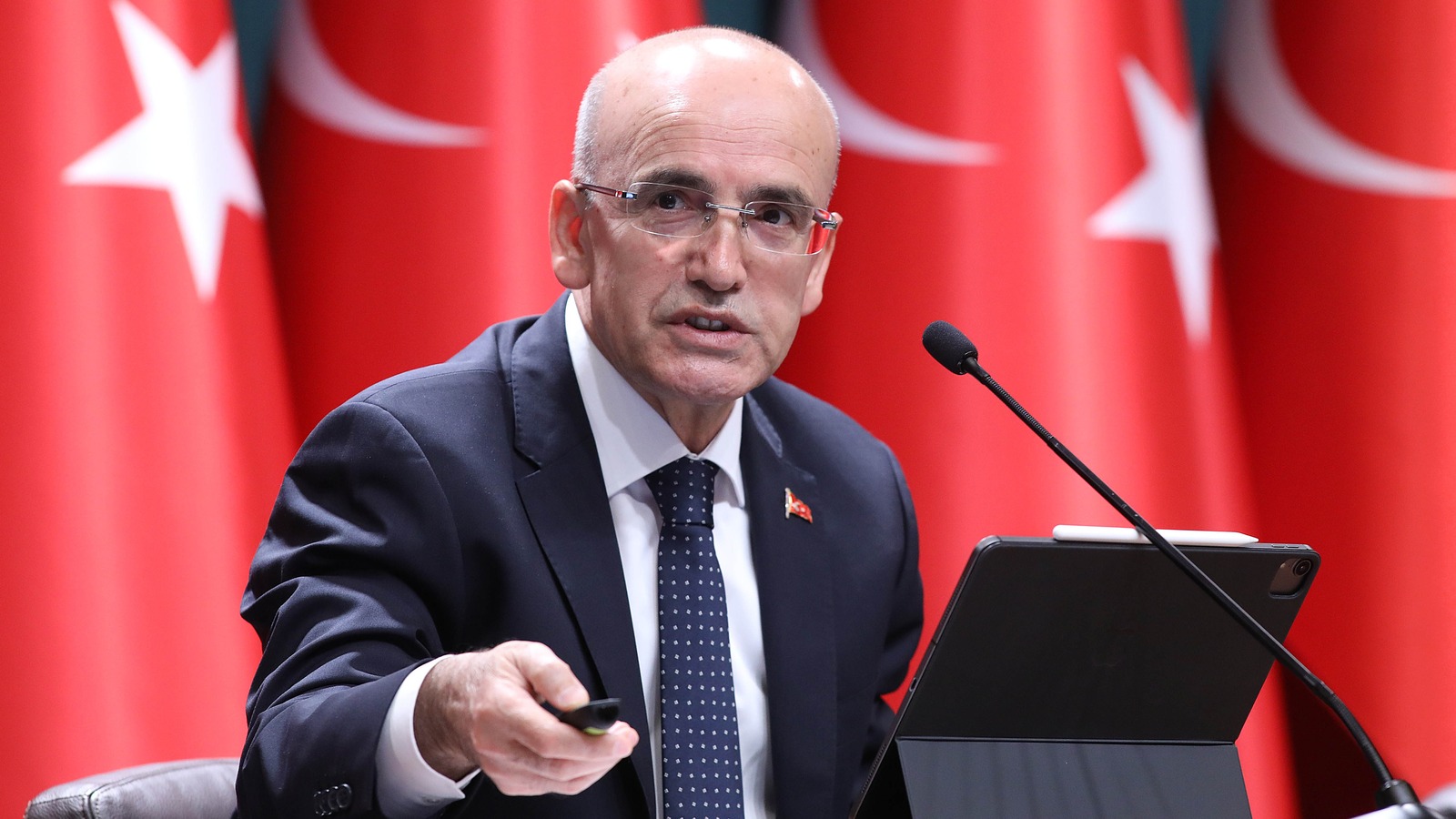
Treasury and Finance Minister Mehmet Şimşek made key assessments on fiscal discipline and the disinflation process after Türkiye's central government budget results for July were released.
Şimşek said they were moving forward without deviating from their budget targets despite the negative effects of geopolitical developments on the economy and public finances. He said the fiscal space created by improving the effectiveness of revenue policies and keeping spending under control would be directed toward priority areas.
July's budget data presented a notable picture on both the revenue and expenditure sides.
The central government budget posted a TL 378 billion 105 million deficit in July, while the total budget deficit in the first seven months of the year reached TL 1 trillion 320 billion 940 million.
A TL 378.1 billion budget deficit in July
According to Treasury and Finance Ministry data, central government budget expenditures amounted to TL 1 trillion 790 billion 502 million in July.
Budget revenues stood at TL 1 trillion 412 billion 397 million in the same period.
As a result of the difference between revenues and expenditures, the central government budget posted a TL 378 billion 105 million deficit in July.
The budget deficit had stood at TL 23 billion 862 million in the same month last year.
Accordingly, the July budget deficit increased significantly compared with the same period last year.
Budget expenditures rose 59.8 percent
The annual increase in central government budget expenditures in July was notable.
Budget expenditures, which stood at approximately TL 1 trillion 120.8 billion in July 2025, rose 59.8 percent to TL 1 trillion 790.5 billion in the same month of 2026.
Interest expenditures amounted to TL 326 billion 764 million in July, while budget expenditures excluding interest stood at TL 1 trillion 463 billion 738 million.
The annual increase in expenditures excluding interest was 48.4 percent.
The sharp rise in budget expenditures was one of the main factors behind the widening of the monthly budget deficit.
Primary balance also posted a deficit in July
Another important indicator in July was the primary budget balance.
In July last year, the central government budget posted a TL 110 billion 726 million primary surplus.
In July 2026, however, the primary budget balance posted a TL 51 billion 341 million deficit.
Nevertheless, the January-July period presents a different picture when assessing performance over a period covering nearly the entire year.
Primary surplus reached TL 470 billion in the first seven months
The indicator Şimşek particularly emphasized was the primary budget surplus in the January-July period.
The primary surplus, which was TL 241 billion 688 million in the first seven months of 2025, rose to TL 470 billion 73 million in the same period of 2026.
Thus, the primary budget surplus increased by approximately TL 228 billion compared with the same period last year.
Şimşek emphasized that the primary surplus was one of the important indicators contributing to a reduction in the public debt burden.
The primary balance shows the difference between the government's revenues and expenditures excluding interest expenses.
For this reason, a primary surplus is considered an important indicator of the extent to which public finances can generate revenue independently of debt-interest payments.
First seven-month budget deficit reached TL 1.32 trillion
Central government budget expenditures totaled TL 10 trillion 520 billion 682 million in the January-July period.
Budget revenues stood at TL 9 trillion 199 billion 742 million in the same period.
As a result, the central government budget posted a TL 1 trillion 320 billion 940 million deficit in the first seven months.
The budget deficit had stood at approximately TL 1 trillion 4 billion in the same period last year.
Accordingly, the total budget deficit was nominally higher than last year, while the improvement in the primary balance became one of the key indicators highlighted by fiscal management.
Interest expenditures reached TL 1.79 trillion in the first seven months
Interest expenses accounted for TL 1 trillion 791 billion 13 million of total central government expenditures in the January-July period.
Expenditures excluding interest reached TL 8 trillion 729 billion 669 million.
Central government budget expenditures rose 36.6 percent year on year, while the increase in expenditures excluding interest was 35.3 percent.
The weight of interest expenses in the budget remains one of the closely monitored issues for the public finances' borrowing and interest policies in the coming period.
Budget revenues rose 28.8 percent in July
There was also a significant annual increase on the revenue side.
Central government budget revenues, which stood at approximately TL 1 trillion 96.9 billion in July last year, rose 28.8 percent to TL 1 trillion 412.4 billion in the same month this year.
Tax revenues rose 30 percent to TL 1 trillion 234 billion 842 million in July.
General budget non-tax revenues stood at approximately TL 145.6 billion.
However, expenditures rising 59.8 percent against a 28.8 percent increase in revenues caused the monthly budget deficit to widen.
Şimşek emphasizes sliding-scale tax system
While assessing budget performance, Mehmet Şimşek also drew attention to the sliding-scale tax system used by the government as part of its fight against inflation.
Şimşek said a significant amount of tax revenue had been forgone under the sliding-scale system to support the disinflation process.
The sliding-scale system aims to limit the impact of price increases on consumers, particularly by partially or fully offsetting increases in fuel prices through the Special Consumption Tax.
While this policy can reduce pressure on inflation, it means the state forgoes some tax revenues it would otherwise collect.
Şimşek maintained that they were advancing in line with their budget targets despite this loss of revenue.
Rebalancing domestic demand affects revenues
Another factor highlighted by Şimşek was the rebalancing of domestic demand.
Under the economic program, bringing consumption demand to a more moderate level is considered important for reducing inflation.
However, slowing domestic demand can also affect the performance of consumption-linked public revenues, such as taxes collected through VAT, the Special Consumption Tax and imports.
Şimşek said the rebalancing of domestic demand was affecting revenue performance, but that they were nevertheless moving forward in line with their budget targets.
Domestic debt rollover ratio at 87 percent
Minister Şimşek also provided information on the Treasury's borrowing policy alongside the budget results.
Şimşek said financing conditions were being taken into account and announced that the domestic debt rollover ratio had been kept at 87 percent.
The debt rollover ratio is one of the key public finance indicators showing how much of maturing debt is financed through new borrowing.
A ratio below 100 percent means that the entire amount of maturing debt is not covered by new borrowing.
Şimşek's emphasis on this figure is viewed as part of the Treasury's strategy to limit its financing needs and preserve public debt sustainability.
Fiscal discipline is part of the disinflation program
In the Treasury and Finance Ministry's economic program, fiscal policy is being used alongside monetary policy as one of the main tools for lowering inflation.
Controlling the increase in public spending and limiting the budget deficit can support the disinflation process by reducing aggregate demand in the economy.
In his latest assessment, Şimşek also emphasized that greater effectiveness in revenue policies and spending discipline would continue.
The minister said the fiscal space created by these policies would be directed toward areas the government considers priorities.
Budget target emphasized despite geopolitical developments
In his statement, Şimşek also raised the negative effects of global and regional geopolitical developments on the economy.
The minister said geopolitical risks that put pressure on energy prices, foreign trade and financing conditions could also affect public finances, but maintained that fiscal discipline had nevertheless been preserved.
Şimşek's message was that the government's current economic program would also continue on the budget side.
July figures highlighted two different indicators
The latest budget data reveal two different trends at the same time.
On a monthly basis, July's high budget deficit of TL 378.1 billion and primary deficit of TL 51.3 billion stand out.
In the first seven months of the year, by contrast, the total budget deficit reached TL 1.32 trillion, while the primary balance posted a TL 470.1 billion surplus.
For the Treasury and Finance Ministry, the increase in the primary surplus is considered one of the key indicators showing that fiscal discipline is being maintained.
At the same time, the trajectory of budget revenues, interest expenses, public spending and the effects of geopolitical developments on the budget in the coming months will determine whether year-end targets are met.
Mehmet Şimşek set out the government's message clearly: Effectiveness in revenue policies and spending discipline will continue, the fiscal space created will be directed toward priority areas, and budget policy will continue to support the disinflation process.