Treasury and Finance Minister Mehmet Şimşek said the war had increased pressure on inflation in Türkiye by driving up energy and commodity prices. An assessment attributed to Şimşek said inflation would have been at least 7 percentage points lower and would have stood at approximately 24.5 percent if there had been no war.

This calculation presents a different estimate of the war’s impact on the economy through energy prices than earlier assessments. In previous statements, Şimşek said that if oil prices remained around $81, they could add approximately 3 percentage points to inflation. In another assessment, he said the war-related energy and commodity shock had created additional pressure of at least 5 percentage points.
Energy prices affect the economy through several channels
As an energy importer, Türkiye transmits changes in oil, natural gas and other commodity prices to the economy through costs. Higher energy prices affect fuel prices and production expenses, while they can also put pressure on the current-account balance, terms of trade and inflation expectations.
Fiscal measures such as waiving the fixed-rate special consumption tax on fuel and using a sliding-scale mechanism were employed to limit the pass-through of higher energy costs to consumer prices. These measures aim to cushion households from the global energy shock, but they can also place a burden on public finances.
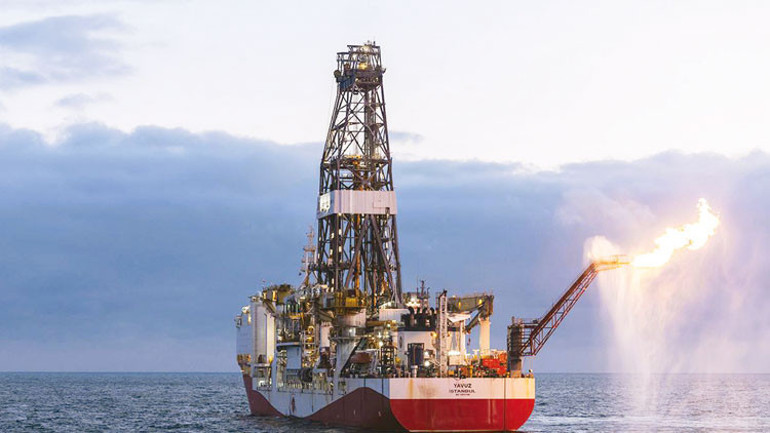
Assessment of the disinflation process
Şimşek argued that supply-side pressure on energy prices had temporarily interrupted the disinflation process, but that the process had resumed. Statements reflecting the ministry’s position also said the aim was to limit the impact of the global energy shock through budgetary resources and fuel policies.
Şimşek also said Türkiye had not faced a direct supply problem in terms of energy security, and that the main risk was price increases and the pressure they placed on the current-account balance. In this context, the impact of the war is being assessed not only through the energy bill but also through foreign trade and tourism.

However, it has not been clarified which date, inflation data and economic assumptions underpin the calculation of a 7-percentage-point impact and an inflation rate of approximately 24.5 percent. The use of different estimates of 3 and 5 percentage points in earlier assessments means the new figure should be treated not as a finalized inflation measurement but as an assumption-based scenario or policy assessment.
















