- BIST10012,151-0.94%
- USD49.220.00%
- EUR55.21+0.28%
- GOLD4,195.90+0.13%
- INTEREST37.00%-1.00
- BITCOIN82,500-1.40%
- October 13, 202618°
- BIST10012,151-0.94%
- USD49.220.00%
- EUR55.21+0.28%
- GOLD4,195.90+0.13%
- INTEREST37.00%-1.00
- BITCOIN82,500-1.40%
- October 13, 202618°
TÜME Foundation develops AI-powered autonomous agricultural vehicle
The TÜME Foundation introduced its AI-powered autonomous ground vehicle at TEKNOFEST at Şanlıurfa GAP Airport. The vehicle can spray crops, detect diseases and monitor plants in greenhouses, then return to the charging station after completing its task.


The AI-powered autonomous ground vehicle developed by the TÜME Foundation was introduced at the Aviation, Space and Technology Festival (TEKNOFEST), held at Şanlıurfa GAP Airport. Displayed in the TÜME Event Area, the vehicle can move without human intervention, detect its surroundings using sensors and perform various tasks with image-processing technology.
Mehmet Fatih Özay, a member of the TÜME Foundation's board of directors, said they aim to reduce labor requirements and costs in agriculture by using autonomous technologies. Özay said the platform was developed for different purposes and that they were focusing particularly on blueberry production in greenhouses.
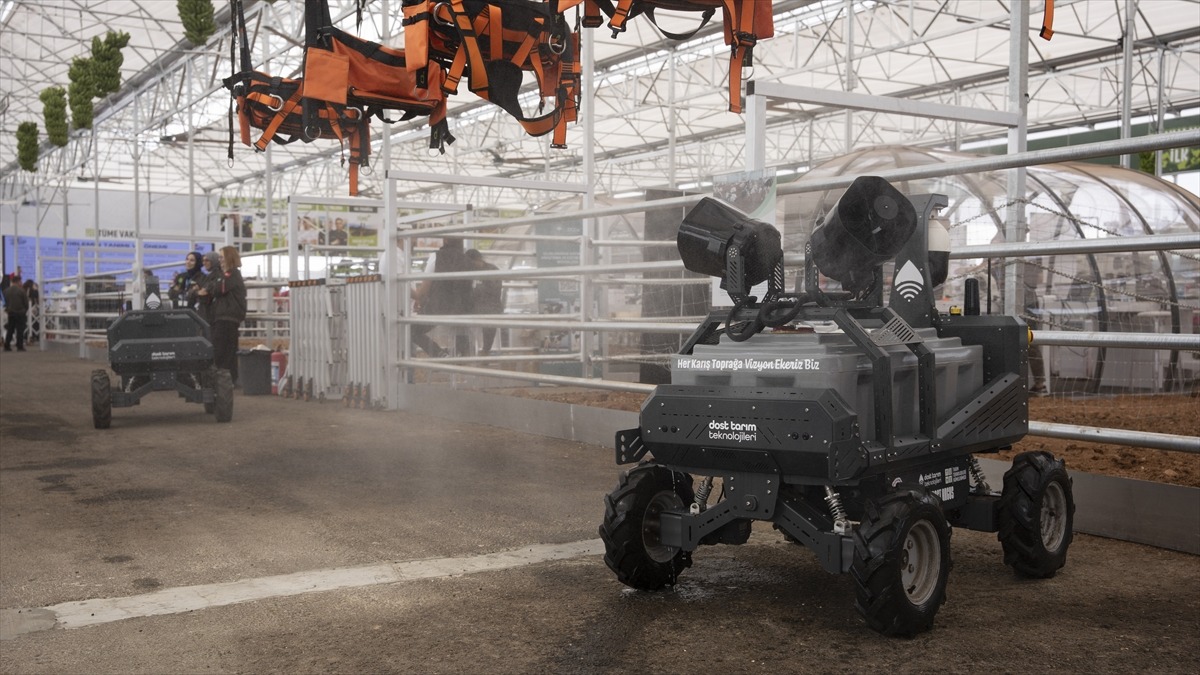
Özay said greenhouse spraying requires significant labor and comes at a high cost, adding that the vehicle can recharge itself, refill its pesticide tank and move around the area to complete spraying operations. He noted that the platform could also be used with different agricultural products.
The vehicle's camera and image-processing technology enable the monitoring of crop growth and diseases. A robotic arm can be integrated into the system for harvesting, while crates and different equipment can be mounted on the platform to transport produce.
Could also be used in livestock farming
The autonomous platform is being designed for use in livestock farming with different attachments. The vehicle can be converted into a feed-pushing or calf-transport device, and can also mix compost, distribute feed and push feed.
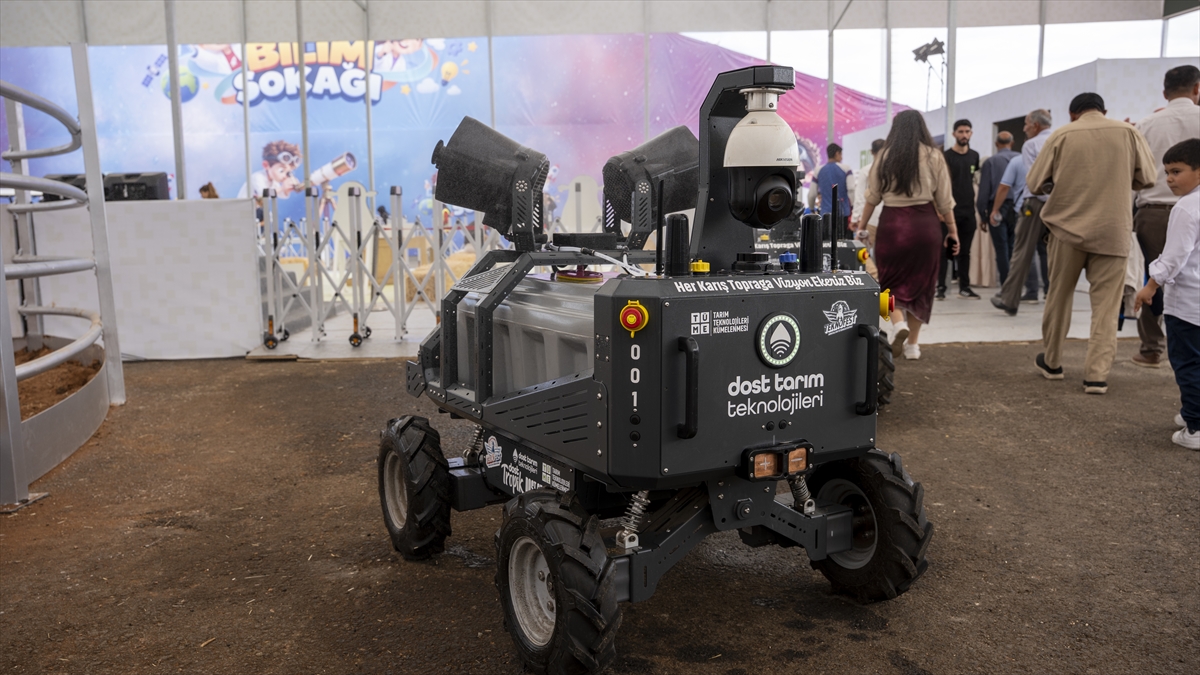
Robotics Engineer Ali Altın said the vehicle was designed particularly for spraying in greenhouses. He said they had developed a system that can move autonomously using cameras and lidar sensors because drones cannot be used in greenhouses.
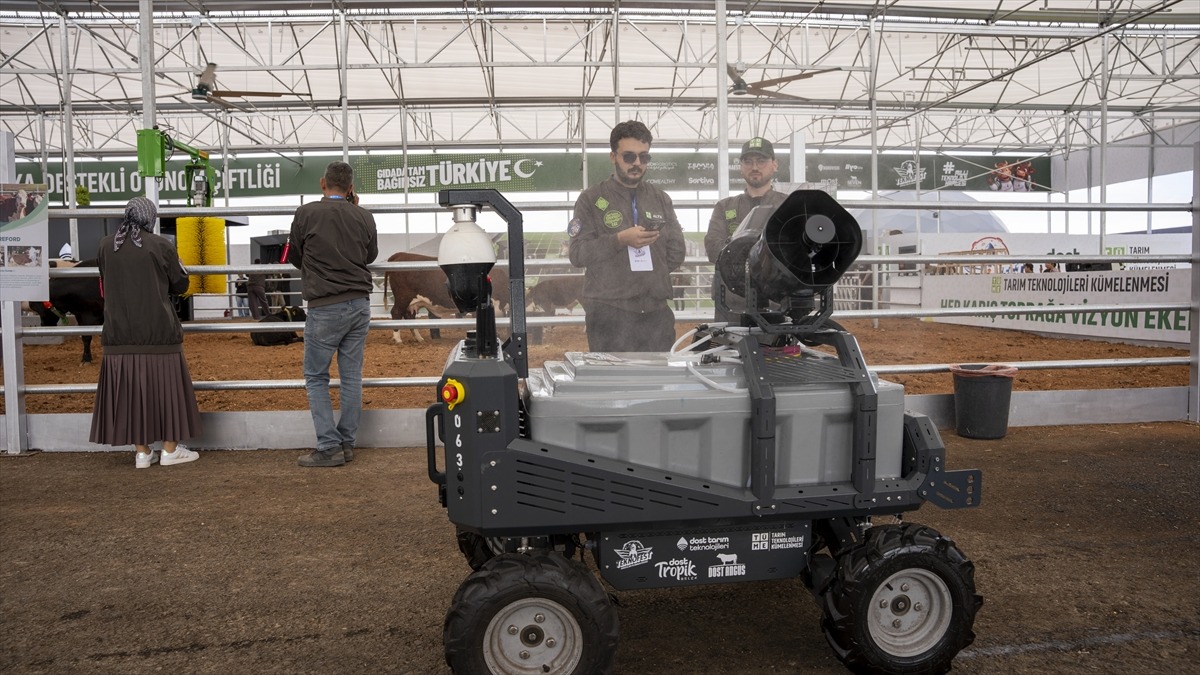
Altın said disease analysis can be performed using the camera at the front of the vehicle, allowing it to identify affected areas and spray only those areas. The vehicle can be controlled through a mobile application, enabling users to set operating times and spraying frequency.
The vehicle follows the designated commands and returns to the charging station after completing its spraying task. Barış Şen, who works in the Electronics and Mechanical Research and Development Department, said the vehicle was completed in approximately 2 to 2.5 months, including software development, while the mechanical design of the first prototype took approximately one month.
Stay Updated with The Turkiye Times
Subscribe to be informed about special news, developments and announcements. We will keep you informed.
By signing up, you agree to our Privacy Policy

















