- BIST10012,151-0.94%
- USD49.220.00%
- EUR55.21+0.28%
- GOLD4,194.30-0.52%
- INTEREST37.00%-1.00
- BITCOIN82,977-0.83%
- October 12, 202619°
- BIST10012,151-0.94%
- USD49.220.00%
- EUR55.21+0.28%
- GOLD4,194.30-0.52%
- INTEREST37.00%-1.00
- BITCOIN82,977-0.83%
- October 12, 202619°
TUSAŞ and ROKETSAN sign HÜRSAT-2 agreement for Türkiye’s first satellite family designed for serial production
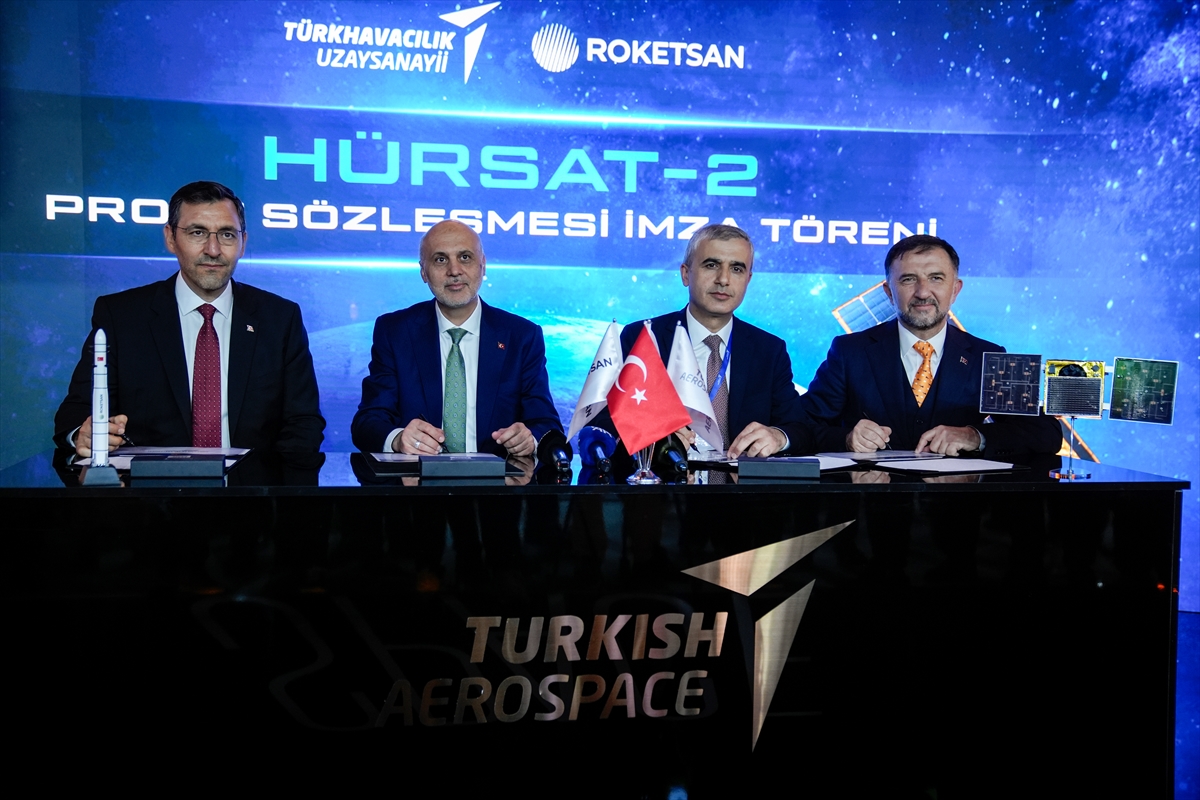
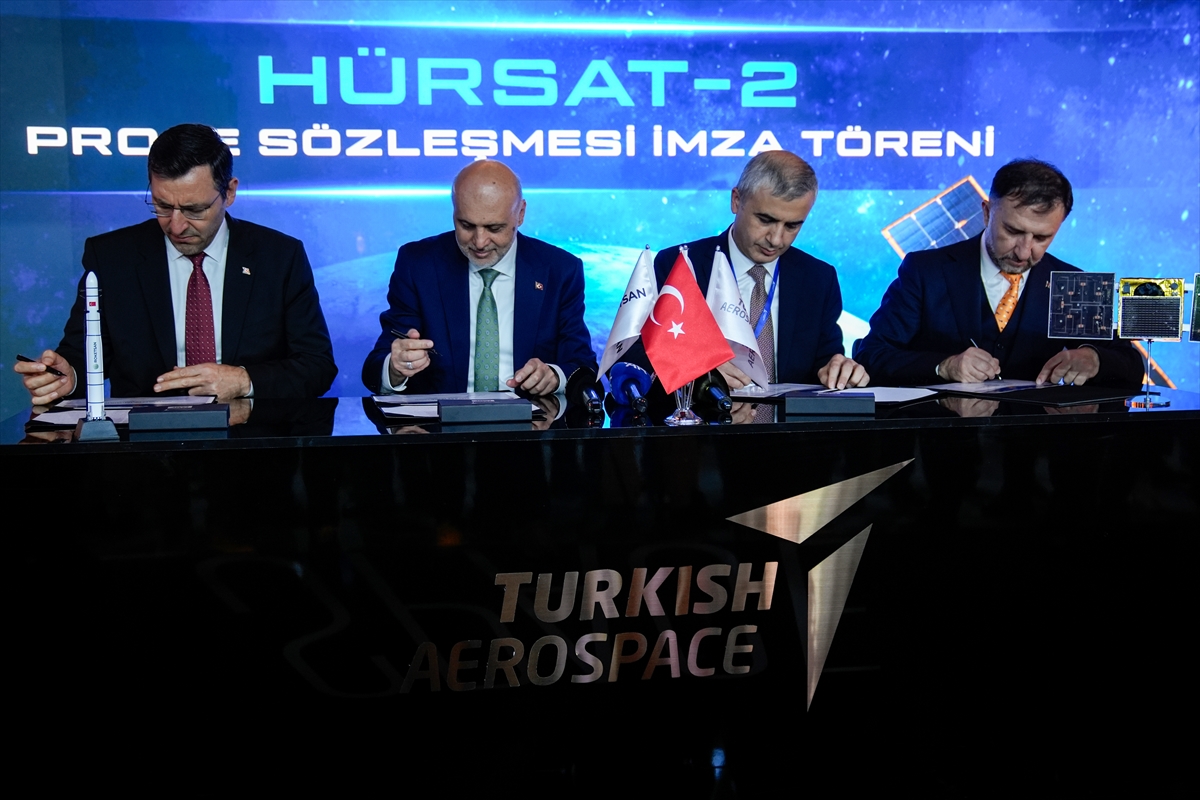
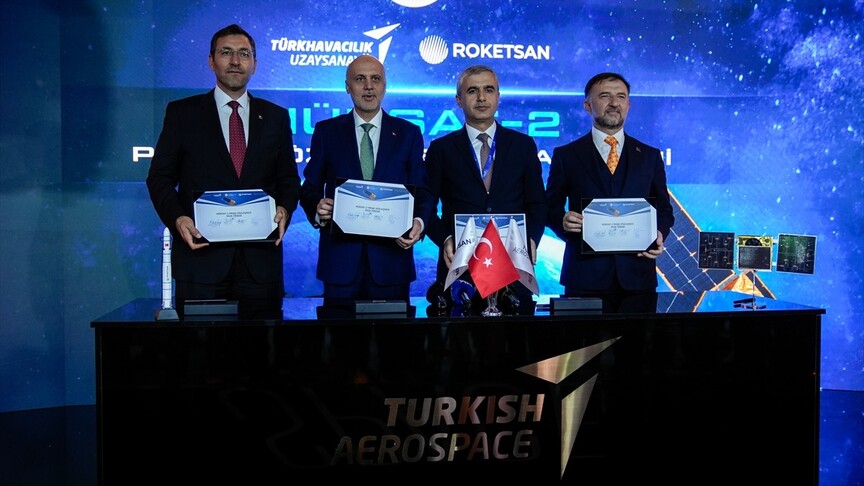
TUSAŞ and ROKETSAN signed the HÜRSAT-2 Project Agreement during the 77th International Astronautical Congress held in Antalya.


TUSAŞ and ROKETSAN signed an agreement for the second project of HÜRSAT, Türkiye’s satellite family designed for serial production. The HÜRSAT-2 Project Agreement was signed at the TUSAŞ pavilion during the 77th International Astronautical Congress at the Antalya NEST Congress Center.
Mustafa Şeker, Vice President of the Presidency of Defense Industries, Hüseyin Avşar, Vice President of the Presidency of Defense Industries, TUSAŞ General Manager Mehmet Demiroğlu and ROKETSAN General Manager Murat İkinci attended the ceremony.
The HÜRSAT family will be adapted for different missions
HÜRSAT can be configured for various mission requirements with different mass options ranging from 200 to 650 kilograms. While testing continues on HÜRSAT-1, developed by TUSAŞ, pre-launch preparations for the satellite are also continuing at TUSAŞ facilities.
HÜRSAT-1’s in-orbit missions will validate the system’s core technologies and its satellite architecture designed for serial production. The HÜRSAT-2 agreement aims to reduce the satellite family’s weight and enable HÜRSAT to be adapted to the needs of different users and missions through a common architecture rather than a structure consisting of separate projects.
Reducing production times and costs is a key objective
The project aims to reduce production times and costs, establish a sustainable supply chain and strengthen TUSAŞ’s global commercial competitiveness in the satellite sector.
The HÜRSAT family also supports a satellite constellation architecture in which multiple satellites can operate together in low Earth orbit. Increasing the number of satellites is expected to enable more frequent imaging of the same region, faster access to data and the fulfillment of different user requirements through the same satellite family.
HÜRSAT is planned to provide sub-meter resolution and wide-area imaging capabilities and is expected to operate in a sun-synchronous orbit. The satellite family will provide multi-mission capabilities through its compact satellite architecture.
An end-to-end national system architecture
The satellite computer, power and interface units, as well as ground and flight software, will be developed by TUSAŞ. TUSAŞ will also conduct command and control operations, creating an end-to-end national system architecture extending from the satellite platform to the ground segment.
ROKETSAN system to be used for launch
Speaking at the ceremony, Mustafa Şeker said an agreement had been signed to launch into space the satellite developed by TUSAŞ using the launch system developed by ROKETSAN. Şeker said the agreement brought together the cooperation of the two organizations and thanked the companies involved in the project and the personnel of the Presidency of Defense Industries.
Hüseyin Avşar said Türkiye was one of the few countries capable of producing its own satellites and that it aimed to join the countries capable of launching their own satellites in the coming period. Avşar said the goal was to launch the satellite developed by TUSAŞ into space using ROKETSAN’s launch system and the country’s own capabilities.
Mehmet Demiroğlu said Türkiye aimed not only to produce and operate its own satellites, but also to launch them and begin serial production. Demiroğlu said the HÜRSAT platform had been planned as a satellite family, with payloads, software, ground stations and operational processes to be managed domestically.
Murat İkinci said they would carry HÜRSAT into space using the launch platform developed by ROKETSAN. İkinci said the signed agreement was their first contract in this field and that they also aimed to carry the satellites of friendly and brotherly countries in later stages.
Stay Updated with The Turkiye Times
Subscribe to be informed about special news, developments and announcements. We will keep you informed.
By signing up, you agree to our Privacy Policy