- BIST10011,430-2.49%
- USD49.45+0.05%
- EUR55.62+0.37%
- GOLD4,161.50-0.47%
- INTEREST37.00%-1.00
- BITCOIN81,825-0.23%
- October 19, 202617°
- BIST10011,430-2.49%
- USD49.45+0.05%
- EUR55.62+0.37%
- GOLD4,161.50-0.47%
- INTEREST37.00%-1.00
- BITCOIN81,825-0.23%
- October 19, 202617°
A suspicious death in Irkutsk raises questions about the risk of a new outbreak
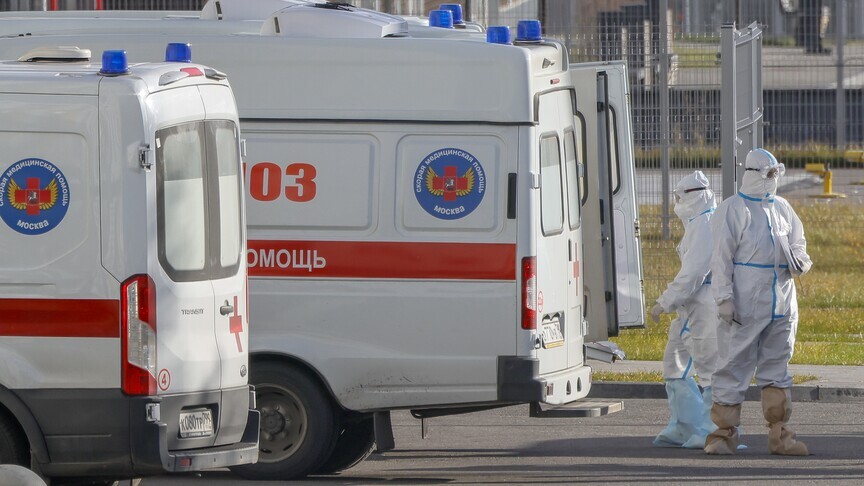
A 28-year-old laboratory technician was hospitalized in Russia’s Irkutsk on September 29, 2026, with severe pneumonia and died on October 2. More than 5,500 tests conducted on approximately 200 contacts found no disease-causing agent, prompting debate over whether the incident could mark the beginning of a new outbreak.


A 28-year-old laboratory technician working at the Siberian and Far Eastern Plague Research Institute in Russia’s Irkutsk was hospitalized with severe pneumonia on September 29, 2026, and died on October 2. After the death, approximately 200 contacts were placed under monitoring.
Russian health authorities said that more than 5,500 repeated tests on the deceased laboratory technician and those who had been in contact with the person found no disease-causing agent. They said none of the contacts had developed the disease and that the claim of a second case was untrue.
Why did the incident in Irkutsk cause global concern?
The fact that the incident occurred at an institute conducting plague research, together with the head of a neighboring region initially saying that the death had been caused by plague and later qualifying the statement by saying it was “probably” plague, caused a local health incident to quickly become an international concern.
Russia’s national public health agency, Rospotrebnadzor, described the death as “pneumonia of undetermined cause.” The agency said tests covering plague had returned negative results and that no new cases had been detected among the contacts.
The World Health Organization said it did not have a complete picture because the disease-causing agent had not been identified and called for transparency. In its assessment dated October 10, the organization said there was no evidence that the disease was spreading, but noted that the cause of death was unknown and that laboratory-acquired transmission could not be completely ruled out at that stage.
Conditions that turn a disease into an outbreak
Easy person-to-person transmission, the absence or weakness of immunity in the population, and the ability of a disease to spread without causing symptoms are decisive factors in turning a disease into an outbreak. The severe global consequences of COVID-19 were driven by its rapid transmission, the lack of immunity at the outset, and the ability of people without symptoms to spread the virus.
Studies indicate that approximately 44 percent of COVID-19 transmissions occurred before people showed symptoms. This allowed the disease to cross borders undetected while people continued going to work and using public transport and airplanes.
Even if the causative agent in the Irkutsk incident had been plague, pneumonic plague generally spreads through close face-to-face contact with people showing pronounced symptoms and can be treated with antibiotics when treatment begins early. If the agent had been another microorganism, new cases would have been expected among the approximately 200 contacts.
Although approximately 200 contacts were tested every day for a week, no new cases emerged, indicating that the chain of transmission—one of the fundamental elements of an outbreak—had not been documented in the incident. As no increase in similar cases or hospital admissions was reported in the region, the available evidence did not indicate that the incident was a harbinger of an outbreak.
Outbreak preparedness after COVID-19
The COVID-19 experience demonstrated the importance of equitable access to vaccines, medicines and tests, as well as binding cooperation among countries, alongside the early detection of threats. After the outbreak, the World Health Organization and its member states began reassessing their outbreak preparedness plans.
Amendments to the International Health Regulations that entered into force in September 2025 defined the concept of a “pandemic emergency” as a level above a “public health emergency of international concern.” Countries were asked to designate national bodies to coordinate the implementation of the regulations.
During the outbreak, countries experienced major inequalities in access to vaccines. The WHO Pandemic Agreement, adopted in May 2025, stipulated that manufacturers participating in the agreement would allocate 20 percent of the vaccines and medicines they produced during an outbreak to the World Health Organization, with at least half of that share provided as donations.
The negotiations on the agreement also addressed the need for countries encountering a new and dangerous pathogen to rapidly share information with the World Health Organization and other countries, as well as for the country providing the information to benefit fairly from the vaccines and medicines developed. However, the agreement could not be opened for signature because consensus was not reached on this issue.
Lessons from Türkiye’s outbreak experience
Türkiye’s contact-tracing organization, the rapid production of domestically developed test kits, and the establishment of PCR diagnostic and gene-sequencing capacity within a short period were cited among the country’s strengths during the outbreak. A $250 million loan from the World Bank was intended to support the development of domestic vaccine production, early-warning systems and laboratory infrastructure.
A project supported by the Pandemic Fund also aimed to integrate capacity for monitoring and assessing human, animal and environmental health. It was emphasized that outbreak preparedness requires not only international regulations but also their implementation at every level, from national laws and society to healthcare providers.
Responsibilities for the next outbreak
When facing an outbreak threat, communities need to follow reliable information from official sources rather than social media claims. Doctors need to ask about travel and occupational history in cases of unexplained illness and report suspected cases without delay.
For decision-makers, priorities include strengthening early-warning and surveillance systems, enforcing biosafety inspections at high-risk laboratories without compromise, testing national outbreak plans through exercises, and complying with international obligations to share information.
In light of the available evidence, the incident in Irkutsk is not considered the beginning of a new outbreak. However, it once again demonstrated the importance of early, complete and transparent information-sharing for global health security.
Stay Updated with The Turkiye Times
Subscribe to be informed about special news, developments and announcements. We will keep you informed.
By signing up, you agree to our Privacy Policy














