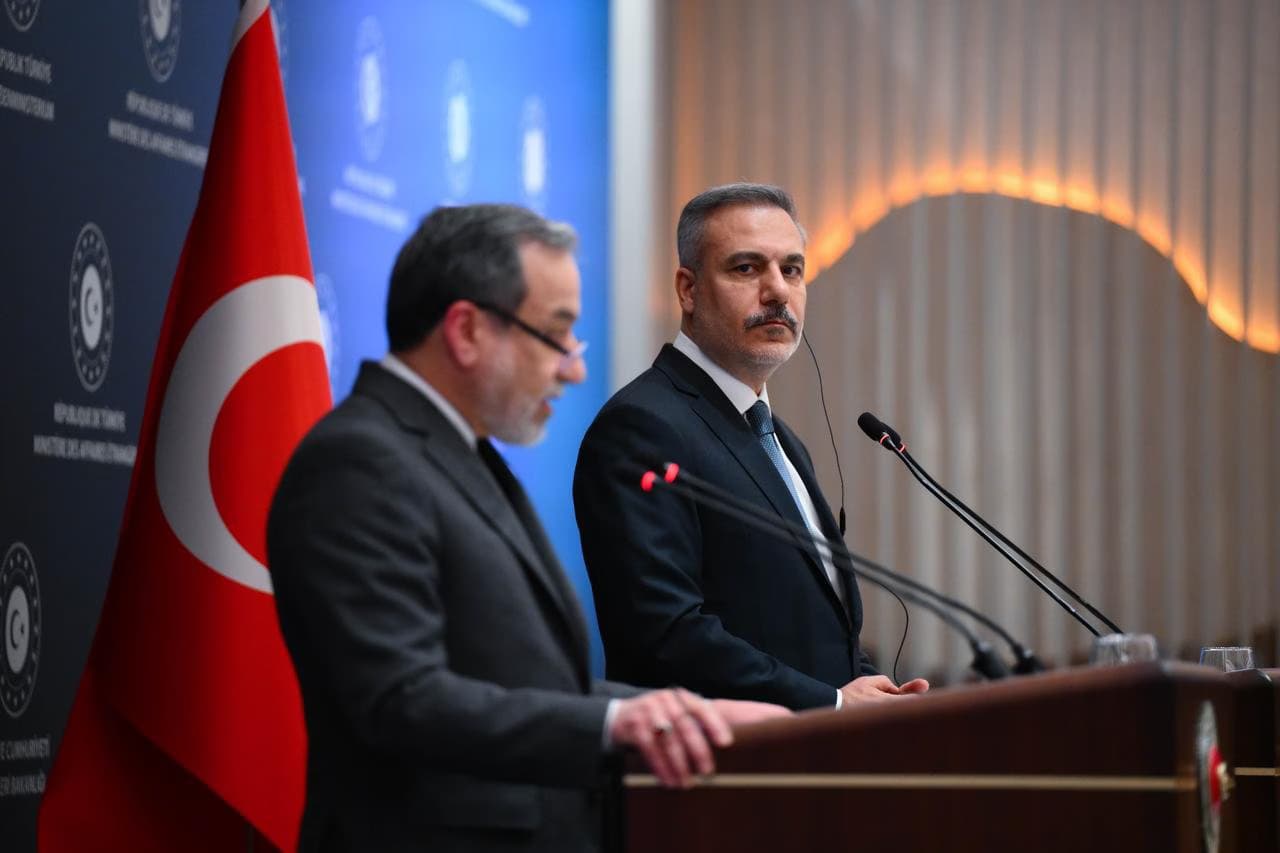
The establishment of the Turkish organization of the International Jerusalem Institution was officially announced at the 11th International Istanbul Arabic Book Fair. A Jerusalem Remembrance Program was also held to mark the anniversary of the fire that broke out at Al-Aqsa Mosque on August 21, 1969.
Prof. Dr. Ahmed Ağırakça, chairman of the board of directors of the International Jerusalem Institution, spoke about Jerusalem’s importance. Ağırakça said that hope for the future liberation of Jerusalem had been passed on to future generations and that this hope had grown after the Al-Aqsa Flood.
Ağırakça said that the International Jerusalem Institution was established in 2006 under the leadership of Sheikh Yusuf al-Qaradawi, the founding chairman of the International Union of Muslim Scholars. He said he had been working at the institution and serving on its board of trustees since 2007, adding that he had recently been included on the board of directors.
Ağırakça said it had been decided to continue the institution’s work in Istanbul after the war prevented activities from continuing in Beirut. He announced that they planned to continue the institution’s activities in Istanbul’s Fatih district.
Four warnings about threats to Al-Aqsa Mosque
Yasin Hammoud, director general of the International Jerusalem Institution, said the organization publishes a comprehensive and analytical report every year on the situation of Al-Aqsa Mosque under occupation. Hammoud said the warning level had been raised to its highest point for three threats in this year’s report.
- The possibility of imposing a physical division by taking control of the eastern courtyards of Al-Aqsa Mosque.
- The possibility of a large-scale attack on the mosque, arson or an explosion following an increase in provocations.
- The possibility of eliminating the remaining elements of the historic status quo at Al-Aqsa Mosque and ending the role of Islamic endowments.
Hammoud argued that the fourth threat to Al-Aqsa Mosque’s future was the weakness and division among Arabs and Muslims. Saying that the governments of some Arab and Muslim countries had moved away from condemning Israel’s attacks, Hammoud stated that joint statements were not enough.

Call for joint action for Gaza and Palestine
Prof. Dr. Ali Muhyiddin al-Qaradaghi, chairman of the International Union of Muslim Scholars, claimed that Israelis wanted to destroy Al-Aqsa Mosque and rebuild what they call the Temple of Solomon. Qaradaghi said efforts were being made to justify this objective on religious, historical and archaeological grounds, but that these claims did not reflect reality.
Stating that every Muslim had a responsibility regarding Al-Aqsa Mosque, Qaradaghi said the people of Gaza and Palestine were waging a major struggle. He argued that this struggle had shaken Israel’s international standing and support network and that social changes had taken place in Europe and the United States regarding the Palestinian issue.
Qaradaghi called on the leaders of Muslim countries to act jointly to protect Gaza and Al-Aqsa Mosque, delivering the message: “Protect Gaza, protect Palestine.” Calling on scholars to adopt a common position on Palestine, Qaradaghi also urged media professionals to explain the Palestinian issue to the world and inform the public.
Qaradaghi also called on the Muslim community to stand with Gaza through material and moral means. Stating that the eight categories eligible to receive zakat should be considered in the context of Gaza and Palestine, he called for the necessary support to be provided to Gaza.
Jerusalem through the lenses of history, law and culture
Academic Prof. Dr. Yasin Aktay said he was a member of the International Jerusalem Institution and had followed its work since its establishment. Aktay said Jerusalem was not merely a geographical area or a historic city, but an important part of humanity’s shared religious and historical memory through memory, the qibla, Isra and Mi'raj.
Aktay said Israel’s occupation of Jerusalem did not merely mean taking control of a city, describing it as an attack on the city’s historical identity, civilizational mission and humanity’s shared memory. He argued that the policies of killing, forcibly displacing, starving and destroying Palestinian communities should be regarded as crimes against humanitarian values and the common cultural heritage.
Aktay said the Jerusalem issue should be addressed beyond daily political developments through the areas of history, law, urban planning, culture, humanity, memory and civilization. He noted that the institution brings together scientific research, education, publishing, documentation, legal work and international cooperation.
Dr. Hisham Yacoub, head of the Research and R&D Department of the International Jerusalem Institution, and senior researcher Ali Ibrahim also spoke at the program. A video message from Sheikh Ikrima Sabri, the former mufti of Jerusalem and Palestine, imam preacher at Al-Aqsa Mosque and chairman of the Supreme Islamic Council of Jerusalem, was also shown to participants.
Establishment of the International Jerusalem Institution
The International Jerusalem Institution addresses the Jerusalem issue not only from a political perspective but also through the perspectives of history, culture, law, education, urban planning, architecture, human rights and civilization. Its areas of work include scientific research, the protection of cultural heritage, producing accurate information, raising international awareness and developing cooperation among institutions.
The idea of establishing the institution was raised at the 3rd Arab-Islamic Congress held in Beirut on October 21, 2000. The congress decided to establish an independent civil organization to preserve Jerusalem’s historical identity, conduct scientific studies and operate internationally.
Following preparatory work, the Founding Congress was held in Beirut on January 28, 2001. Approximately 2,000 people from 46 countries and different regions attended the congress, where academics, lawyers, scholars and intellectuals, civil society representatives and public opinion leaders supported the idea of establishing the institution.
The institution was later registered by the Council of Ministers of the Republic of Lebanon. During its founding period, the 282-member Board of Trustees brought together scholars, academics, lawyers, cultural figures and civil society representatives from different countries; Prof. Dr. Yusuf al-Qaradawi served as the first chairman of the Board of Trustees.
Research and cultural heritage work
The institution has identified the protection of Jerusalem’s historical, religious, cultural and civilizational heritage as one of its primary objectives and supports academic research and scholarly publications. It prepares books, journals, reports and studies, and conducts archival and documentation work on the city’s memory.
The institution develops joint projects with universities and research centers and organizes conferences, symposia and workshops. It also aims to support young researchers, raise awareness about the protection of cultural heritage, build an information-based public sphere through media and digital communication tools, and support academic and legal studies concerning Jerusalem.