- BIST10012,151-0.94%
- USD49.220.00%
- EUR55.21+0.28%
- GOLD4,196.40+0.14%
- INTEREST37.00%-1.00
- BITCOIN82,472-1.44%
- October 13, 202618°
- BIST10012,151-0.94%
- USD49.220.00%
- EUR55.21+0.28%
- GOLD4,196.40+0.14%
- INTEREST37.00%-1.00
- BITCOIN82,472-1.44%
- October 13, 202618°
MÜSİAD forum explores how AI is transforming people and business
The 29th International Business Forum, held at the Istanbul Expo Center as part of MÜSİAD EXPO 2026, focused on artificial intelligence’s transformation of people and the business world.


The 29th International Business Forum, held as part of the MÜSİAD EXPO 2026 International Trade Fair, began at the Istanbul Expo Center. This year’s forum was titled “The Transformation of People and the Business World in the Age of Artificial Intelligence.”
Speaking at the opening of the forum, MÜSİAD Chairman Burhan Özdemir said that MÜSİAD, founded in 1990, is Türkiye’s largest and most widespread civil society organization. Özdemir said the association has branches in 84 countries and at 78 locations across Türkiye.
Özdemir said MÜSİAD has nearly 15,000 members and is represented by more than 60,000 companies in total, adding that the association provides employment for more than 3 million people. He said that, in addition to the figures MÜSİAD has reached, a sense of unity and solidarity was also important.
AI’s limits discussed
Özdemir assessed the changes artificial intelligence has brought to human life. Saying that AI provides systematic answers to questions, Özdemir identified passion and predictability among the technology’s main shortcomings.
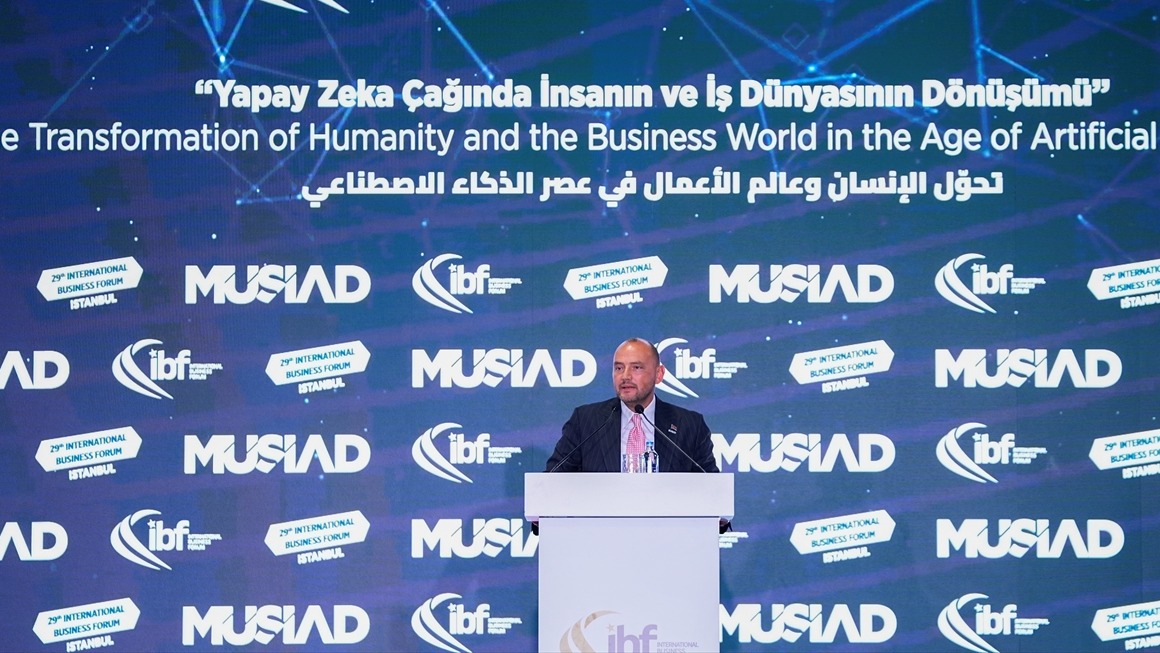
Özdemir said people can understand speeches prepared by artificial intelligence and noted that a process would unfold over time in which people would also decipher and understand AI. He said AI makes decisions analytically and independently of emotion.
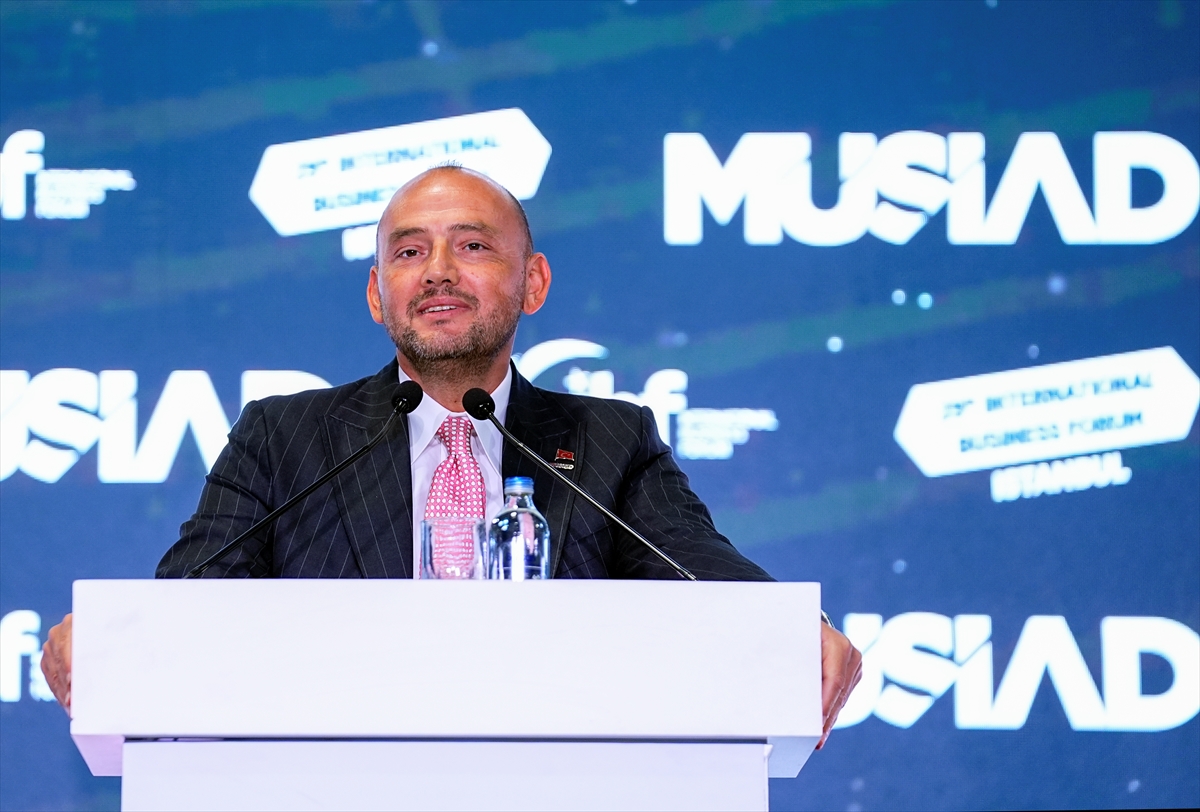
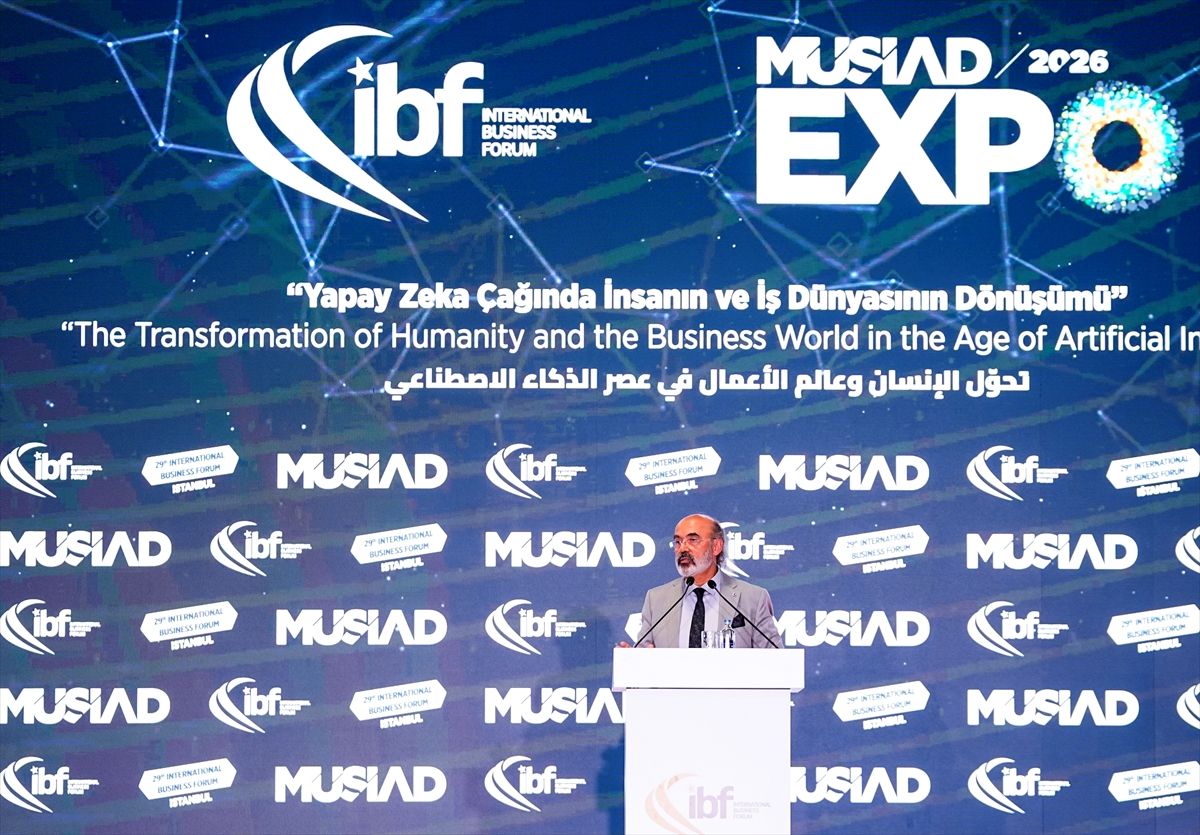
Erol Yarar, chairman of the International Business Forum, said IBF is held each year under a different theme. Yarar said it was inevitable to address AI’s transformation of people and the business world at a time when a new era was beginning.
Yarar announced that the answers given by four major artificial intelligence systems to the same questions would be compared on stage at the forum. He said one of the answers was planned to be checked by the other systems and that participants would later be able to ask questions to ChatGPT, Gemini, DeepSeek and Claude via a QR code.
Risk of manipulation and responsibility
Yarar said AI systems can analyze on behalf of people, collect information and produce decisions. He said that as authority is transferred to algorithms, AI systems could influence institutions or individuals, and identified the risk that the institutions owning these systems could manipulate people in the future as one of the greatest dangers.
Yarar said artificial intelligence could create serious problems in the coming years and drew particular attention to the learning processes of children and young people. He said eliminating the research and information-gathering stages between a question and its answer could pose a risk to human education.
Yarar also addressed the possible effects of AI on children’s mental development. Saying that the brain develops through a process, Yarar noted that AI’s shortening of this process could change learning methods and business models.
Yarar said AI has also begun to be used for personal decisions, noting that people consult systems on matters such as choosing a spouse. He said these forms of use could steer people toward ready-made answers and create a serious area of risk.
Debate over legal responsibility
Yarar said raising people in the age of AI is a separate field of research and argued that a form of competency framework is needed for those who will use the technology. He said the question of who would be responsible if a person were injured as a result of an AI system’s erroneous decisions poses a clear legal problem.
Yarar said it was necessary to debate whether responsibility in such a case would belong to the artificial intelligence, the institution that developed the system or the institution that authorized its use. The forum will continue with talks and sessions on artificial intelligence.
Stay Updated with The Turkiye Times
Subscribe to be informed about special news, developments and announcements. We will keep you informed.
By signing up, you agree to our Privacy Policy