- BIST10011,483+1.32%
- USD50.07+0.05%
- EUR55.96-0.52%
- GOLD4,074.90-0.94%
- INTEREST36.00%-1.00
- BITCOIN75,768+0.02%
- November 8, 20267°
- BIST10011,483+1.32%
- USD50.07+0.05%
- EUR55.96-0.52%
- GOLD4,074.90-0.94%
- INTEREST36.00%-1.00
- BITCOIN75,768+0.02%
- November 8, 20267°
Özvar: Türkiye rises from 35th to 13th globally in scientific publishing
Erol Özvar, president of Türkiye’s Council of Higher Education (YÖK), announced that Türkiye had risen from 35th to 13th worldwide in scientific publication output. Özvar said they were working to enable undergraduate programs to be completed in three years, that the number of courses would be reduced, and that the number of programs in artificial intelligence and digital fields had reached 724.


Erol Özvar, president of Türkiye’s Council of Higher Education (YÖK), announced that Türkiye had risen from 35th to 13th worldwide in scientific publication output in recent years. Speaking on CNN Türk, Özvar assessed the higher education agenda and said research universities had reached the OECD average in the quality of their publication output. He described this development as one of the most significant advances achieved by Turkish higher education over the past 40 to 50 years.
Özvar emphasized that increased resources allocated to higher education and scientific research had positively affected the performance of universities. He noted that Türkiye has 23 research universities, including 20 state and three foundation universities.
Undergraduate programs could be completed in three years
Özvar said they were working to restructure undergraduate programs around 180 credits so they could be completed in three years, and that universities had been preparing for this process for about a year. He said undergraduate programs in Türkiye contained around 60 courses, compared with approximately 20 to 25 in Europe, and announced that work to reduce the number of courses was continuing this year, with the system set to begin operating accordingly next year.
Özvar said nearly 80 new types of programs had been created over the past three years. He noted that programs in fields such as artificial intelligence, data science, cybersecurity and robotics had reached 724 across 160 universities, with enrollment rates in these programs approaching 100 percent. He also said 233,000 applications had been submitted to the Digital University Platform this year and that around 55,000 people had participated in the training programs.
Double majors in engineering for dentistry and pharmacy students
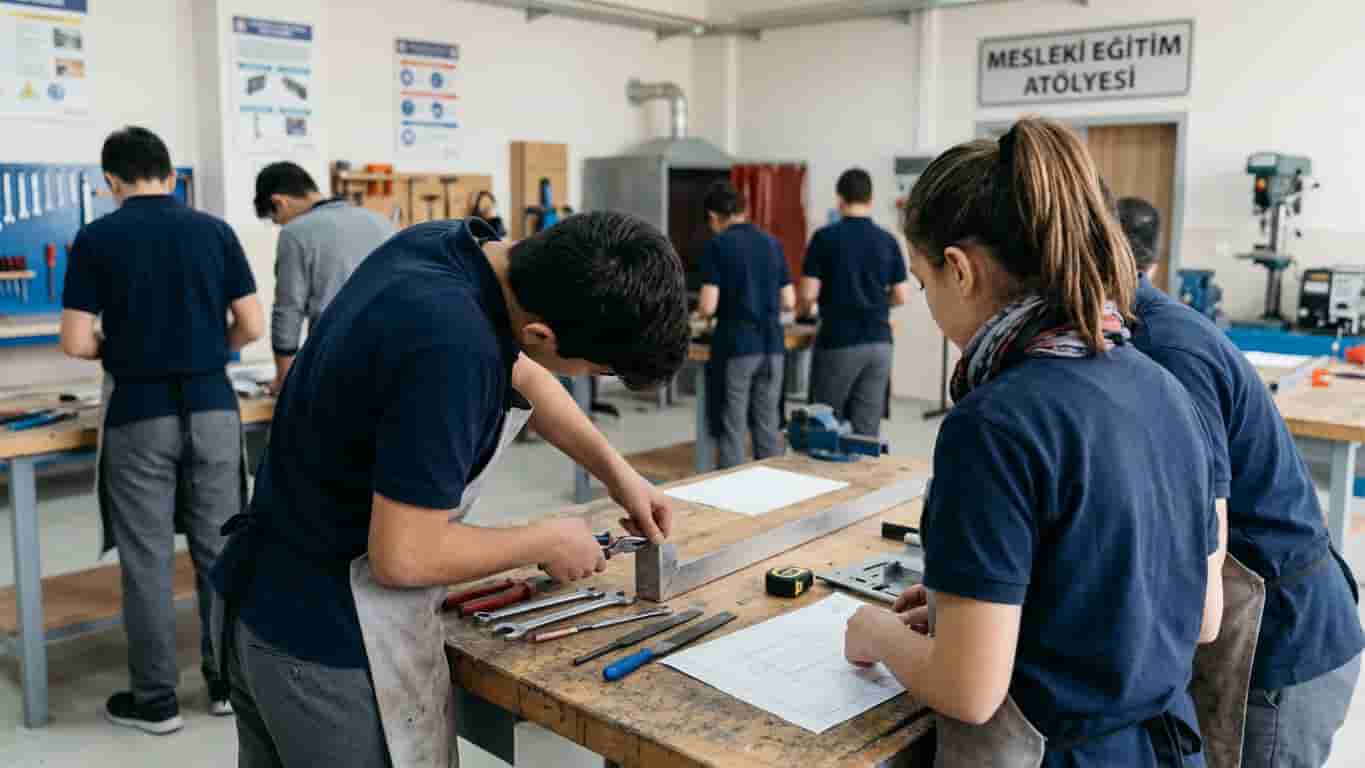
Özvar announced that they planned to grant dentistry and pharmacy students who meet specific achievement requirements the right to pursue double majors in certain engineering programs at their own universities. He said they aimed to implement the arrangement in the 2027-2028 academic year. In vocational schools, he said the Work-Based Vocational Education model, under which students will spend at least one of four semesters in businesses, would initially be implemented in Ankara, Bursa, Gaziantep, Istanbul, Izmir, Kocaeli and Konya.
Özvar said Türkiye has approximately 380,000 international students and more than 3,000 international academics. He added that Türkiye ranks among the world’s top seven countries for international student mobility and that these students contribute approximately $3 billion to the economy each year.
Photo: AA (archive)
Stay Updated with The Turkiye Times
Subscribe to be informed about special news, developments and announcements. We will keep you informed.
By signing up, you agree to our Privacy Policy