Led by the Presidency of Defense Industries, Türkiye’s defense industry has transformed over approximately a quarter of a century from a structure largely dependent on foreign procurement and licensed production into a sector that develops indigenous platforms and critical technologies.
The number of companies operating in the sector rose from 56 in 2002 to more than 4,500 during the 2024–2026 period. Over the same period, the number of projects increased from 62 to more than 1,400, while the total project volume rose from approximately $5.5 billion to more than $100 billion.
Exports and R&D capacity expand
Türkiye’s defense and aerospace exports stood at $248 million in 2002 and reached $10.05 billion in 2025. Exports totaled $5.79 billion in the January–July period of 2026, while exports over the 12 months through July reached $11.2 billion.
Annual R&D spending rose from approximately $49 million to more than $3.5 billion over the same period. The domestic production rate increased from approximately 20 percent to more than 80 percent, while direct employment exceeded 100,000 people and the average age of sector employees reached 34.
Procurement shifts toward indigenous design
In the early 2000s, the procurement model was focused mainly on off-the-shelf purchases, production under license and technology transfer. Over time, it shifted toward domestic development, indigenous design and the domestic production of critical subsystems.
Along with this transformation, the sector’s product and technology portfolio expanded beyond armored vehicles and conventional platforms. Unmanned systems, warships, jet aircraft, air defense systems, radar, electronic warfare, smart munitions, engines, space technologies and advanced electronics were added to the portfolio.
Defense and aerospace revenues stood at approximately $1.1 billion in 2002 and exceeded $20 billion in 2026.
Unmanned and manned aerial platforms
Bayraktar TB2 became one of the main platforms that enabled Türkiye to gain global visibility in unmanned aerial vehicles. With its high payload capacity, long range, advanced sensors and heavy-munition integration, Bayraktar AKINCI contributed to elevating unmanned air power from the tactical level to strategic capability.
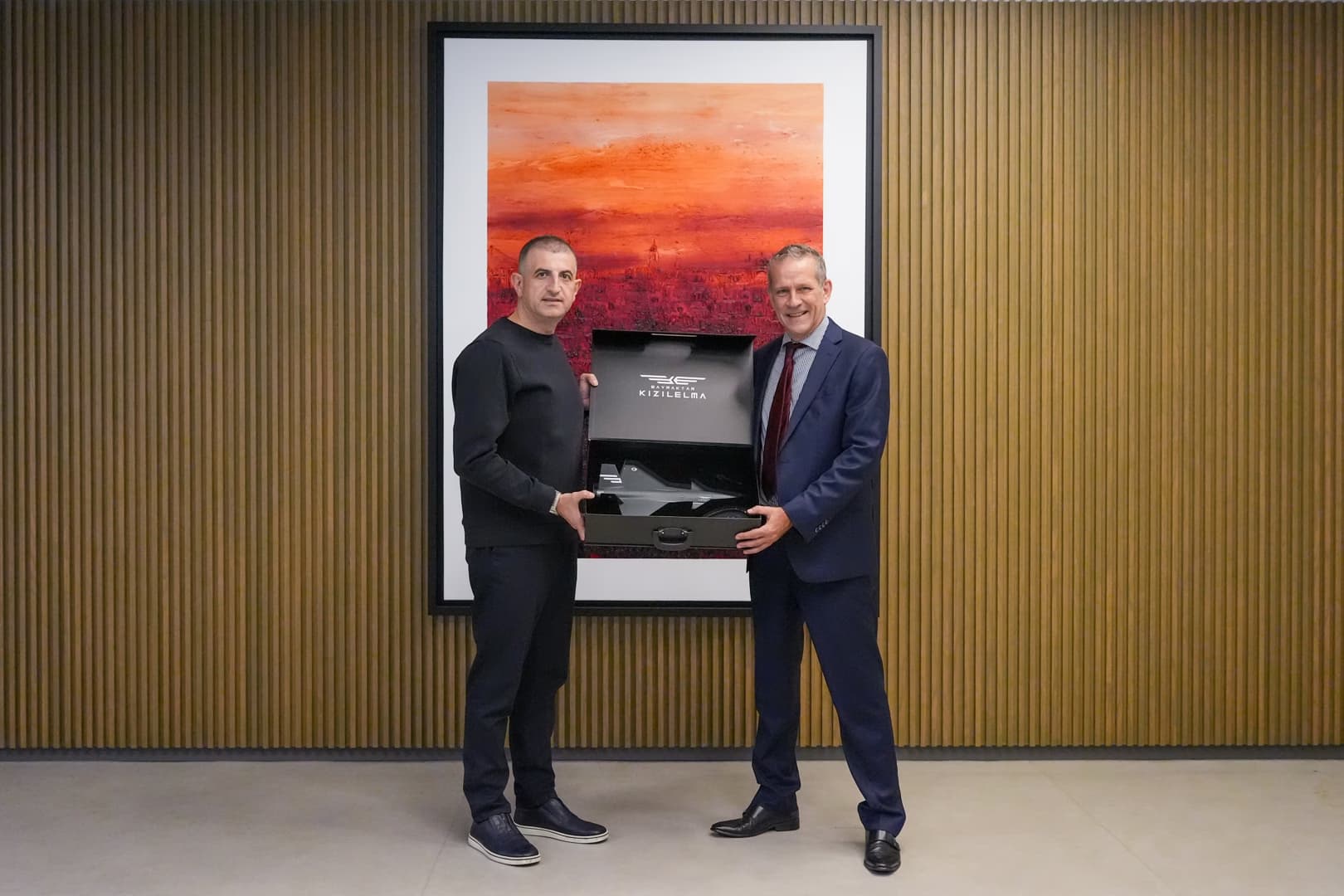
BAYRAKTAR KIZILELMA brought high speed, low observability, air-to-air and air-to-ground missions, and the capability to operate from short-runway ships together on a single platform. ANKA and AKSUNGUR also developed high-altitude, long-endurance and strategic reconnaissance and surveillance capabilities through satellite communications, indigenous electro-optical systems, munitions and engine integration.
In manned aviation, KAAN and HÜRJET were among the prominent programs. KAAN combines low observability, advanced avionics, a mission computer, radar and systems integration, while HÜRJET was developed to meet the need for a jet trainer aircraft with an indigenous platform.
The production and systems-integration experience gained through T129 ATAK was transferred to the indigenous helicopter design capability developed with T625 GÖKBEY.
New projects in naval platforms
The MİLGEM Project laid the foundation for Türkiye’s indigenous warship design capability, ranging from corvettes to frigates. Gains in combat management systems, sensors and weapons integration contributed to the development of capabilities in the naval defense industry and to exports.
The TF-2000 Air Defense Destroyer is being developed to extend air defense capabilities into open seas by combining long-range air defense with advanced radar, weapons and sensor integration. The MİLDEN Project represents Türkiye’s goal of designing and building its own submarine.
The joint use of TCG ANADOLU and Bayraktar TB3 introduced a naval-air operations concept that combines large-scale amphibious operations with unmanned aerial vehicles capable of operating from short runways.
Layered air defense architecture
HİSAR and SİPER systems became core elements of a layered air defense structure that combines sensors, command-and-control systems and missile systems within an indigenous architecture against different threats at low, medium and high altitudes.
ÇELİK KUBBE represents a “system of systems” approach that brings together radars, electro-optical sensors, electronic warfare elements, command-and-control infrastructure and air defense weapons with different ranges under a common network.
Long-range precision strike capabilities were developed for air, naval and land platforms through SOM, ATMACA and KARA ATMACA. TAYFUN emerged as one of the components of progress in missile technologies with its capability to engage long-range and precision land targets.
Goal of independence in critical technologies
The ALTAY main battle tank contributed to the formation of a broad industrial ecosystem around critical technologies such as armor, active protection, fire control and the power pack. The project also demonstrated the strategic importance of dependence on engines and power packs.
KORAL and indigenous radar systems provide radar detection, electronic jamming, early warning and sensor superiority, while the PD170, TF6000 and KTJ projects cover power-system development ranging from UAV engines to turbofan and cruise-missile engines.
Export model expands
Turkish defense products are exported to 185 countries, while approximately 230 different product types are actively used around the world. In addition to direct product sales, the export model has expanded to include training, maintenance and sustainment, systems integration, joint production and technology cooperation.
Engineering, software, electronics, materials, engines, artificial intelligence and advanced technology expertise are among the sector’s main areas of competition.
While meeting a larger share of defense needs domestically was set as the main objective in 2002, the goals as of 2026 are to deepen independence in critical technologies, establish high-volume mass-production capacity and permanently increase the sector’s share of the global market.