- BIST10011,701-3.06%
- USD49.42+0.06%
- EUR55.41+0.20%
- GOLD4,202.30+0.77%
- INTEREST37.00%-1.00
- BITCOIN82,610+0.58%
- October 16, 202614°
- BIST10011,701-3.06%
- USD49.42+0.06%
- EUR55.41+0.20%
- GOLD4,202.30+0.77%
- INTEREST37.00%-1.00
- BITCOIN82,610+0.58%
- October 16, 202614°
Türkiye's Çepni UAV family takes on three distinct missions
The Çepni tactical UAV family, developed within Türkiye's defense industry, is operating in the field in three variants for reconnaissance and attack, as well as target simulation and deception missions for air defense systems. The system can be prepared by a single operator in less than 30 minutes, launched without a runway and reach a speed of 185 kilometers per hour.
Scraper SystemUpdated:


The fixed-wing Çepni tactical unmanned aerial vehicle family, developed within Türkiye's defense industry, has begun operating in the field for a range of military missions.
Developed by SolidAERO, the family is built around a common airframe and modular design. This configuration allows the same basic platform to be equipped with different systems depending on the nature of the mission.
Its first mission was to serve as a target for air defense systems
During its first field mission, one of the vehicles in the Çepni family was used as an aerial target as part of the development of a solution for air defense systems.
The system takes its name from the Çepni tribe, one of the Turkmen tribes of the Oghuz Turks. Historical accounts describe the tribe as being known for its courage in battle.
Three mission variants
The family's first variant was designed as the medium-range Çepni. The vehicle can be used for intelligence, surveillance, reconnaissance and attack missions, with an operational range extending hundreds of kilometers.
The medium-range variant has a payload capacity of 15 kilograms. This capacity allows it to carry detection equipment, different systems or attack payloads required for a mission.
The second variant, Çepni Target, serves as an aerial target that can be reused in the training of air defense systems. The vehicle can be used to train radar, missile and artillery units, and has an operational range of more than 100 kilometers and a payload capacity of 5 kilograms.
Thanks to its reinforced airframe and ability to land in difficult conditions, Çepni Target can be prepared for a new mission shortly after completing a training flight. The vehicle can also be equipped with special units that simulate the radar signatures of different aerial threats.

The third variant was designed to deceive radars
The third variant of the Çepni family, Çepni Deceiver, was developed for camouflage and deception missions on the battlefield. This variant can be configured to deceive air defense networks and divert radar attention.
This use is intended to make it more difficult for air defense systems to distinguish between genuine targets and targets intended for deception, while directing their attention to different locations.
Designed for electronic jamming environments
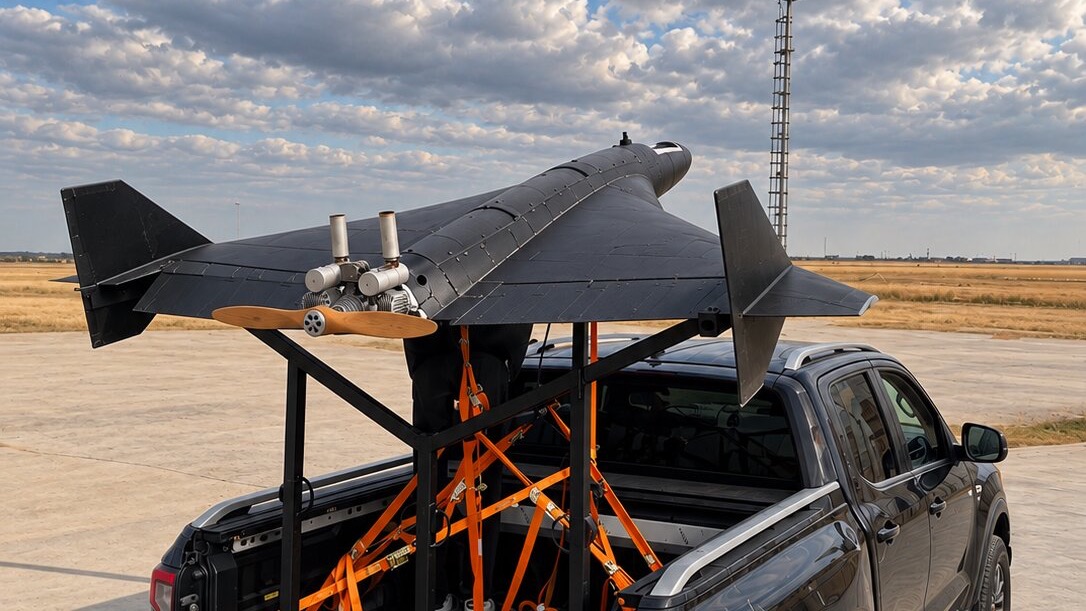
The Çepni family was designed to operate in modern conflict environments where communications and electronic systems are subject to intense jamming. Lightweight and durable carbon fiber is used in the vehicles' construction, while the airframe design focuses on keeping the radar cross-section relatively low.
A low radar cross-section reduces the likelihood of the vehicle being detected by radar, but does not mean it cannot be detected at all. The Çepni family's maximum flight speed reaches 185 kilometers per hour.
Can be prepared without a runway
The system can be prepared for a mission inside a container by a single operator in less than 30 minutes. The vehicle does not require a fixed runway for takeoff and can be launched using a ramp mounted on the back of a vehicle or a compressed-air catapult.
This design allows the system to be transported to different locations and prepared without relying on fixed launch infrastructure. The ability to equip the common platform with different systems also reduces the need to develop a separate aircraft for each mission.
Source: Anadolu Ajansı
Spotted an error in this story?Report it on WhatsApp
Share on all social platforms
Sponsored Ads
Featured Listings
Loading featured properties...
Stay Updated with The Turkiye Times
Subscribe to be informed about special news, developments and announcements. We will keep you informed.
By signing up, you agree to our Privacy Policy