- BIST10011,165+0.13%
- USD49.79+0.05%
- EUR55.52-0.41%
- GOLD4,058.90-0.39%
- INTEREST36.00%-1.00
- BITCOIN81,357+0.69%
- October 28, 202617°
- BIST10011,165+0.13%
- USD49.79+0.05%
- EUR55.52-0.41%
- GOLD4,058.90-0.39%
- INTEREST36.00%-1.00
- BITCOIN81,357+0.69%
- October 28, 202617°
Vice President Yılmaz: Budget resources will be used for retirees
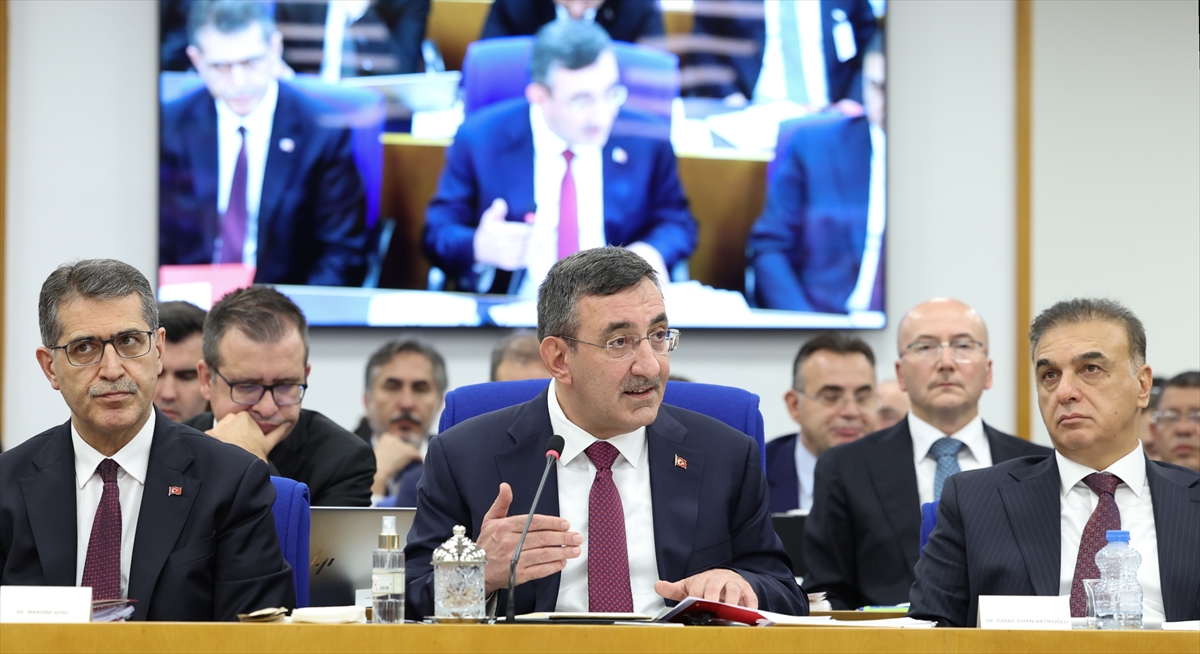
Vice President Cevdet Yılmaz said retirees had been prioritized in assessments of the 2027 budget proposal before the Grand National Assembly of Türkiye’s Planning and Budget Committee. Yılmaz said technical work on alternatives was continuing to provide support exceeding the inflation-linked increase, and that the measure would be brought before the Assembly after the budget process.


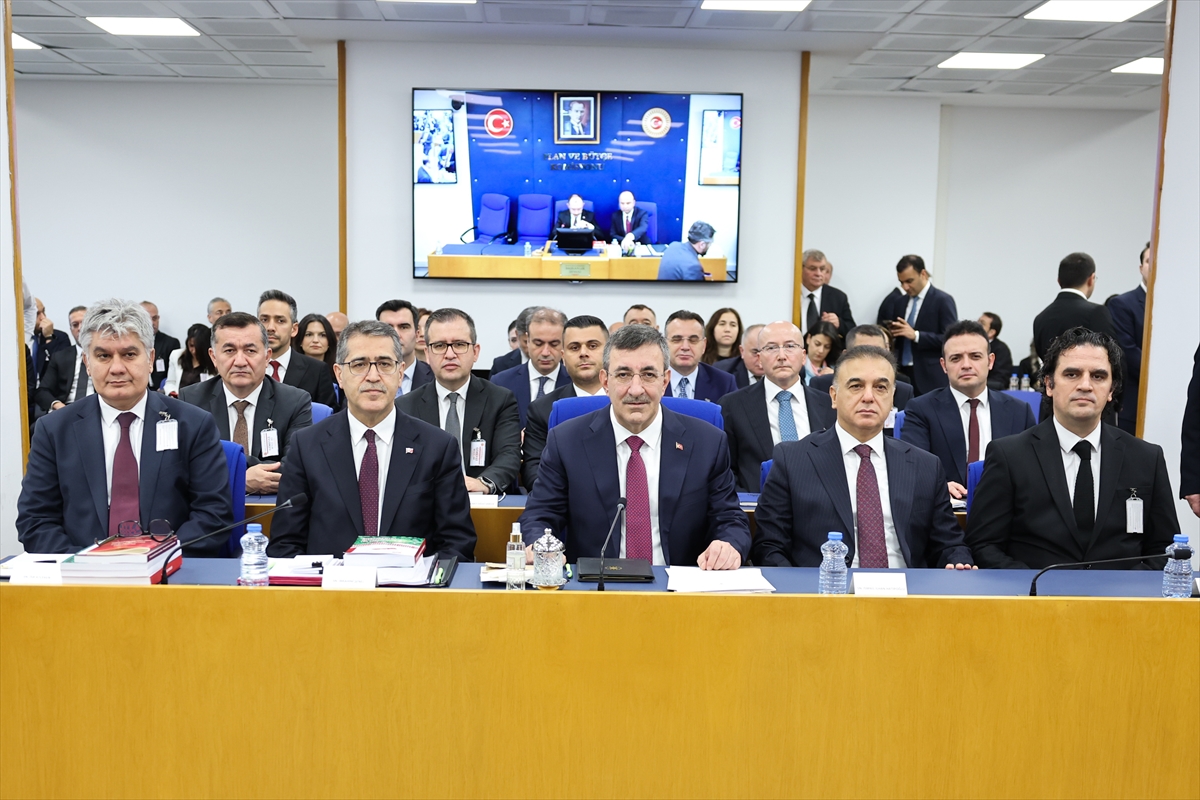
Vice President Cevdet Yılmaz answered lawmakers’ questions about the 2027 Central Government Budget Law Proposal and the 2025 Central Government Final Accounts Law Proposal before the Planning and Budget Committee of the Grand National Assembly of Türkiye.
Yılmaz said retirees had been prioritized in the 2027 budget and that the aim was to provide them with support exceeding the increase linked to inflation.
Yılmaz said the budget deficit expectation had been raised from 3.1 percent to 3.5 percent in this context, adding that budget resources would be used for retirees. He noted that the work was not limited to retirees receiving the lowest pensions but was being considered within a broader framework.
Yılmaz said technical work was being conducted with the relevant institutions on alternatives for the measure concerning retirees and that the process had not yet been completed. He said the area needed to be regulated by law, apart from automatic increases linked to inflation.
Yılmaz said the work would be finalized and submitted to the Assembly for consideration after the budget process. He added that the social security system concerned the entire society and that the measure would be brought before the Assembly after a thorough study.
Assessment of the economy and public policies
Yılmaz said geopolitical tensions, risks and uncertainties were increasing around the world, adding that Türkiye was working to preserve both its strong and justified position during this period.
Yılmaz said artificial intelligence had become one of the key elements of economic and social transformation and that the state and public sector needed to assume a more effective role under changing conditions. He said free markets and competition were fundamental, arguing that public-private cooperation in strategic areas should be addressed within a broader framework.
Yılmaz said the Türkiye economy continued to generate growth and employment, noting that Türkiye’s average annual growth rate over the past quarter-century was 5.3 percent, compared with the global average of 3.5 percent. He said Türkiye’s average growth was 5.2 percent during the 2020–2025 period, while the global economy’s average growth was 3 percent.
Yılmaz said annualized goods exports had reached $284 billion, services exports had approached $125 billion and total goods and services exports had reached $410 billion.
Yılmaz said the current account deficit was expected to equal 2.6 percent of gross domestic product this year, adding that the ratio was projected to fall below 2 percent again starting next year as temporary effects disappeared. He noted that the budget deficit stood at 3–3.5 percent of gross domestic product, while public debt was around 22 percent of gross domestic product.
Yılmaz said Türkiye had reserves of approximately $170 billion and that the banking system had a strong and healthy structure in terms of capital adequacy ratios.
Focus on resilience and regional development
Explaining why the budget was described as a “budget for resilience, prosperity and transformation,” Yılmaz said increasing national and domestic production and diversifying supply sources and markets were important for economic resilience.
Yılmaz said the green and digital transformation needed to be implemented in industry, agriculture, services and production, adding that the Development Road, Zangezur and Middle Corridor projects, along with regional transport routes, would contribute to development. He noted that investments would continue under GAP, DAP, KOP and DOKAP.
Yılmaz highlighted the importance of private-sector investment for employment and exports, saying that strengthening the investment environment in Eastern and Southeastern Anatolia would support regional development.
Yılmaz said 3.9 trillion liras had been transferred from the budget for energy subsidies during the 2021–2026 period, equivalent to $74.9 billion. He said 605 billion liras had been allocated for energy subsidies in the 2027 budget.
Yılmaz said the share of indirect taxes in total tax revenues was 65.8 percent in 2024 and 62.4 percent in 2025, adding that the ratio was expected to decline to 59.4 percent in 2026.
Social spending
Yılmaz argued that the increase in social spending did not mean poverty had increased. He said support had been expanded in many areas, including payments for citizens over 65, services for people with disabilities and social housing, as the social state model was strengthened.
Yılmaz said social state programs in Türkiye had been strengthened over the past 25 years and that support for disadvantaged groups had been increased.
Source: Anadolu Ajansı
Have a story, event or announcement of your own?Send us your news on WhatsApp
Spotted an error in this story?Report it on WhatsApp
Share on all social platforms
Sponsored Ads
Featured Listings
Loading featured properties...
Stay Updated with The Turkiye Times
Subscribe to be informed about special news, developments and announcements. We will keep you informed.
By signing up, you agree to our Privacy Policy














