- BIST10011,165+0.13%
- USD49.79+0.05%
- EUR55.52-0.41%
- GOLD4,058.90-0.39%
- INTEREST36.00%-1.00
- BITCOIN81,357+0.69%
- October 28, 202617°
- BIST10011,165+0.13%
- USD49.79+0.05%
- EUR55.52-0.41%
- GOLD4,058.90-0.39%
- INTEREST36.00%-1.00
- BITCOIN81,357+0.69%
- October 28, 202617°
Türkiye's deputy foreign minister says Mecca Pact is open to new members
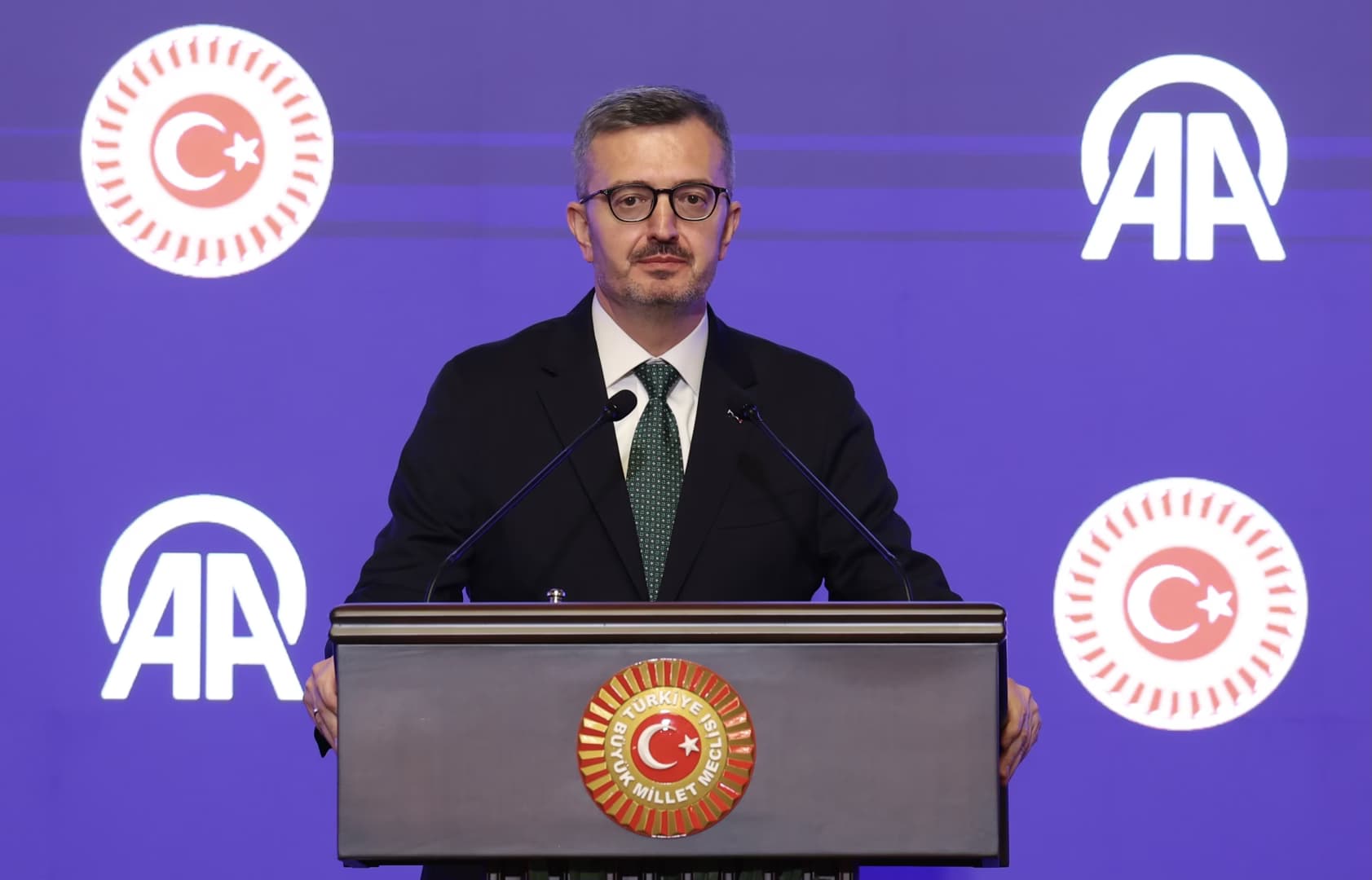
Türkiye's Deputy Foreign Minister Levent Gümrükçü announced on Tuesday that the Mecca Defense Pact between Türkiye, Pakistan and Saudi Arabia is open to new members. Gümrükçü said the three countries must jointly approve any accession and that approval by the Grand National Assembly of Türkiye is required, adding that the agreement does not target any country.


Türkiye's Deputy Foreign Minister Levent Gümrükçü announced that new members can join the Mecca Defense Pact between Türkiye, Pakistan and Saudi Arabia. Gümrükçü said the agreement is expected to expand in the coming period.
Gümrükçü made the remarks while answering lawmakers' questions at a meeting of the Foreign Affairs Committee of the Grand National Assembly of Türkiye, where a bill on ratifying the agreement was being debated. The three countries must jointly decide on the admission of new members, and the decision must be submitted to the Grand National Assembly of Türkiye for approval.
Membership conditions and the scope of the agreement
Gümrükçü said membership is open to countries that adhere to the principles of international law. This requires respect for sovereignty, independence and territorial integrity, a commitment not to use force, non-interference in the internal affairs of other countries, and acceptance of the responsibilities arising from membership.
Emphasizing that the agreement does not target any party, Gümrükçü said no specific country or group is named in the definition of a common threat. He noted that the threats addressed by the agreement concern interventions targeting the independence, sovereignty, territorial integrity and borders of the parties.
Gümrükçü said Iran had welcomed the agreement and adopted a positive stance toward it. He added that neither Israel nor India had made a negative statement about the agreement so far.
Gümrükçü said the agreement is defensive in nature and contains no offensive objective, adding that one of the parties must make a request for joint defense to be activated. The nature and scope of the support would then be determined through an objective assessment, while decisions would be made by consensus among the parties.
Deployment of Turkish troops
Gümrükçü announced that there are currently no plans to send Turkish troops to Saudi Arabia under the agreement. He said any deployment of troops outside Türkiye after the agreement is ratified and enters into force would be subject to the provisions of the Constitution of the Republic of Türkiye.
Gümrükçü also said the agreement contains no provision concerning Pakistan's nuclear weapons, adding that the Mecca Pact is compatible with Türkiye's responsibilities within NATO.
NATO and the ratification process
Gümrükçü said NATO has adopted a 360-degree security approach and that the obligations arising from the Mecca Pact would complement Türkiye's responsibilities within NATO. He said Ankara informed NATO's North Atlantic Council after signing the agreement, adding that the allies had so far adopted a positive stance toward the information provided and the approach of the new alliance.
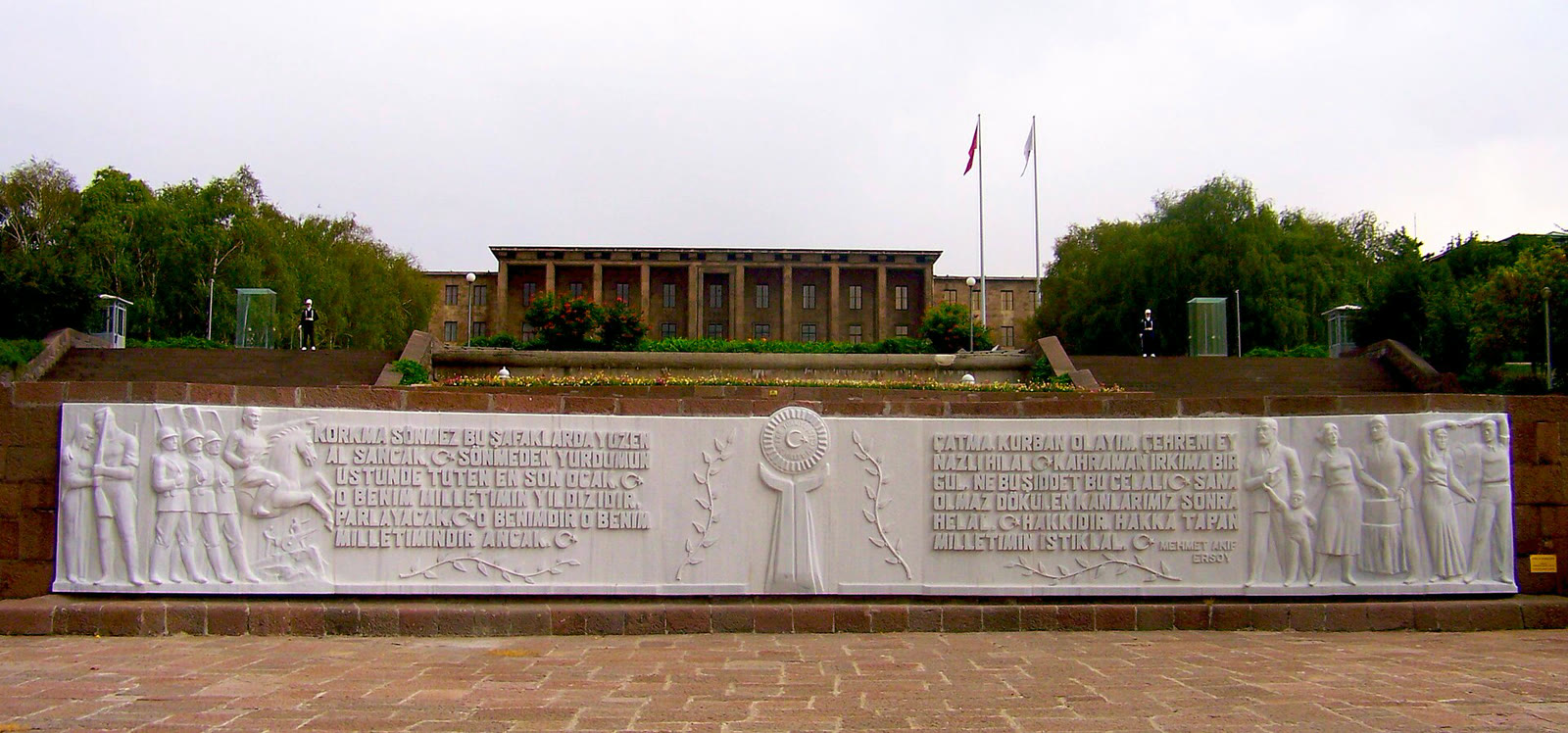
Gümrükçü said the consultations and preparatory work carried out so far under the agreement had created no obligations for Türkiye in terms of human resources, legal matters or finances. He said the formal ratification process was conducted with the start of the new legislative session at the beginning of October. He added that the bill was sent to the Grand National Assembly of Türkiye shortly afterward.
Regarding the alliance's secretariat, Gümrükçü said Article 8, Paragraph 6 of the agreement stipulates that the first secretary-general will be from Pakistan. He added that the secretariat's working methods would be determined through consultations among the parties after the ratification process is completed.
Emphasis on regional solutions
Gümrükçü said the Middle East is going through a difficult period and that Türkiye is affected directly or indirectly by crises in the region. He said the international community or actors from outside the region cannot be relied upon to resolve regional problems. Gümrükçü added that regional countries must assume responsibility for finding joint solutions to crises.
Gümrükçü said the Mecca Pact was the result of regional ownership and a shared will. He said cooperation among the countries of the region would strengthen stability, which would have a positive impact on Türkiye's security and prosperity.
Gümrükçü said Türkiye continues to pursue an approach based on diplomacy and peaceful mediation. He noted that contacts held by the alliance members in Iran on Monday provided an example of efforts to resolve disputes through dialogue.
Withdrawal period
Gümrükçü also answered a question about the agreement's provision preventing the parties from withdrawing during its first 10 years. He said similar agreements are generally concluded for an indefinite period but contain rules governing withdrawal. Gümrükçü cited the Montreux Convention regulating the Turkish Straits as an example of such arrangements in international law and said the convention was initially concluded for a period of 20 years.
The Badr Agreement and the visit to the United Arab Emirates
Gümrükçü said the Badr Agreement signed by Türkiye, Pakistan, Qatar and Indonesia is not institutionally directly linked to the Mecca Pact. He added, however, that both initiatives reflect an approach aimed at strengthening regional cooperation and developing solutions to common problems.
Gümrükçü said Foreign Minister Hakan Fidan's visit to the United Arab Emirates had been planned for a long time. He said Fidan did not meet with Israeli Prime Minister Benjamin Netanyahu or any Israeli official during the visit.
Türkiye's President Recep Tayyip Erdoğan, Pakistan's Prime Minister Shehbaz Sharif and Saudi Crown Prince Mohammed bin Salman signed the Mecca Defense Pact on Aug. 7. The agreement aims to strengthen the security of the three countries through joint defense and deterrence, and to support regional security and stability.
Source: Anadolu Ajansı
Have a story, event or announcement of your own?Send us your news on WhatsApp
Spotted an error in this story?Report it on WhatsApp
Share on all social platforms
Sponsored Ads
Featured Listings
Loading featured properties...
Stay Updated with The Turkiye Times
Subscribe to be informed about special news, developments and announcements. We will keep you informed.
By signing up, you agree to our Privacy Policy