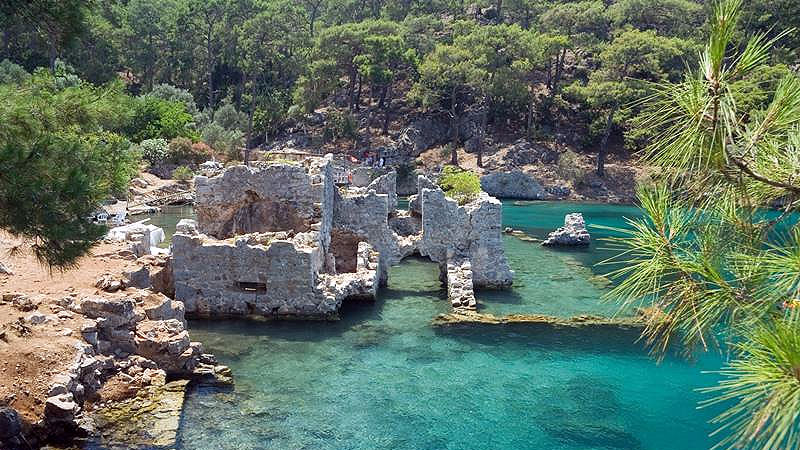
Located in Antalya's Kemer district, Phaselis Ancient City brings together nature lovers and history enthusiasts. Home to ruins from the Hellenistic, Roman, and Byzantine eras, the city stands out with its unique setting on the Mediterranean coast.
Known as the easternmost city of ancient Lycia, Phaselis offers visitors the chance to explore the ancient harbor, agora, and theater ruins amidst green forests. One of the most enchanting features of the ancient city is the chance to swim into the sea from its millennia-old harbor steps.
Governor Şahin: "An experience everyone should have"
Antalya Governor Hulusi Şahin, speaking about the city's tourism potential, said Phaselis is one of the rare places that blend natural beauty with historical fabric. Governor Şahin said, "A visitor to Phaselis can walk down the steps from the thousand-year-old harbor into the sea. This is truly a very special experience. I recommend everyone enjoy swimming among the ancient ruins."
Şahin noted that intensive excavation work continues at Phaselis, an important port city of the ancient world, as part of the Ministry of Culture and Tourism's "Heritage for the Future" project. The governor stated that new streets buried underground are being rapidly uncovered, and these features make Phaselis a rare destination worldwide.

The street where Alexander the Great walked comes to light
Excavation and restoration work carried out by the Ministry of Culture and Tourism has uncovered the city's main street, which is over 2,000 years old. Historians believe that important figures such as Alexander the Great may have walked on this road. In addition, the temple area at the city entrance has been made more prominent for visitors, and restoration is progressing on the columns of the ancient water channels.
Tourist influx in summer
Reachable by road or by boat tours on the Mediterranean, Phaselis attracts intense interest, especially in the summer. Visitors swim in the cove with its various shades of blue and use the beach area for relaxation. Officials are working around the clock to protect the historical structures and rare plant species in the area.