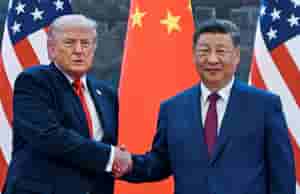
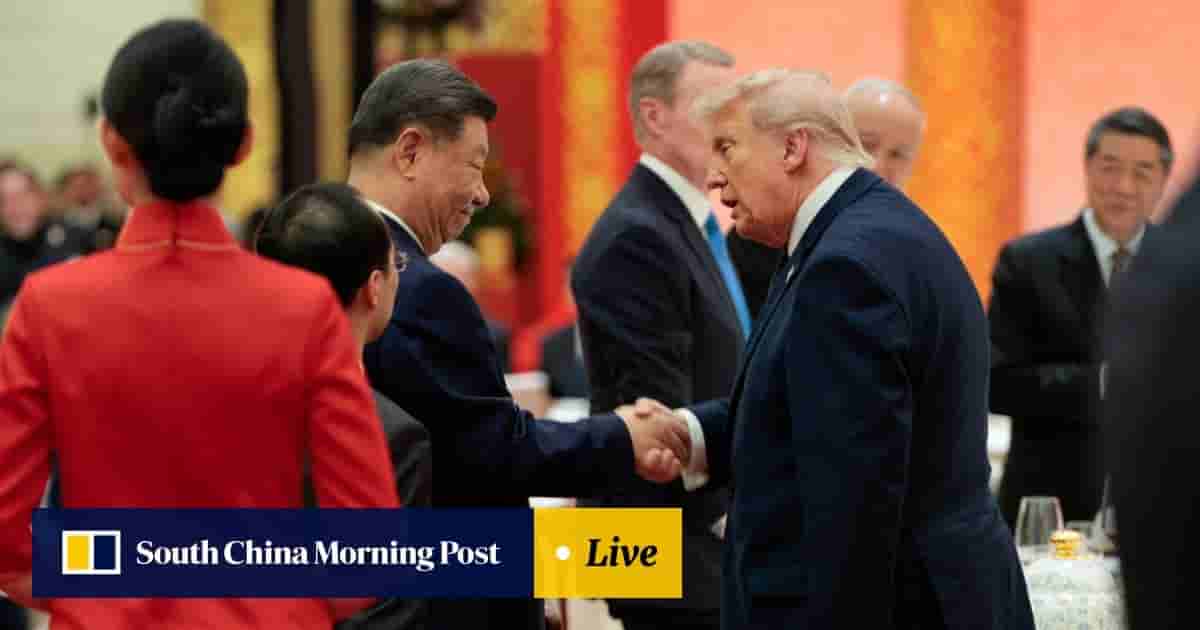
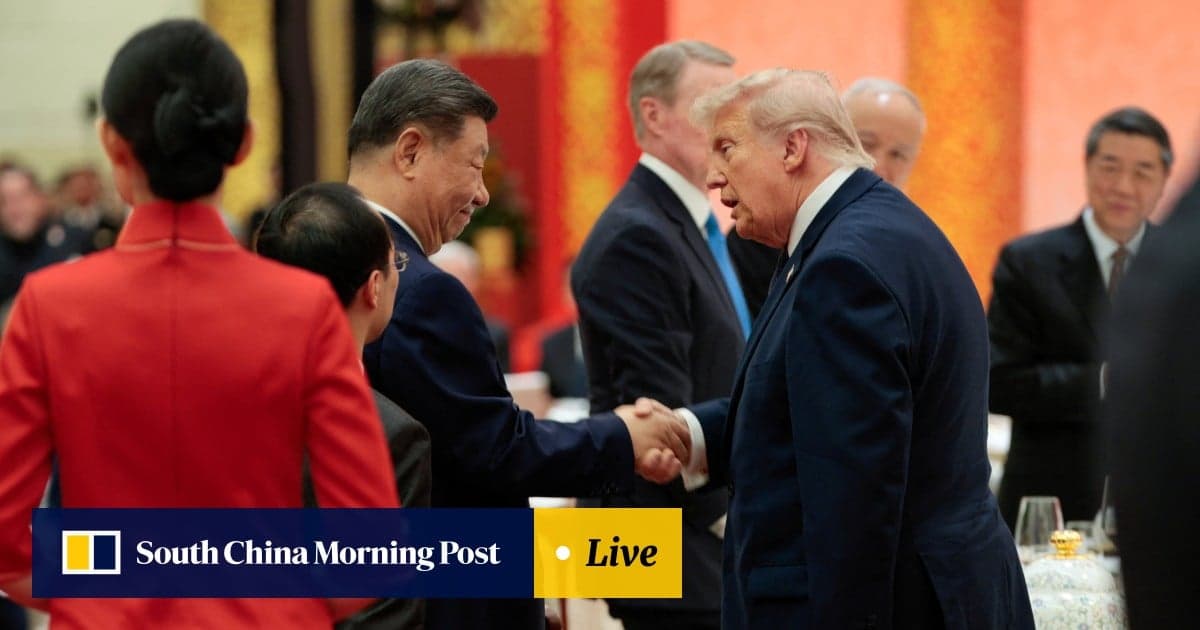
The summit between US President Donald Trump and Chinese President Xi Jinping in Beijing created a significant dilemma in the Korean semiconductor sector. The summit offers new business opportunities for equipment suppliers in China, while also raising the risk of Chinese chip manufacturers closing the technology gap with Samsung Electronics and SK hynix. The US has tightened semiconductor equipment exports to China to slow advances in artificial intelligence and high-performance computing. Meanwhile, China is using its dominance in rare earth supplies as leverage in negotiations to extend the trade truce reached last October. It is rumored that the US may ease some export restrictions in exchange for China purchasing more American agricultural products, energy, and Boeing aircraft. Nvidia CEO Jensen Huang's last-minute addition to the Trump delegation has increased speculation about the company's business in China. According to Reuters, the US Department of Commerce has granted permission to about 10 Chinese companies, including Alibaba, Tencent, ByteDance, and JD.com, to purchase H200 chips, but shipments have not yet occurred. Intermediaries like Lenovo and Foxconn have also been approved to sell these chips. For Korean chip manufacturers, the situation is more complex. Although H200 chips do not directly compete with Korean memory products, these approvals indicate a possible shift in Washington's approach to technology exports to China. Experts emphasize the need to closely monitor restrictions on semiconductor manufacturing equipment, especially for 14 and 7 nanometer processes, as Chinese firms move toward more advanced production methods. However, if the US grants China access to extreme ultraviolet lithography equipment, it is noted that China's technology catch-up process will accelerate. Current restrictions are close to the levels reached by Chinese manufacturers in some areas, and even a slight relaxation may not pose a direct threat to Samsung and SK hynix. On the other hand, if Chinese chip manufacturers accelerate capacity expansion, new opportunities may arise for Korean equipment suppliers. This development is viewed positively for Korea's semiconductor equipment companies.