- BIST10011,722-2.89%
- USD49.45+0.05%
- EUR55.62+0.37%
- GOLD4,181.10+0.26%
- INTEREST37.00%-1.00
- BITCOIN81,095-0.35%
- October 18, 202614°
- BIST10011,722-2.89%
- USD49.45+0.05%
- EUR55.62+0.37%
- GOLD4,181.10+0.26%
- INTEREST37.00%-1.00
- BITCOIN81,095-0.35%
- October 18, 202614°
Türkiye’s egg exports rise to $418.7 million in nine months
Türkiye’s egg exports rose 54% year on year to $418.676 million in the January-September period. Table-egg exports increased 132.4% to $153.150 million, while hatching-egg exports reached $245.512 million.


Türkiye’s exports of animal products, excluding aquaculture products, reached $1.275 billion in the January-September period, with shipments totaling 667,143 tons. The egg sector accounted for the largest share of these exports.
Egg-sector exports, which stood at $271.430 million in the same period last year, rose 54% this year to $418.676 million.
Table-egg and hatching-egg exports increase
Table chicken eggs and hatching chicken eggs accounted for the largest share of egg exports. Table-egg exports rose 132.4% in value terms to $153.150 million.
Hatching-egg exports amounted to $245.512 million.
Avian flu affects global trade dynamics
Bedri Girit, deputy chair of the Aegean Fisheries and Animal Products Exporters’ Association, said domestic market dynamics and diseases in the global poultry sector contributed to the rise in exports.

Girit said climate change and diseases were affecting productivity in the global poultry sector, adding that the detection of avian flu in some countries, the United States and five European countries had changed the dynamics of global trade. He said these developments had caused some exporting countries to become importers from time to time and increased product shipments from Türkiye to European Union countries.
Egg exports to the Netherlands, Poland, Greece, Italy and Belgium rose by nearly 100%.
Export quotas increased nearly fivefold
The easing of export quotas for small-sized eggs in the domestic market also supported exports. Girit said quotas had been increased nearly fivefold after the Ministry of Agriculture and Forestry determined that production levels were sufficient and that there were no fluctuations in prices.
Main markets are Middle Eastern countries
Due to eggs’ 60-day shelf life and logistical conditions, exports are concentrated mainly in countries in nearby regions. The United Arab Emirates, Qatar, Kuwait, Iran and Syria remain the sector’s main markets.
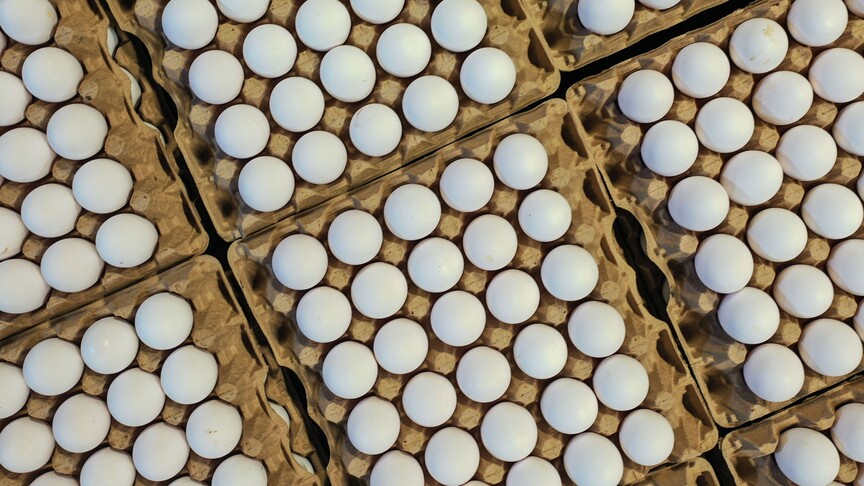
Gambia, Equatorial Guinea, Sudan and Djibouti, along with Hungary and Germany, have also emerged as new markets.
Sector targets $550 million by year-end
Girit said Türkiye uses the latest technology in its poultry sector and that its production capacity is sufficient for the domestic market. He added that the sector has nearly 100 million laying hens.
Girit said there was no cause for concern regarding the balance between supply and demand, adding that producer prices had never exceeded 4 liras and that consumers encountering higher prices in markets or bazaars was an issue outside the sector.
The sector’s export target, set at $500 million last year, was raised by $50 million to $550 million for 2026 after the quotas were lifted.
Stay Updated with The Turkiye Times
Subscribe to be informed about special news, developments and announcements. We will keep you informed.
By signing up, you agree to our Privacy Policy