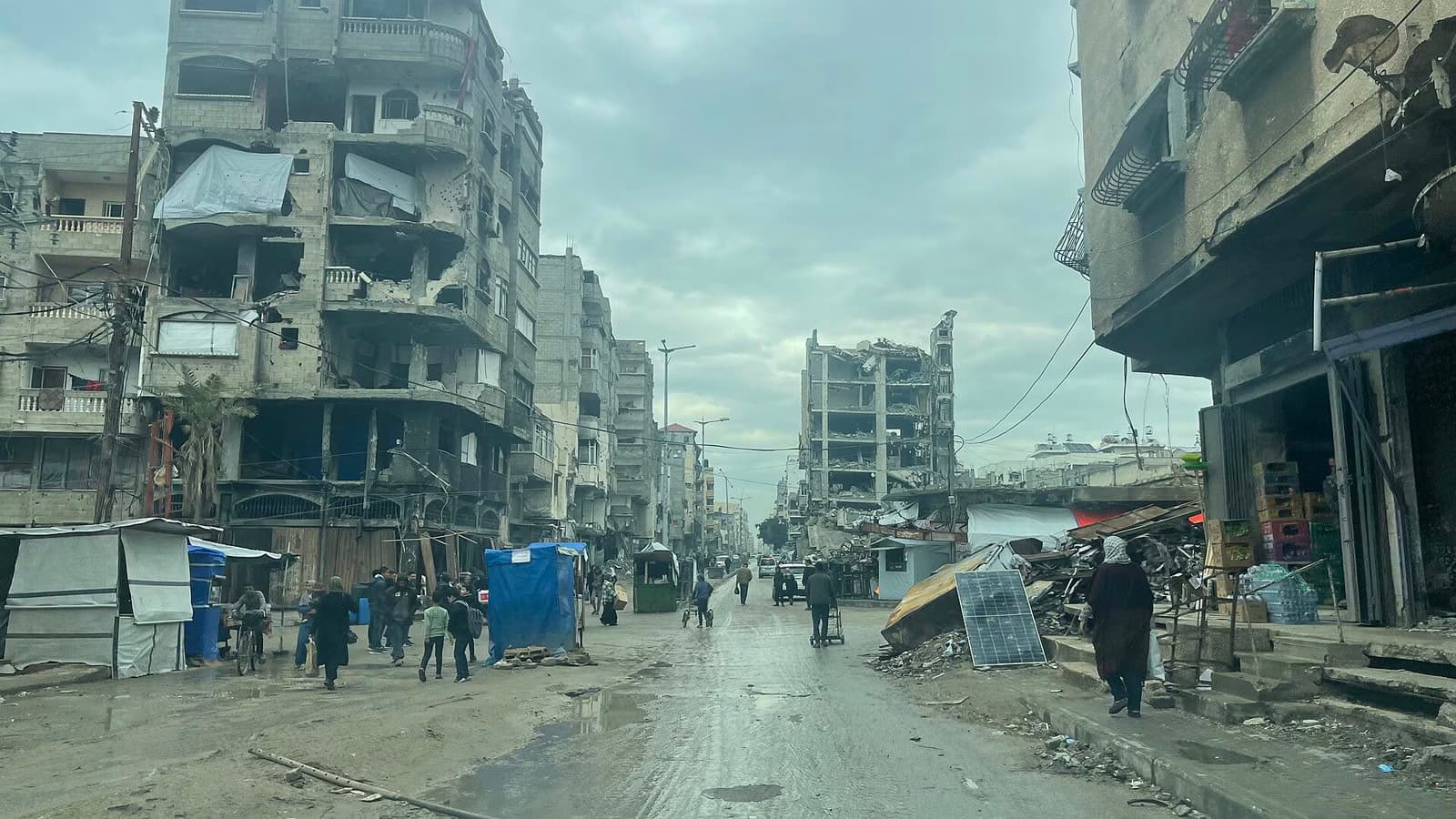
The seventh round of direct talks between Lebanon and Israel, mediated by the United States, is planned for Sept. 1. The talks are continuing after the Israeli army advanced again in the town of West Zawtar in southern Lebanon and built an earth embankment in the area.
The Israeli army advanced again in West Zawtar, north of the Litani River, which had been placed under the control of the Lebanese army as part of a pilot-area arrangement. The development was considered the first violation since the Lebanese army deployed in the town on July 21.
Dispute over pilot areas at the Rome talks
No progress was made on expanding the scope of the pilot areas during the seventh round of negotiations held in Rome, the capital of Italy, from Aug. 4 to 6 under US mediation. Lebanon proposed including the towns of Bint Jbeil and Khiam in the pilot areas, but no agreement was reached because of Israel’s objection.
A senior Lebanese official who requested anonymity said no decision had been made to freeze the negotiations. The official said Beirut was continuing to apply pressure through the United States to encourage Israel to remain committed to the process, adding that suspending the talks because of the attacks had not been considered.
The official said the next round was planned for Sept. 1 and that Lebanon viewed the United States as the sponsor of the negotiations. The official said Lebanon wanted several issues resolved before the September meeting and that the United States had promised to work on those matters.
Experts assess the future of the negotiations
Political analyst and journalist Maysa Abdulhalik said Lebanon remained committed to the negotiation process despite pressure on the ground and Israel’s ongoing attacks. Abdulhalik said reports that Israeli soldiers were attempting to advance toward Tahir Hill near the town of Nabatieh al-Fawqa in southern Lebanon had also emerged during a period of heightened tensions.
Abdulhalik said there were reports that remotely controlled robots and vehicles were being used for reconnaissance in the area, adding that Lebanon was officially insisting on continuing the negotiations and communication with the United States. Abdulhalik said diplomacy had no alternative despite domestic pressure.
Abdulhalik said Hezbollah had previously asked the Lebanese government to freeze the negotiations and had sharply criticized the process. She said Israel’s statements that it would remain up to approximately 10 kilometers deep in the area known as the “Yellow Line” had increased the difficulty facing Lebanon.
Retired Brigadier General and military expert Hashem Jaber, meanwhile, described Lebanon’s participation in the negotiations under the current circumstances as a mistake. Jaber argued that Lebanon could use the 1949 Armistice Agreement and the issue of “the weapons of the resistance” as negotiating points.
Referring to the armistice agreement signed on March 23, 1949, to demarcate the border between Israel and Lebanon, Jaber said the Framework Agreement signed on June 26 contained no clear program or implementation timetable for Israel’s withdrawal. Jaber said he supported freezing the process, arguing that continuing the negotiations had not produced sufficient results.
Retired Brigadier General and military expert Naji Melaib, on the other hand, described Lebanon’s entry into the negotiation process under the current circumstances as the best option available. Melaib said the negotiations remained important because the Lebanese state had no clear alternatives.
Melaib said President Joseph Aoun had taken this step at a time when southern Lebanon and Beirut’s Dahiyeh area were facing threats of evacuation. Melaib argued that entering negotiations had prevented tensions from escalating further and said US pressure on Israel was important to Lebanon’s expectation of a withdrawal.
The ceasefire and framework agreement process
The Israeli army launched heavy airstrikes on Lebanon on March 2 and advanced in many towns in the country’s south. The Lebanese government announced during this period that the number of displaced people had exceeded 1 million.
The ceasefire between Lebanon and Israel, which took effect on April 17, was later extended several times. Lebanon’s Health Ministry reported that 4,335 people had been killed in Israeli attacks since March 2.
Following the fifth round of direct negotiations held in Washington, Lebanon and Israel signed a framework agreement on June 26. After the attacks continued despite the ceasefire and framework agreement, the seventh round of talks was held in Rome from Aug. 4 to 6.