The US administration has marked one of the most significant turning points in its decades-long policy toward Syria. Washington has officially removed Syria from the State Sponsors of Terrorism (SST) list, where it had remained for nearly 47 years.
US Secretary of State Marco Rubio announced on August 24, 2026, that he had formally approved the removal of Syria's designation after the mandatory 45-day congressional notification period was completed.
The decision brings to an end nearly half a century that began in 1979 and covered the governments of both Hafez al-Assad and Bashar al-Assad.
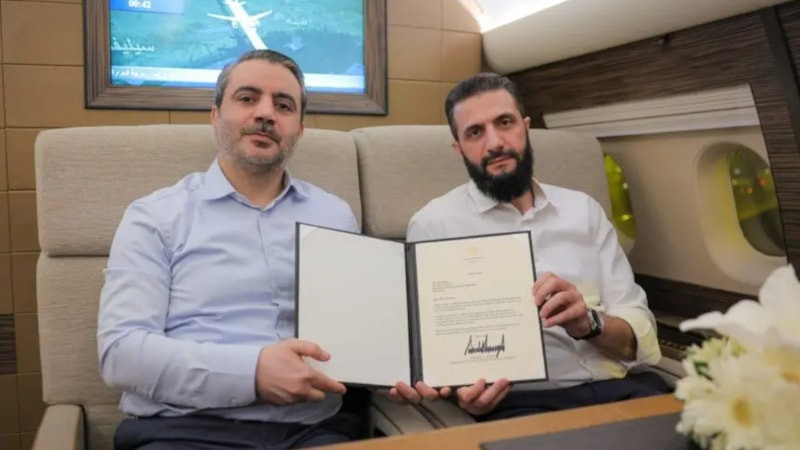
Washington's decision also emerged as one of the most important steps taken so far toward reintegrating the new Syrian administration, established under President Ahmed al-Sharaa after Bashar al-Assad's government was overthrown in December 2024, into the international system.
Syria had been on the list since 1979
The history of the US designation of Syria as a State Sponsor of Terrorism dates back to December 29, 1979.
Syria was among the first countries subject to the designation.
For many years, Washington accused the government in Damascus of providing support to various armed groups. The policy began under Hafez al-Assad and continued under Bashar al-Assad, who came to power in 2000.
Syria's place on the list was maintained particularly because of its support for Hezbollah in Lebanon and various Palestinian groups designated as terrorist organizations by Washington.
Relations between Washington and Damascus deteriorated further after the Syrian civil war began in 2011.
The US Embassy in Damascus suspended operations in 2012, and diplomatic relations between the two countries effectively fell to one of their lowest levels.
What did the State Sponsor of Terrorism designation mean?
The US State Sponsors of Terrorism list is not merely a political designation; it is a mechanism that carries serious legal and economic consequences.
Countries with this designation can face significant restrictions on US foreign assistance, the export and sale of defense goods, the export of dual-use goods and certain financial transactions.
For this reason, Syria's removal from the list is critically important for the country's return to the international economic system.
Legal and financial risks for foreign banks and companies conducting business with Syria are expected to decline significantly.
However, the decision does not mean that all US sanctions on Syria have automatically ended. Restrictions arising from different US laws and sanctions programs still need to be assessed separately.
Assad's removal changed Washington's policy
The starting point of the major change in US-Syria relations was the overthrow of Bashar al-Assad's government in December 2024.
After Assad was removed from power, the new administration led by Ahmed al-Sharaa took control in Damascus.
One of the biggest challenges facing the new administration was rebuilding a country severely damaged by nearly 14 years of war and reconnecting Syria to the international economic system.
For this, the lifting or easing of sanctions imposed by the United States and European countries was critically important.
During this period, the al-Sharaa administration pursued intensive efforts to develop diplomatic relations with Washington, European countries and regional actors.
Trump administration moves to lift sanctions
The administration of US President Donald Trump also gradually changed its approach toward Syria's new government.
Throughout 2025 and 2026, Washington took various steps to ease sanctions, saying they would help Syria's economic recovery.
One of the most critical stages of the process took place on July 8, 2026.
The Trump administration formally notified Congress at that time that it planned to remove Syria from the State Sponsors of Terrorism list.
Under US law, the mandatory congressional review process had to be completed before the decision could take effect.
After the 45-day congressional notification period ended, Secretary of State Marco Rubio made the final decision on August 24, and Syria's designation was officially removed.
Rubio: A path to prosperity is opening for the Syrian people
In a statement after the decision, US Secretary of State Marco Rubio said it was one of the “historic” steps in the Trump administration's Syria policy.
Rubio said Washington had taken unprecedented steps over the past year to reduce the burden of sanctions for the benefit of the Syrian people.
According to the US administration's approach, easing sanctions and removing Syria's State Sponsor of Terrorism designation could help rebuild the country by opening the way for international trade and investment.
Critical decision also affects HTS
Another notable aspect of Washington's August 24 decision concerned Hayat Tahrir al-Sham (HTS).
The US Department of State removed HTS's terrorism designation under the “Specially Designated Global Terrorist” (SDGT) category on the same day as the change in Syria's status.
The US Department of the Treasury also removed HTS from the Specially Designated Nationals and Blocked Persons (SDN) list.
The development is particularly significant because of Ahmed al-Sharaa's past.
Al-Sharaa had led HTS, which became one of the most powerful armed groups fighting the Assad government during the Syrian civil war. The group's history extended back to the al-Nusra Front and its links to al-Qaeda.
Al-Sharaa later announced that he had severed ties with al-Qaeda and changed the group's political direction.
After Assad's government was overthrown, al-Sharaa became a central figure in Syria's new political order and assumed the country's presidency.
For this reason, Washington's latest decision on HTS is viewed not merely as a technical change to sanctions, but as one of the indicators of the fundamental shift in the US approach toward the new government in Damascus.
Why is this so important for Syria's economy?
Syria's removal from the list is expected to have its greatest impact in the economic sphere.
During nearly 14 years of war, Syria's infrastructure, energy system, industry and housing stock suffered extensive damage. The country's reconstruction is considered to require very large amounts of foreign capital.
However, US sanctions, particularly the State Sponsor of Terrorism designation, had made doing business with Syria extremely risky for international banks and major companies.
The new decision removes one of the most important of these obstacles.
Reuters reported that the first signs of interest in Syria from the international financial sector had also begun to emerge. Bank of America is holding talks, while Mastercard's efforts to connect Syria to the international payments infrastructure have also come under discussion.
For the Damascus administration, the goal is to reconnect the country to the global banking system, attract foreign investment and accelerate postwar reconstruction.

Only three countries remain on the list
After Syria's removal, three countries remain on the US State Sponsors of Terrorism list:
This ends Syria's nearly half-century designation, making it one of the longest-serving members of the list since 1979.
A new era in Washington-Damascus relations
The decision signals a major change in US Syria policy not only economically, but also diplomatically and geopolitically.
Since 1979, Syria had been viewed by most US administrations as one of the region's most problematic states.
After decades of tensions spanning the period from Hafez al-Assad's government to Bashar al-Assad's administration, policies toward Lebanon and Israel, close relations with Iran, the civil war that began in 2011 and US sanctions, Washington is now seeking to establish a different relationship with the new administration in Damascus.
The decision taken on August 24, 2026, therefore means not only the lifting of a sanction, but also the closing of a nearly half-century period in US-Syria relations.
At the same time, Syria's security problems have not disappeared entirely. In the US Department of State's August 2026 travel advisory, Syria remains in the highest-level “Level 4 – Do Not Travel” category. The advisory states that terrorist attacks, armed conflicts, kidnappings and security problems continue in various parts of the country.
Washington's latest decision therefore does not mean that all of Syria's problems have been resolved. However, removing the state-level designation as a sponsor of terrorism, which had been in effect since 1979, means that one of the biggest hurdles facing the new Syrian administration in its pursuit of international legitimacy and economic normalization has been cleared.