- BIST10012,151-0.94%
- USD49.220.00%
- EUR55.21+0.28%
- GOLD4,195.70-0.49%
- INTEREST37.00%-1.00
- BITCOIN82,434-1.48%
- October 12, 202619°
- BIST10012,151-0.94%
- USD49.220.00%
- EUR55.21+0.28%
- GOLD4,195.70-0.49%
- INTEREST37.00%-1.00
- BITCOIN82,434-1.48%
- October 12, 202619°




Defence Minister Yaşar Güler to Global Business Press: 2035 goals, KAAN and Türkiye–Azerbaijan defence cooperation
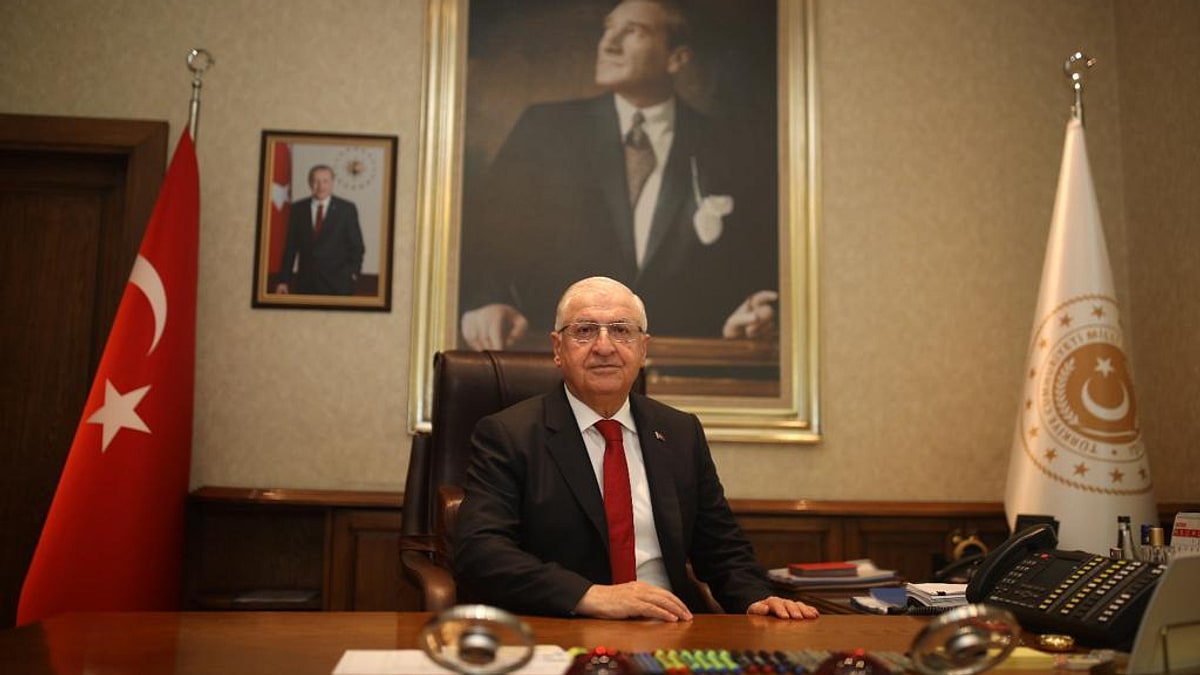
Türkiye's Minister of National Defence Yaşar Güler answered questions from Singapore-based defence and aerospace publication Global Business Press, discussing the transformation of the Turkish defence industry, military cooperation with Azerbaijan, the security environment in the South Caucasus, lessons from unmanned systems and the country's 2035 goals.
The transformation of the defence industry
Türkiye has become one of the world's fastest-growing defence exporters. What lies behind this transformation?
Our country's location close to hot conflict zones, the ongoing instability in our region and the geopolitical and strategic changes in the world require our armed forces and other elements of our national power to be effective, strong and ready at all times. The products and systems we have continuously developed in this direction, drawing on the means and capabilities we have reached and on the experience our armed forces have gained in the field, contribute to safeguarding our national survival; thanks to their success in the field and the game-changing effect they have created, they are also closely followed and preferred by friendly and brotherly countries and by our NATO allies.
The Turkish defence industry now has a capacity and strength that the world watches with admiration. This makes us proud, but it also increases our responsibility. The progress we have made, especially over the last 10 years compared with regional actors, owes much to the integration of the Turkish Armed Forces with domestic and national defence products, to the transfer of field experience into product development and to the creation of a strong institutional structure that supports exports.
Today Türkiye has a strong defence industry ecosystem that meets not only its own needs but also those of friendly and allied countries. With more than 4,000 companies, over 100,000 direct jobs and a turnover exceeding 20 billion dollars, our defence and aerospace ecosystem has reached a considerable size and has significantly strengthened its position in global markets with the high-technology products it develops.
Where do you see the Turkish defence industry in the next 10 years?
Over the next 10 years, our defence industry aims to take its current 'operational platform producer' structure further and become a global 'technology leader and game-maker'. In the period ahead, we aim to further develop our capabilities in critical and advanced technology areas, above all autonomous systems, fifth-generation fighter jets, integrated air defence systems and space technologies.
Our goal in the coming period is to further strengthen our independence in critical technologies, increase our serial production capacity and permanently grow our share of the global market.
Türkiye–Azerbaijan: “A strong Türkiye means a strong Azerbaijan”
Türkiye–Azerbaijan relations are often summed up as “One nation, two states”. How is this reflected in defence and security cooperation today?
The aim is to achieve interoperability and full harmony between the Turkish Armed Forces and the Azerbaijani Armed Forces. To this end, joint training and advisory activities continue without interruption for the modernisation of the Azerbaijani army, the strengthening of its commando brigade structures and the achievement of doctrinal unity. Every year, comprehensive joint exercises involving land, air and special forces are held to keep the operational capability and harmony of the two armies at the highest level.
The Shusha Declaration has further strengthened the political and strategic framework of our cooperation. When it comes to the security of Türkiye and Azerbaijan, solidarity is not a circumstantial choice for us; it is the natural result of our brotherhood and strategic partnership. Our understanding is clear: 'A strong Türkiye means a strong Azerbaijan, and a strong Azerbaijan means a strong Türkiye.' As two brotherly countries, our goal is to strengthen our defence and security capabilities mutually while contributing to lasting peace, stability and prosperity in the South Caucasus.
What have been the most important achievements of Türkiye–Azerbaijan defence cooperation in recent years?
The defence and security partnership, which has gained momentum in recent years, has moved beyond being merely a process of preparation and infrastructure for the two countries and now produces direct strategic and concrete results in the field. Thanks to joint exercises, training activities and personnel exchanges, the two armies' planning, command-and-control and joint operational capabilities have grown even stronger. In 2026, the Unshakable Brotherhood exercise aimed to improve interoperability, while the Power of Unity-2026 exercise aimed to develop capabilities for planning and conducting joint operations against hybrid threats.
In my view, one of the most important achievements is that the solidarity between Türkiye and Azerbaijan in the field of security has become a lasting institutional culture. Where we stand today, the defence cooperation of the two brotherly countries is not limited to preparing for existing threats; it also contributes to strengthening peace, stability and security in our region.
We believe that the level of defence and security cooperation reached between Türkiye and Azerbaijan offers an important experience and example for cooperation that can be developed among member states of the Organization of Turkic States. We believe this experience will help develop mutual exchange of experience and interoperability across the Turkic world.
Will defence industry cooperation with Azerbaijan go beyond supplying products? Is partnership possible in projects such as KAAN?
We already have strong cooperation with Azerbaijan in the defence industry. Our companies have delivered many systems to Azerbaijan, above all various land vehicles. In the period ahead, we aim to take this cooperation beyond product supply and deepen it in technology sharing, joint production and capacity building.
We see significant potential for developing joint projects in the air systems of the future, especially our fifth-generation national fighter KAAN and new-generation unmanned aerial platforms such as ANKA III and Bayraktar KIZILELMA.
South Caucasus: “Security and peace are not alternatives to each other”
How do you assess the changing security environment in the South Caucasus? How can defence cooperation contribute to lasting stability in the region?
As Türkiye, we see the developments in the South Caucasus as a period in which the region's security architecture is being reshaped and important opportunities for lasting peace are emerging. A new era began in the region after Azerbaijan restored its sovereignty in Karabakh. Today our priority is to turn this historic opportunity into lasting peace, stability, economic development and regional cooperation. Together with Azerbaijan, Türkiye supports the establishment of lasting peace between Azerbaijan and Armenia and wants the South Caucasus to be associated with cooperation and prosperity rather than conflict.
Developments in the Black Sea, energy and transport security, hybrid threats and regional geopolitical rivalry can affect the security environment of the South Caucasus directly or indirectly. That is why, as Türkiye, we pursue our security policy not only by responding to existing threats but with a comprehensive approach that strengthens deterrence, is based on regional ownership and keeps diplomatic channels open.
With the Shusha Declaration, relations between the two countries rose to the level of an alliance, and this alliance has found concrete expression in the field through joint exercises, military training, sharing of experience and defence industry cooperation. The main purpose of this work is not to threaten any country, but to strengthen the security and defence capabilities of Türkiye and Azerbaijan, improve the interoperability of our armies and contribute to deterrence in the region.
Security and peace are not alternatives to each other; a strong defence capacity is one of the security foundations of lasting peace. With this understanding, we believe that Türkiye–Azerbaijan defence cooperation complements diplomatic efforts and contributes to regional stability and deterrence.
Unmanned systems, partnerships and the 2035 goals
Turkish unmanned systems attract great interest worldwide. What lessons have emerged from their use in the field and from their exports?
One of the most important lessons from Türkiye's experience with unmanned systems is that platform development and real operational experience cannot be separated. Our drones and armed drones have been tested under real field conditions in different operational environments, and the feedback gathered has been fed directly into the continuous improvement of the systems.
Another important point is the need to build an integrated unmanned systems ecosystem rather than a single platform. Over time, Türkiye has developed not only unmanned aerial vehicles but also complementary capabilities such as electro-optical systems, radars, munitions, communications infrastructure, electronic warfare, command and control and artificial intelligence.
Another important lesson from our export success is the importance of cost-effectiveness, sustainable production capacity and solutions that fit users' needs. Our goal in the coming period is to develop autonomy, swarm technologies, artificial intelligence and manned-unmanned teaming capabilities and take to a higher level an integrated unmanned systems ecosystem in which different platforms can operate together.
Many countries now want not only to buy products but also joint production and technology transfer. How does Türkiye respond to such requests?
As Türkiye, we do not see defence industry cooperation as merely buying and selling products. Our approach is to develop long-term, sustainable partnerships based on mutual benefit. Our main goal is to develop our national and original capabilities while also increasing our capacity to produce and develop together with friendly and allied countries.
What are the main headings of your 2035 goals?
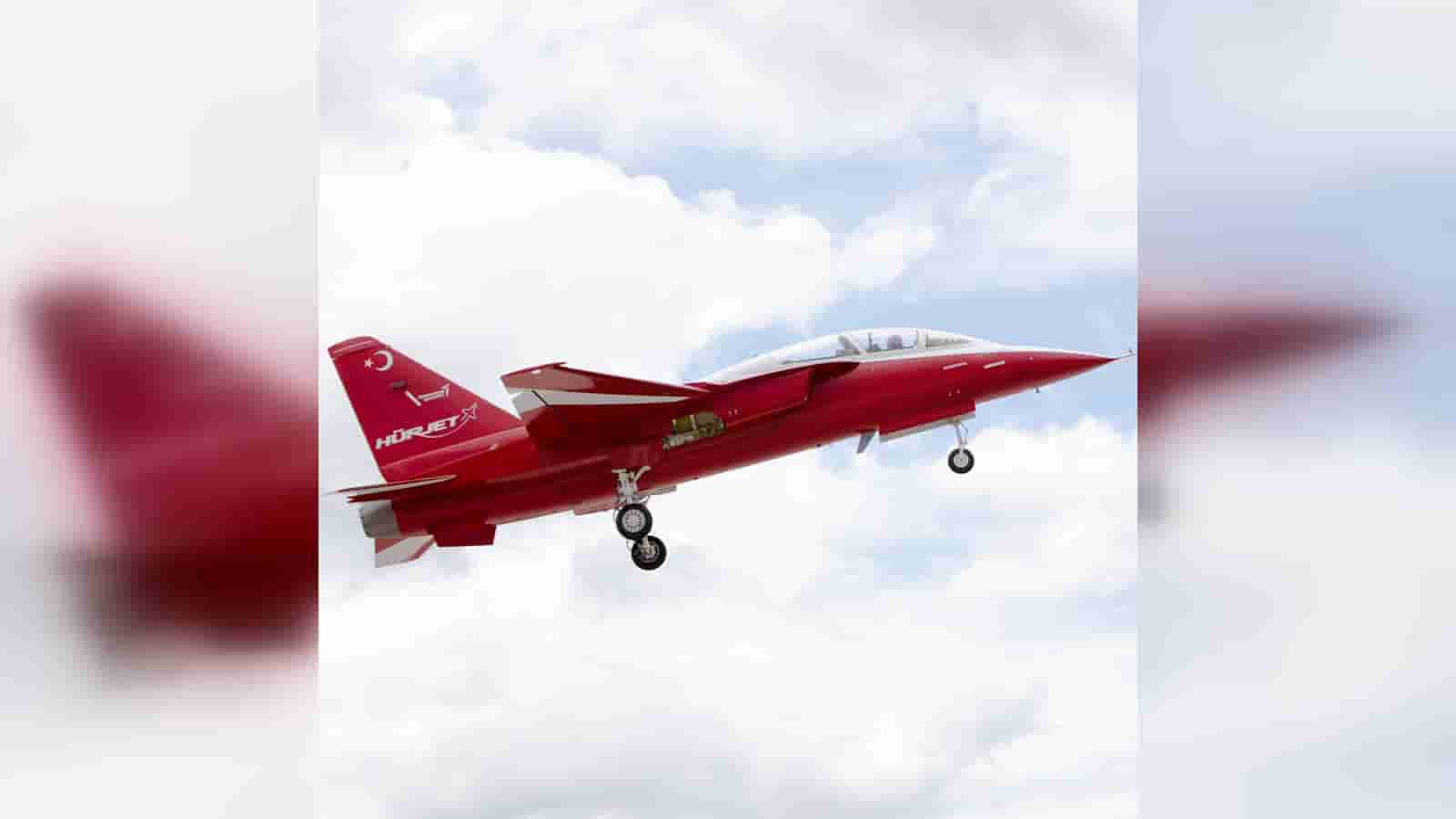
For our 2035 goals, developing national capabilities in critical technologies and further strengthening our technological independence are of great importance. Our platform projects, above all KAAN and HÜRJET, together with our national engine work, are key elements of this goal.
One of the important dimensions of this vision is our capabilities in space. By 2035, we aim to develop capabilities that will contribute to building a defined space picture through intelligence, surveillance and reconnaissance, electronic support, early warning, regional positioning and timing satellite systems and space domain awareness, and for our defence industry to reach a level at which it can meet the Turkish Armed Forces' needs in this field.
In short, our goal towards 2035 is to further strengthen the position of the Turkish defence industry in the global defence and aerospace sector, advance our independence in critical technologies and increase our effectiveness as a reliable and sustainable partner in international markets.
Featured Listings
Sponsored
Similar Interviews


Outgoing Ambassador Mustafa Göksu: Türkiye and Qatar are bound by a shared destiny
Cabir el-Harami, Avatıf bin Ali (Al-Sharq)
- 9/23/2026


Justice Minister Akın Gürlek to Sabah: assets seized in the investment fund probe will go to victims
Abdurrahman Şimşek (Sabah)
- 10/4/2026


Parliament Speaker Numan Kurtulmuş to Ortadoğu Analiz: Terror-Free Türkiye, a terror-free region and the Türkiye model
Ortadoğu Analiz (ORSAM)
- 9/30/2026
Featured News


Job Listings
Stay Updated with The Turkiye Times
Subscribe to be informed about special news, developments and announcements. We will keep you informed.
By signing up, you agree to our Privacy Policy











