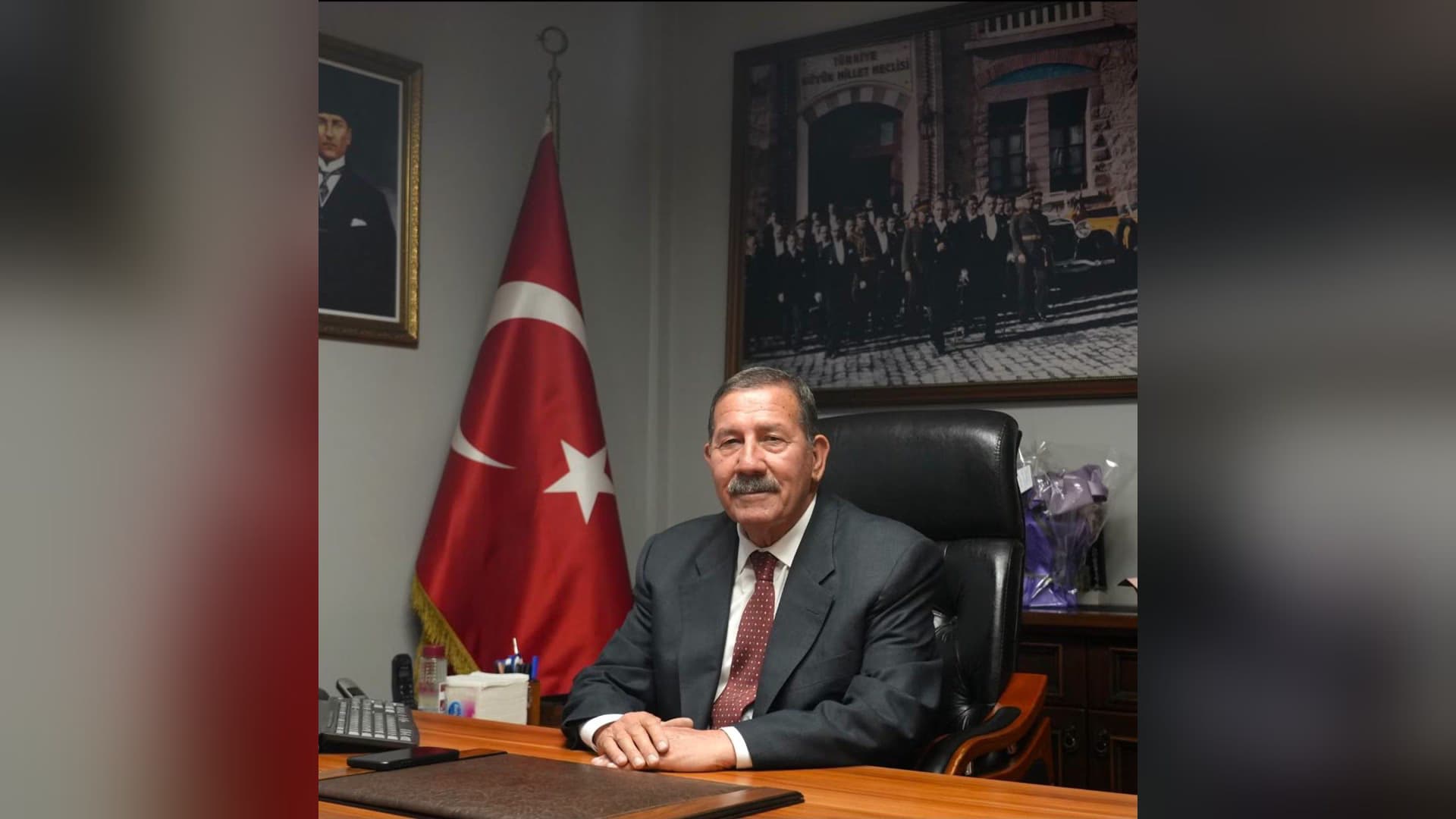
Events organized in Sivas to mark the 107th anniversary of the Sivas Congress, where the foundations of the Republic of Türkiye were laid, are continuing. The program, which began on August 31, will conclude with the Muhsin Yazıcıoğlu Karakucak Turkish Championship on September 5.
Mustafa Kemal Atatürk's arrival in Sivas was reenacted. The program will also feature a folk dance performance, a clothing show titled "From the Seljuks to the Republic: The National Will" in the garden of the Atatürk Congress Museum, and a ceremony marking the cutting of the National Pact Carpet.
September 4 program
A wreath will be laid at the Atatürk Monument in the city on September 4. The Sivas Congress will be reenacted at the Atatürk and Congress Museum, and a helicopter show will be held.
The Sivas 10th Agriculture, Livestock and Food Fair will also open that day. Following the procession and a mehter band concert, the Folk Dance Ensemble will perform, while a concert program will be held in the evening.
The significance of the Sivas Congress
Serap Bozpolat Ayan, a lecturer in the Department of Atatürk's Principles and the History of the Turkish Revolution at Sivas Cumhuriyet University, said the Sivas Congress was a congress at which the Turkish nation declared that it would not surrender.
Ayan said the idea of mandates and protection was rejected at the congress, adding that independence was accepted as a fundamental condition for the nation's existence. Ayan said the Sivas Congress put forward the understanding of "independence or death" and stated that no option other than full independence was accepted.
Recalling that Mustafa Kemal Atatürk defined the character of the Turkish nation through freedom and independence, Ayan said the Sivas Congress was one of the important steps that illuminated the path of the national liberation struggle.
Ayan said the decisions taken at the Sivas Congress contributed to the process that led to the opening of the Grand National Assembly of Türkiye on April 23, 1920, the rejection of the Treaty of Sèvres, the War of Independence, the victory on August 30, 1922, and the proclamation of the Republic on October 29, 1923.
The congress in chronological order
Mustafa Kemal Atatürk moved the national liberation struggle, which began in Samsun on May 19, 1919, to Sivas after Amasya. Mustafa Kemal Pasha, who arrived in Sivas on June 27, 1919, led preparations for the national congress planned to be held in the city.
After the Erzurum Congress, Mustafa Kemal Pasha returned to Sivas on September 2, 1919, and remained in the city until December 18, 1919. The Sivas Congress began at 2 p.m. on Thursday, September 4, 1919, in what is now the Atatürk and Congress Museum building.
The congress, chaired by Mustafa Kemal Pasha, held its official proceedings over seven days. Mandate debates took place on September 8 and 9, while the final declaration was issued on September 11, 1919. The congress adopted important decisions for the national liberation struggle, including the decision that "mandates and protection cannot be accepted."
Hikmet Bey's words
Hikmet Bey, a military medical student, was also among the delegates during the congress. Opposing the idea of a mandate, Hikmet Bey told Mustafa Kemal Pasha that he had been sent to join the struggle for independence and that a mandate could not be accepted.
In response to Hikmet Bey's words, Mustafa Kemal Pasha said he trusted the youth and stated that a mandate would not be accepted and that the motto was "independence or death."
Women's participation in the National Struggle
The women of Sivas cared for refugees arriving from Trabzon and Erzurum, most of whom were women and children. After Mustafa Kemal Pasha said that Turkish women should participate in the National Struggle in an organized manner, the women of Sivas began working to establish an association.
The Anatolian Women's Association for the Defense of the Homeland was established on December 9, 1919, following these efforts.
From the congress to the Republic
With the Sivas Congress, the concepts of national sovereignty and the national will began to be reflected in state affairs. One of the first organizational activities encompassing the entire population was carried out in Sivas, and the congress served as a national assembly in both form and substance.
The Representative Committee, formed to encompass the entire country, became a body influential in the nation's fate after the congress. The national movement shaped at the Sivas Congress reached a new stage with the proclamation of the Republic on October 29, 1923, following the victory of September 9, 1922.